Most of these projects land in the zone between a quart of paint on a Saturday and a full weekend with a drill, with a few asking for more if you are already opening up the wall.
What separates one idea from another is how much of your kitchen you want to live on display, because every dish and spice jar sits right there in the open.
The maker of one reclaimed-wood set in this list suggests keeping the load light; skip it for heavy pottery, and the shelf stays straight.
1. In a Corner
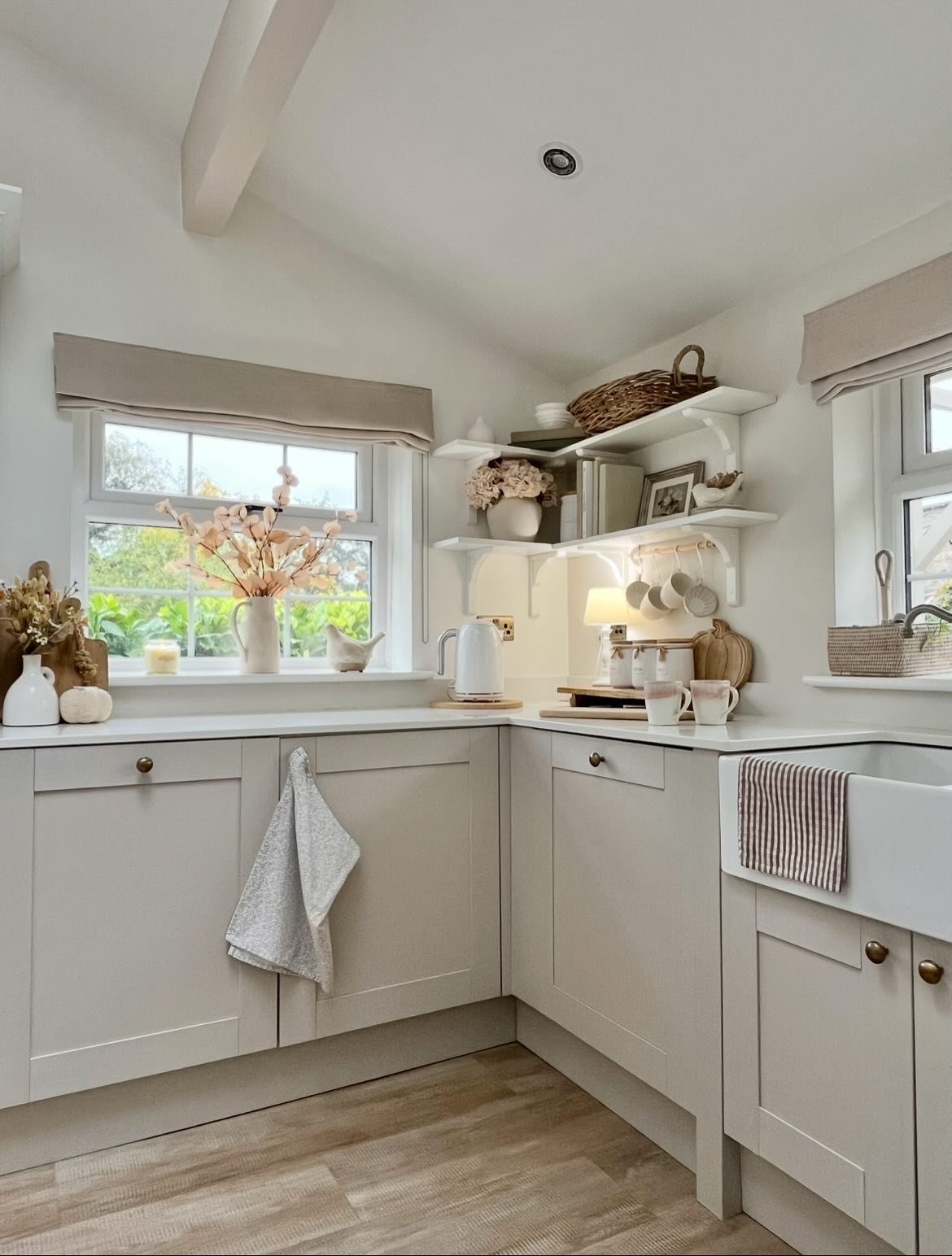
Corners usually sit empty because cabinets fight the angle. Two or three open shelves turn that dead space into a morning coffee station, with mugs on hooks underneath and a small basket for filters or pods.
Shallow shelves, about 12 inches deep, keep everything in reach so nothing gets lost in the back of a corner. I would not try to store dinner plates here; the depth is wrong and the reach is awkward.
This works best for items you grab daily and replace often.
2. Use Clear Canisters
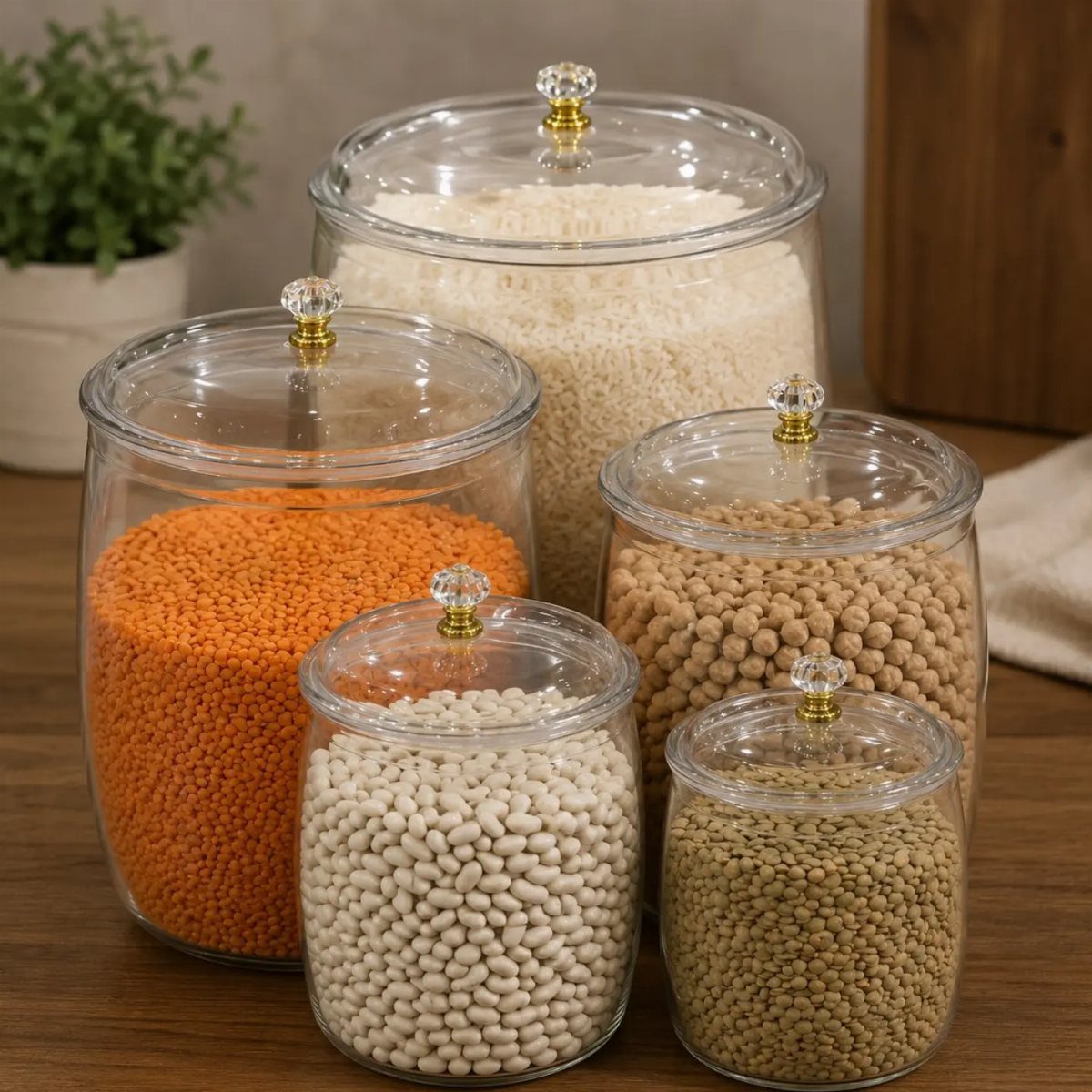
Clear canisters turn pantry staples into something you actually want to look at. Lentils, beans, and grains carry their own color, so the shelf reads as a gradient rather than clutter.
Glass jars with gold knobs pick up other warm tones in a kitchen, though plain lids work if your hardware runs cooler.
Labels matter once you own more than three; I use masking tape and a marker, replaced when the contents change. Ceramic canisters hide too much and tend to collect half-empty bags behind them.
3. Use Lighting
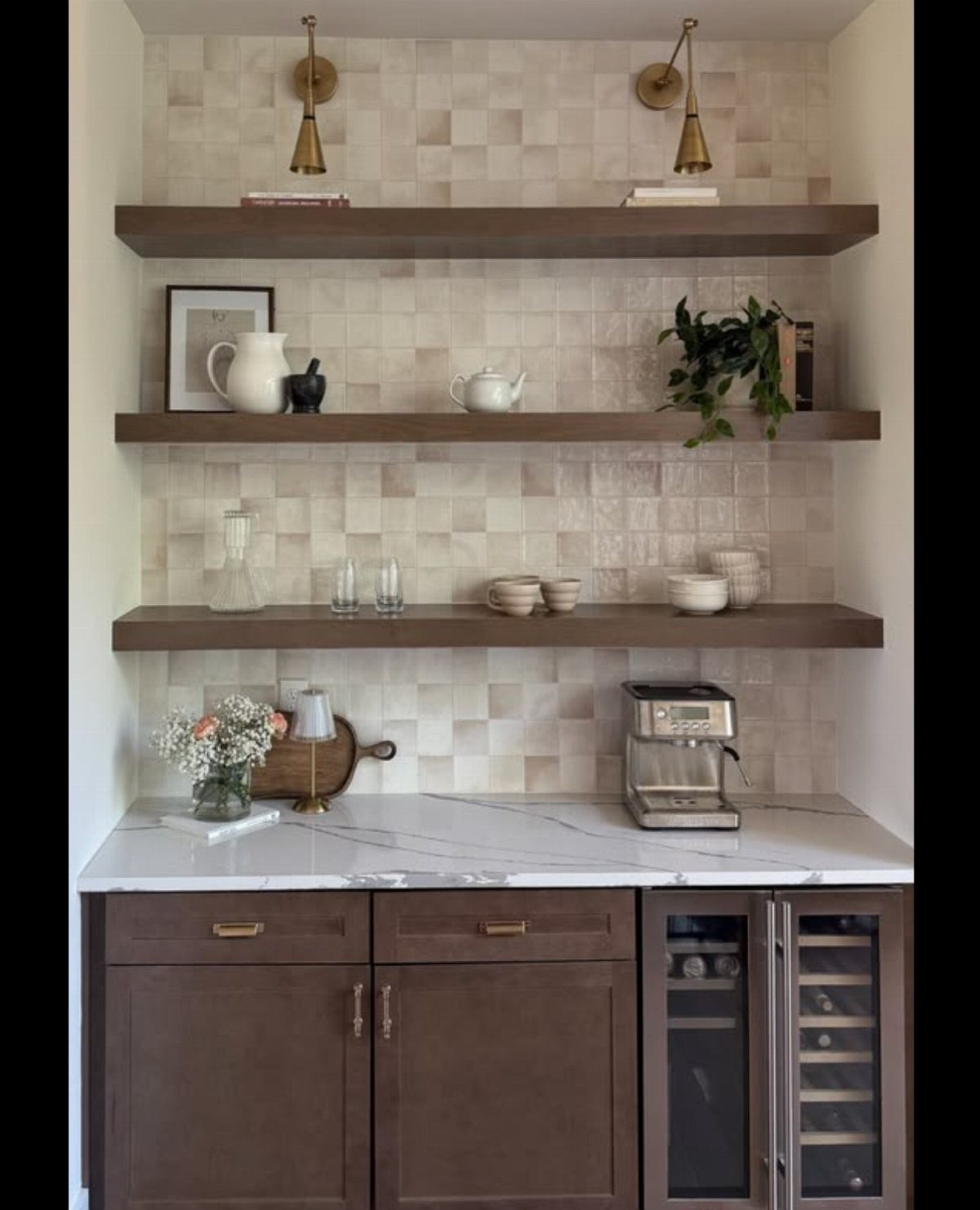
Overhead lighting leaves shelves in shadow, especially where cabinets used to block the ceiling fixture.
A pair of brass sconces above the top shelf fixes that without rewiring the whole room; many plug into an outlet behind the range or into a converted under-cabinet junction.
A single sconce can carry a corner setup if the shelves are short; add a second only when the run is long enough to need it.
Wiring to a wall switch is the cleanest look, though a cord with an inline dimmer costs less and takes hardly any time to set up.
The light should hit the front of the shelf, not the wall behind it, or you lose the goods in their own shadow.
4. Create Balance with Color and Texture
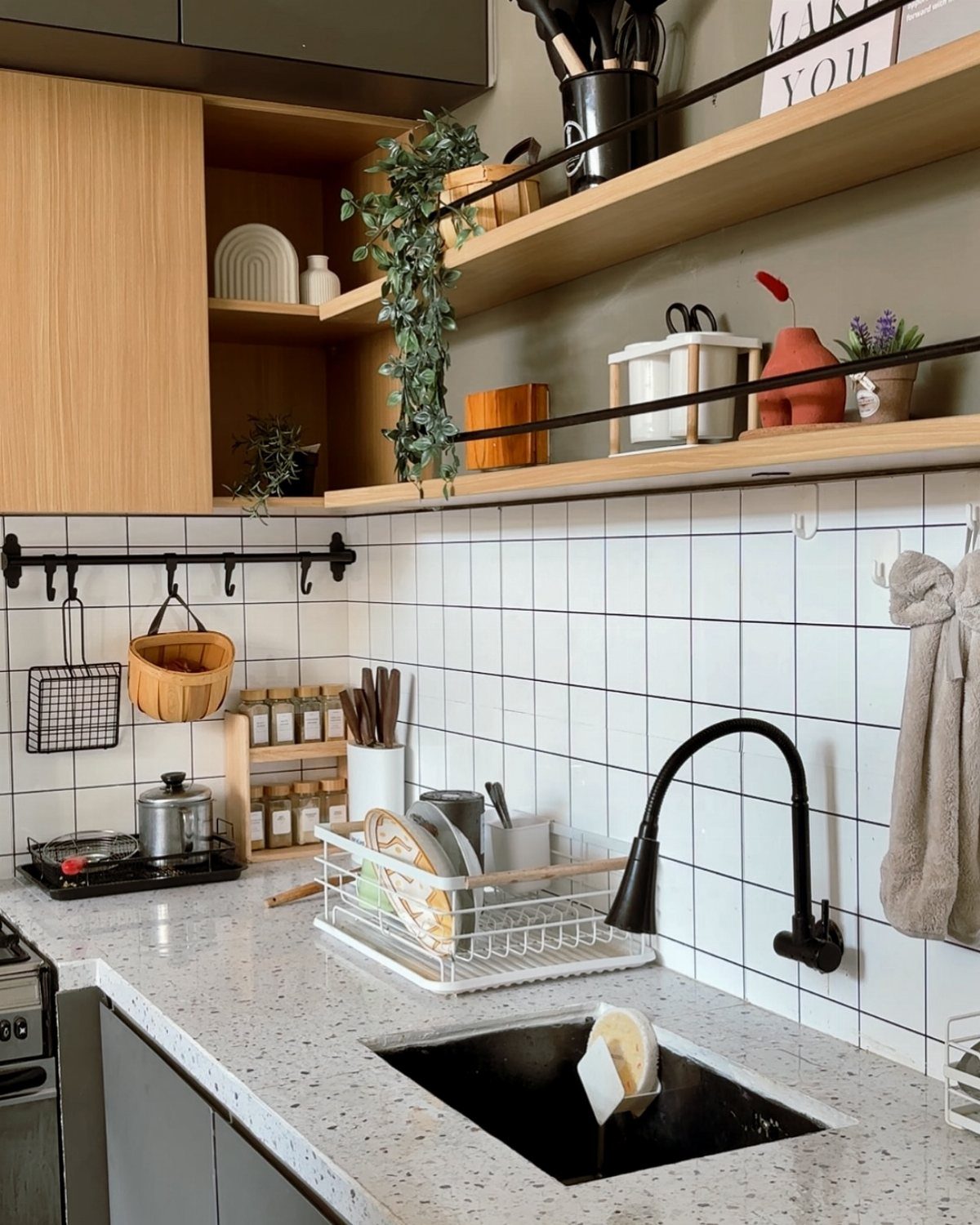
Sage paint on the wall behind these shelves does half the styling work before anything goes up. A wood shelf, a trailing plant, white ceramics, and a black faucet all pull from the same muted range so nothing competes.
Cramming every texture onto one shelf makes the eye bounce around without landing anywhere; restraint reads as calm.
One natural element, one smooth, one matte usually covers it; here, the plant supplies the living texture, the glaze on the bowls gives the shine, and the unfinished wood handles the rest.
The lantern is decorative until the power goes out, which is reason enough to keep it.
5. Use Rustic Wood Shelves
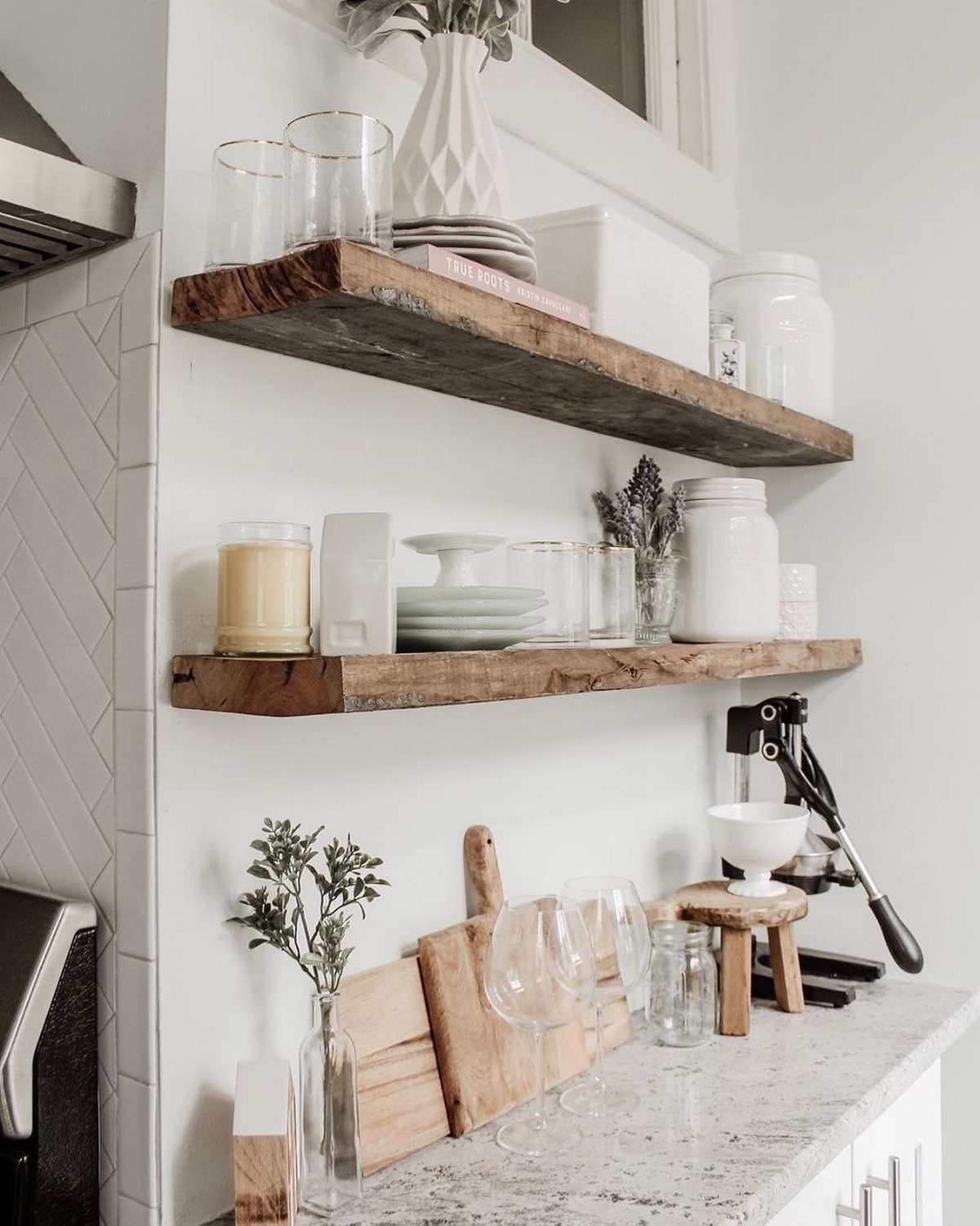
Thick, rustic wood shelves add warmth that polished surfaces cannot fake, and they cost less than you might expect if you buy unfinished planks and bracket them yourself.
Reclaimed lumber saves sanding time because the dents are the point; new pine or oak needs a stain or oil to avoid reading as raw construction material.
Thick shelves that extend past the bracket hide the hardware and give you somewhere to hook a dish towel. I would keep the load light: ceramics and glassware, not a stand mixer or a full stockpot collection.
The maker of this set suggests adding greenery with houseplants of differing textures, which keeps the wood from feeling too heavy.
6. Use Matching Dishware
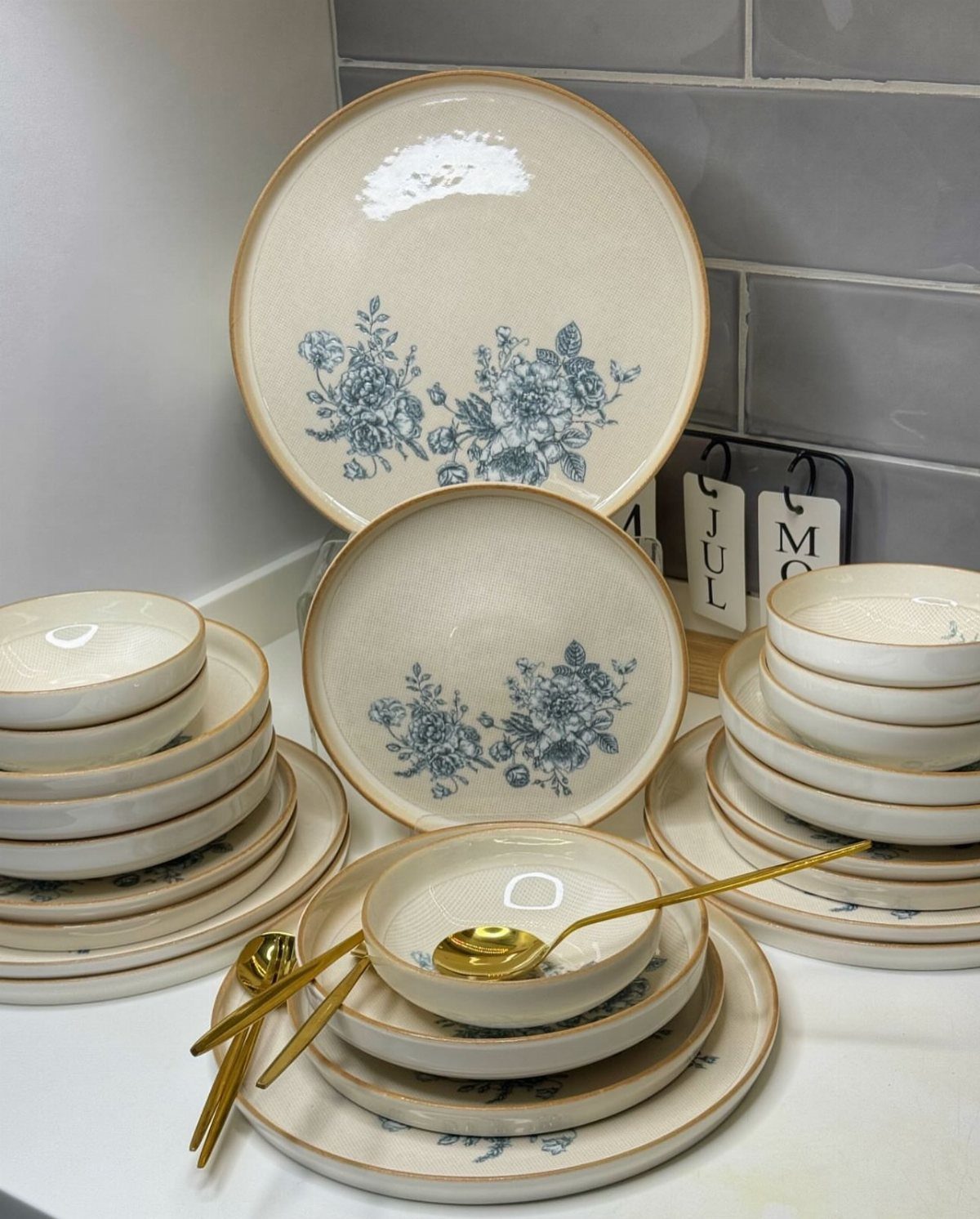
Matching dishware reads as intentional even when the arrangement is casual. White or cream sets the calmest base; a blue floral pattern adds just enough rhythm without demanding attention.
A full set is worth buying even if you only display half; rotate when the daily stack gets chipped. A neutral backsplash acts as a stage for patterned dishware, but a busy backsplash fights a busy pattern on the plate.
If your dishes are mismatched now, this is the excuse to commit to one complete set and relegate the survivors to weekday cabinets.
7. Use Unique Brackets
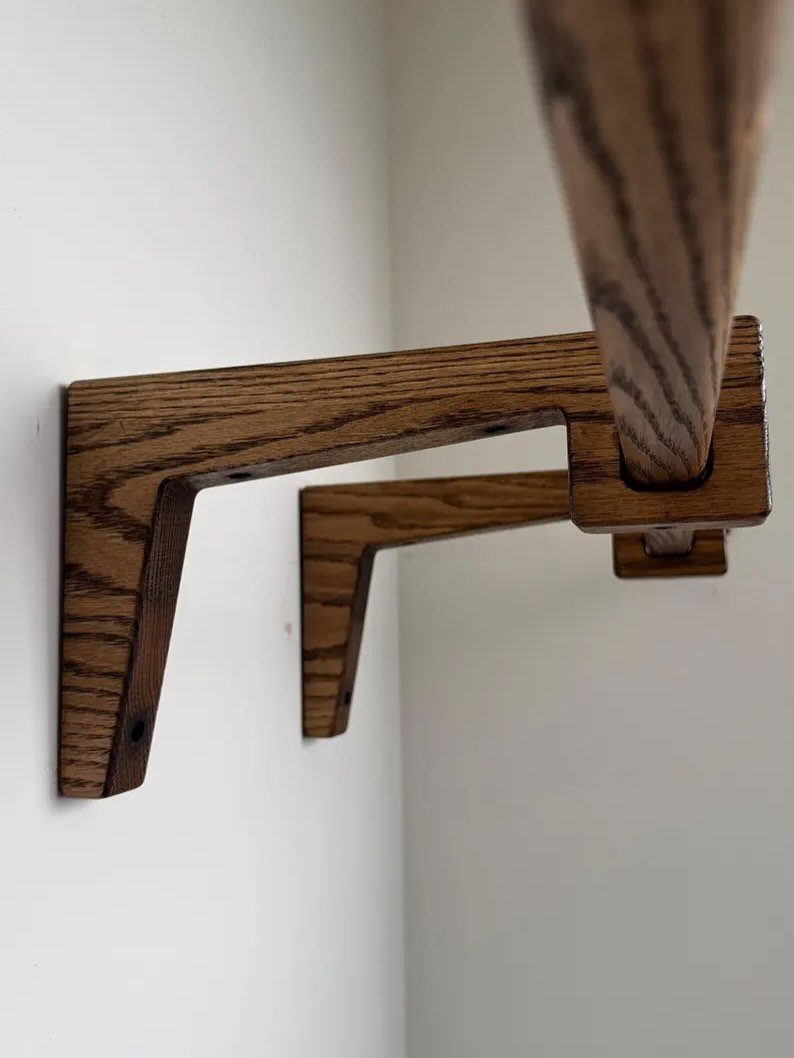
A geometric wooden bracket in dark stain turns an ordinary shelf into something worth looking at twice. Matching the bracket finish to nearby cabinetry, or deliberately mismatching it, sets the tone for the whole wall.
For a cottage-style kitchen, a painted bracket in a cabinet color like Edward Bulmer Invisible Green lets the shelf itself fade back so whatever sits on it pops. Metal brackets read industrial; carved wood reads traditional.
Picking one shape and repeating it keeps the run cohesive; mixing styles along the same stretch tends to look accidental.
8. Give It an Industrial Feel
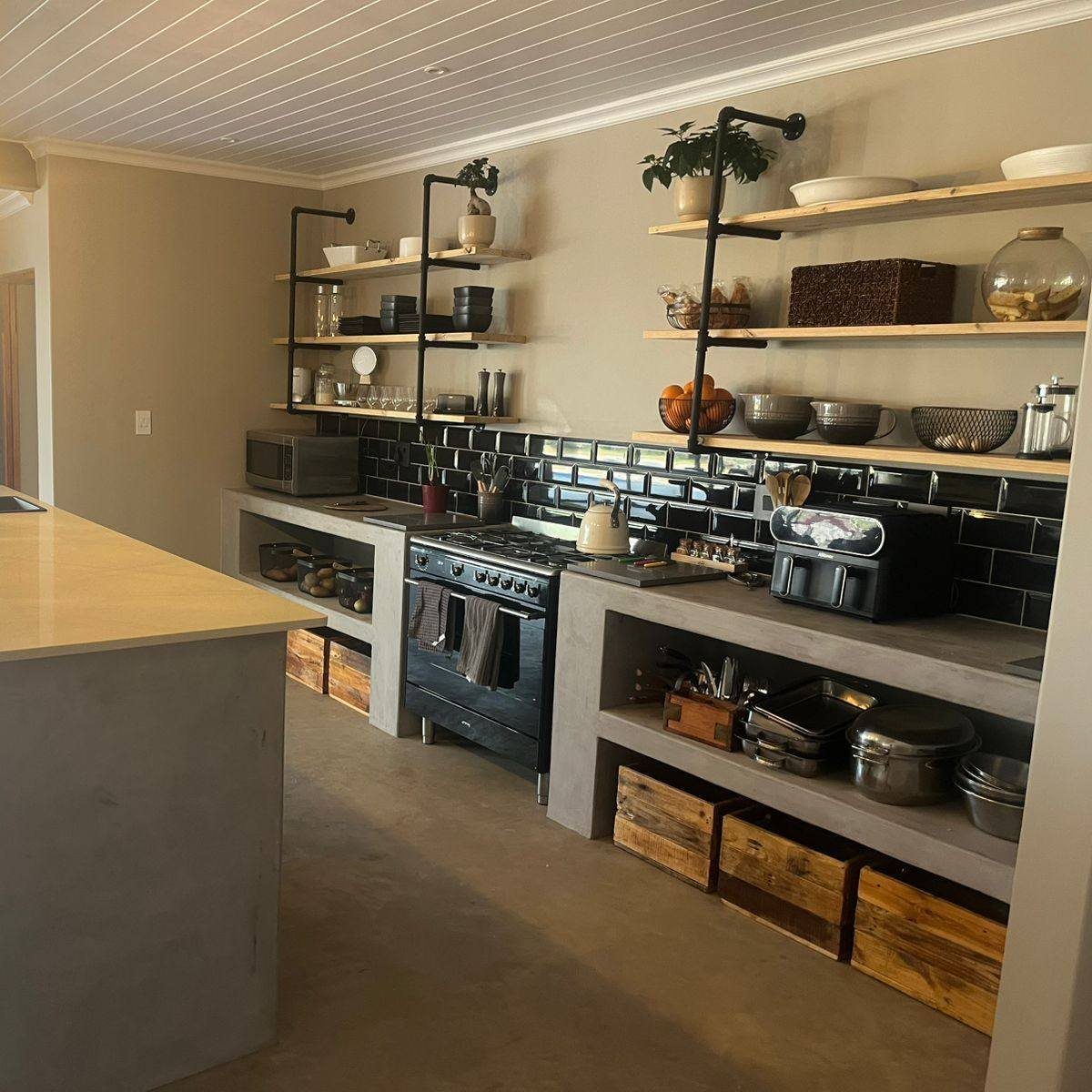
Black pipe brackets against light wood give a kitchen that utilitarian, chef’s-kitchen feel without the restaurant price tag. I like this best when the brackets echo something else in the room: a black stove, dark countertops, or steel pendant lights.
Brushed steel works too, but black keeps the look consistent and hides wear. Open pipe collects grease and dust near a range, so I would place this setup away from the cooktop if the kitchen sees heavy use.
Against a dark wall, the wood shelf itself becomes the visual relief.
9. Mix Open and Closed Storage
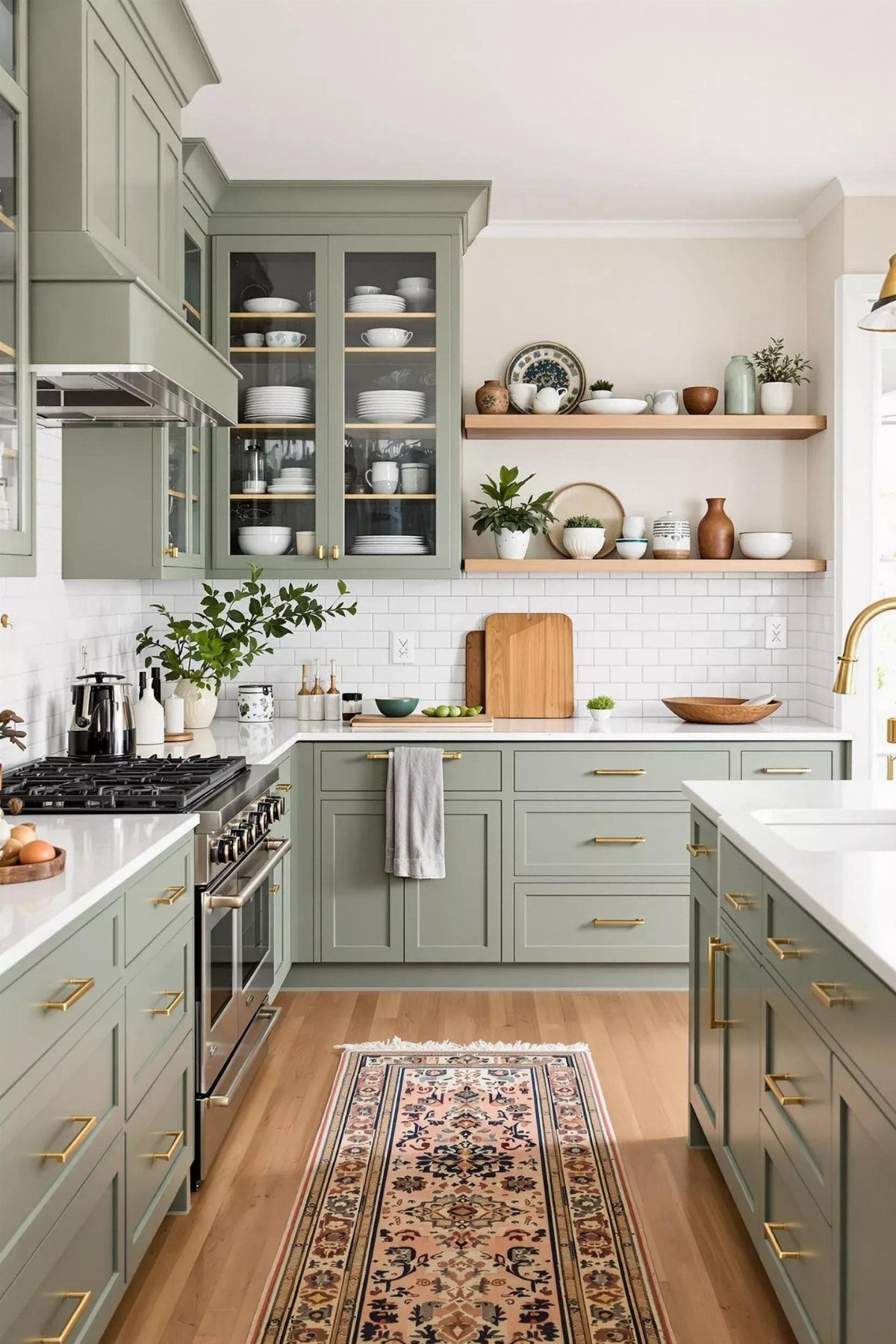
Open shelves and closed cabinets can share one wall without fighting when the colors stay in the same family and the proportions feel balanced.
I use the open portion for the four or five things I reach for daily: bowls, a few plates, a small plant. Everything else, the bulky stuff and the visual clutter, goes behind glass or solid doors.
The rhythm matters. Alternating a longer open run with a shorter cabinet break keeps the wall from feeling like a showroom.
Baskets on the open shelves help, but I keep them to one or two so the look stays intentional, not packed.
10. Incorporate Cookbooks
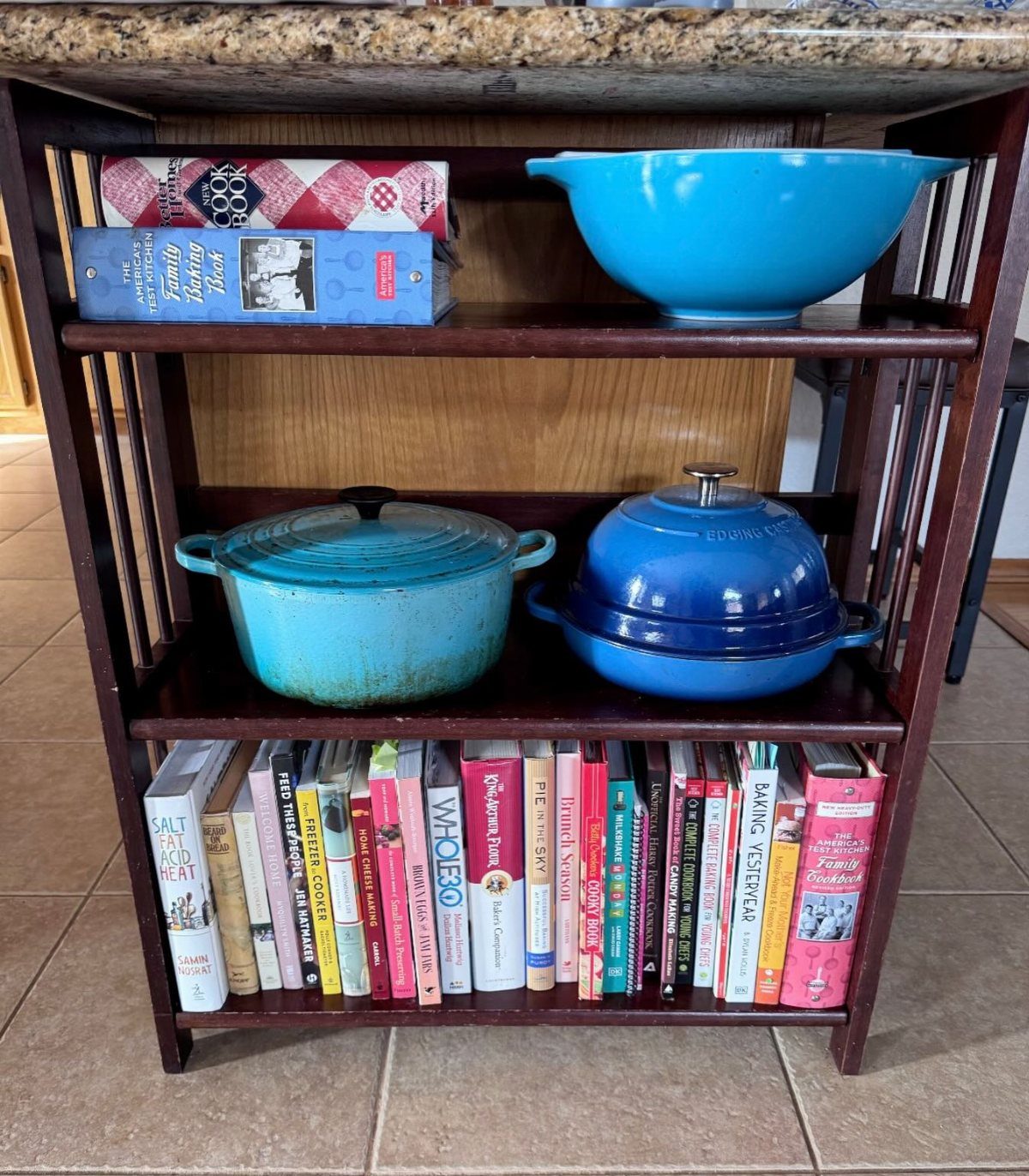
A dedicated cookbook shelf saves the frustration of digging through a cabinet while something burns on the stove.
I stack mine spine-out on the top shelf, where they stay clean from splatter, and keep the one I’m using flat on a counter or holder.
The color of their spines becomes part of the kitchen’s palette whether you plan it or not, so I group by height and let the blues and reds fall where they may.
One maker of a piece like this noted that high-altitude baking books, specifically Pie in the Sky, earn their keep for anyone living above 7,000 feet. That detail stuck with me: a shelf that holds practical help, not just pretty spines.
11. Use Wall Hooks
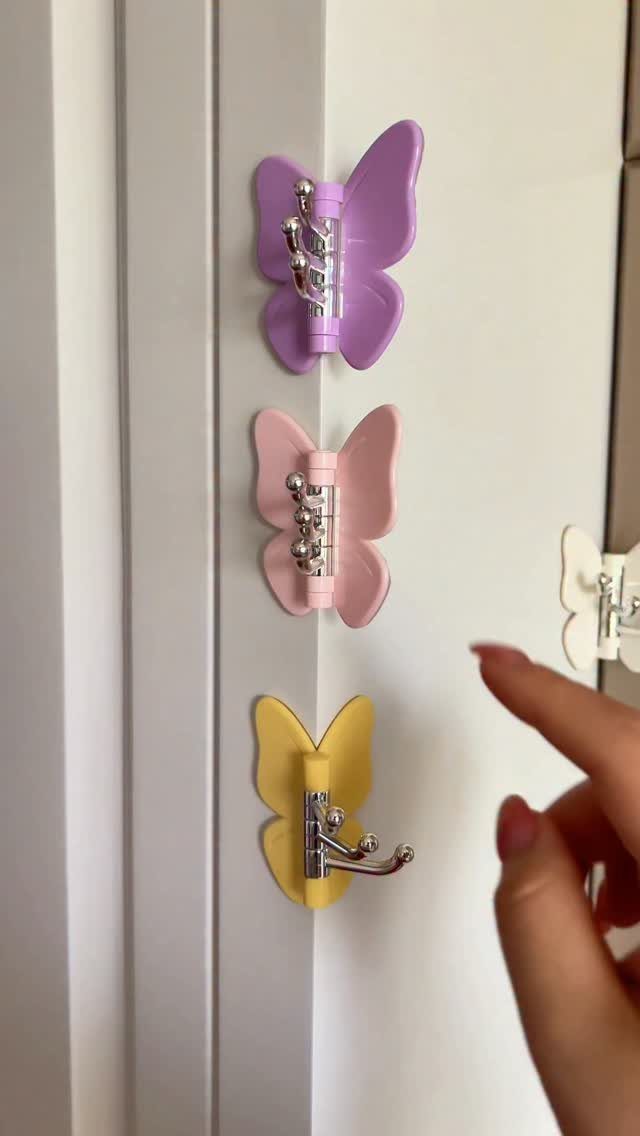
Butterfly-shaped hooks in bright colors turn dead wall space into storage for aprons, mugs, or a dish towel.
I alternate a row of shelves with a row of hooks when the wall is tall enough, or run hooks directly beneath a shelf to hang items that would clutter the surface.
The vertical rhythm breaks up a long wall better than shelves alone. In a narrow kitchen, this setup buys back counter space: mugs on hooks, not in a tree on the counter.
12. Create an Open Pantry
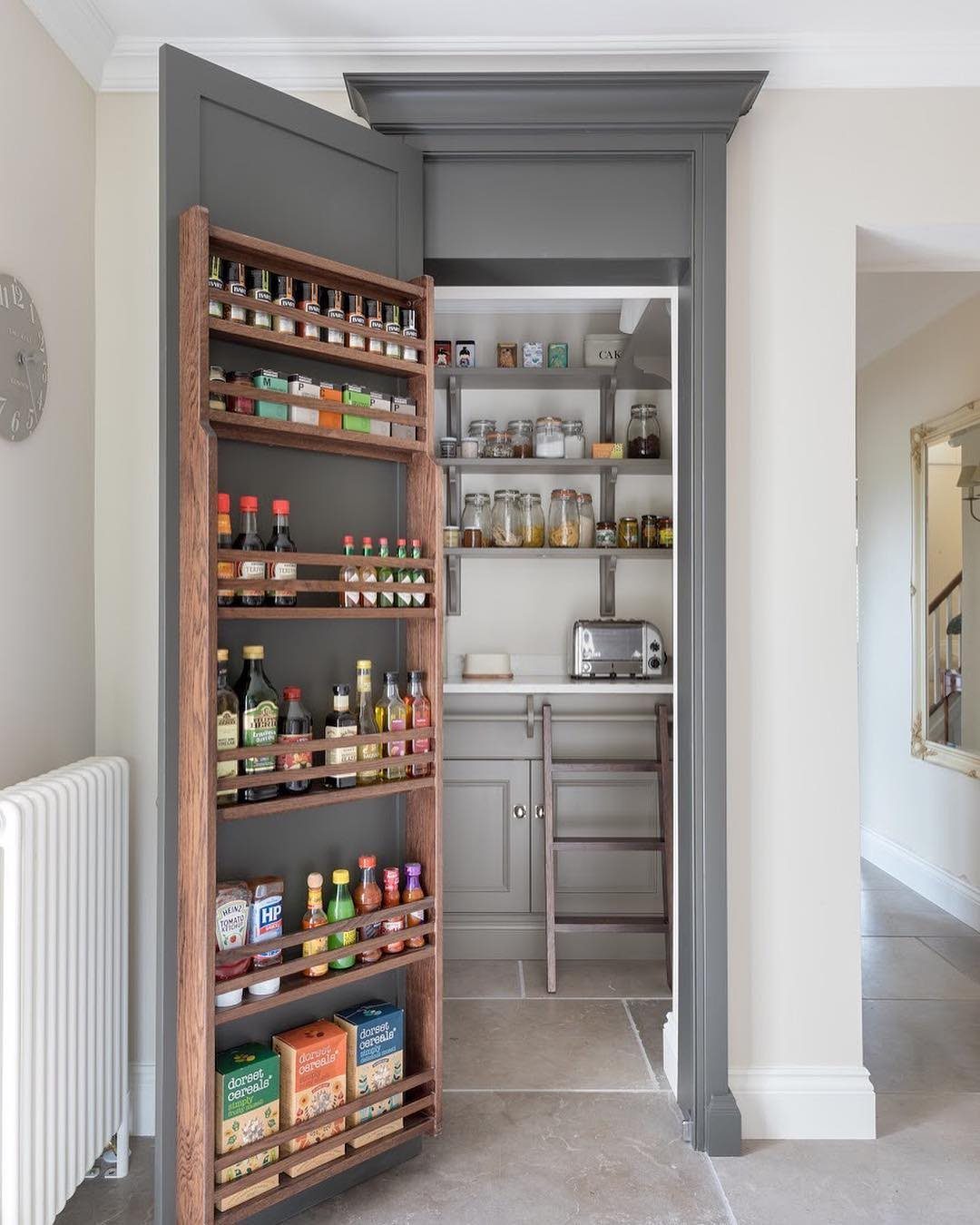
An open pantry lets you see at a glance what you have and what you’re running low on. I transfer staples, nuts, spices, and dried pasta into clear glass jars or labeled ceramic canisters, whatever fits the shelf depth.
One maker of a piece like this pointed to door-mounted storage in Portobello oak as their favorite part, maximizing space that usually goes wasted.
I would do the same: a shallow rack on the back of the pantry door for spice bottles, with deeper shelves inside for jars and small appliances.
Basic shelving and containers keep the cost reasonable, and the real benefit is knowing before you shop exactly what needs replacing.
13. Above Counters
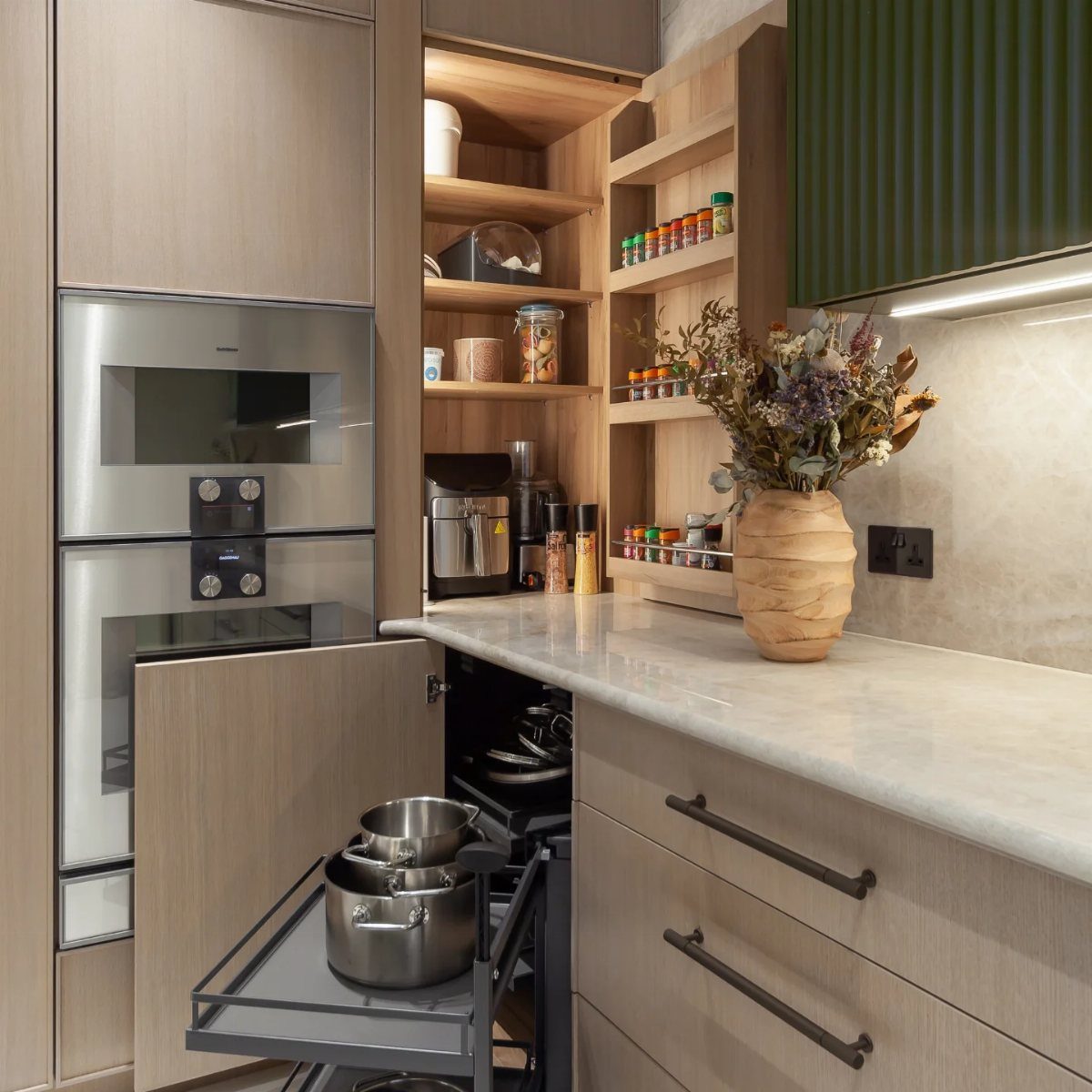
Shelves above counters replace upper cabinets entirely, which keeps everyday dishes and coffee gear where you can actually see them.
White walls or a simple subway tile backsplash do the heavy lifting here; the background stays quiet so your serveware gets the attention. I like this best in kitchens that already feel boxed in by too many cabinet faces.
Open shelves above counters put everything on display, including the clutter cabinets used to hide.
14. Over a Sink
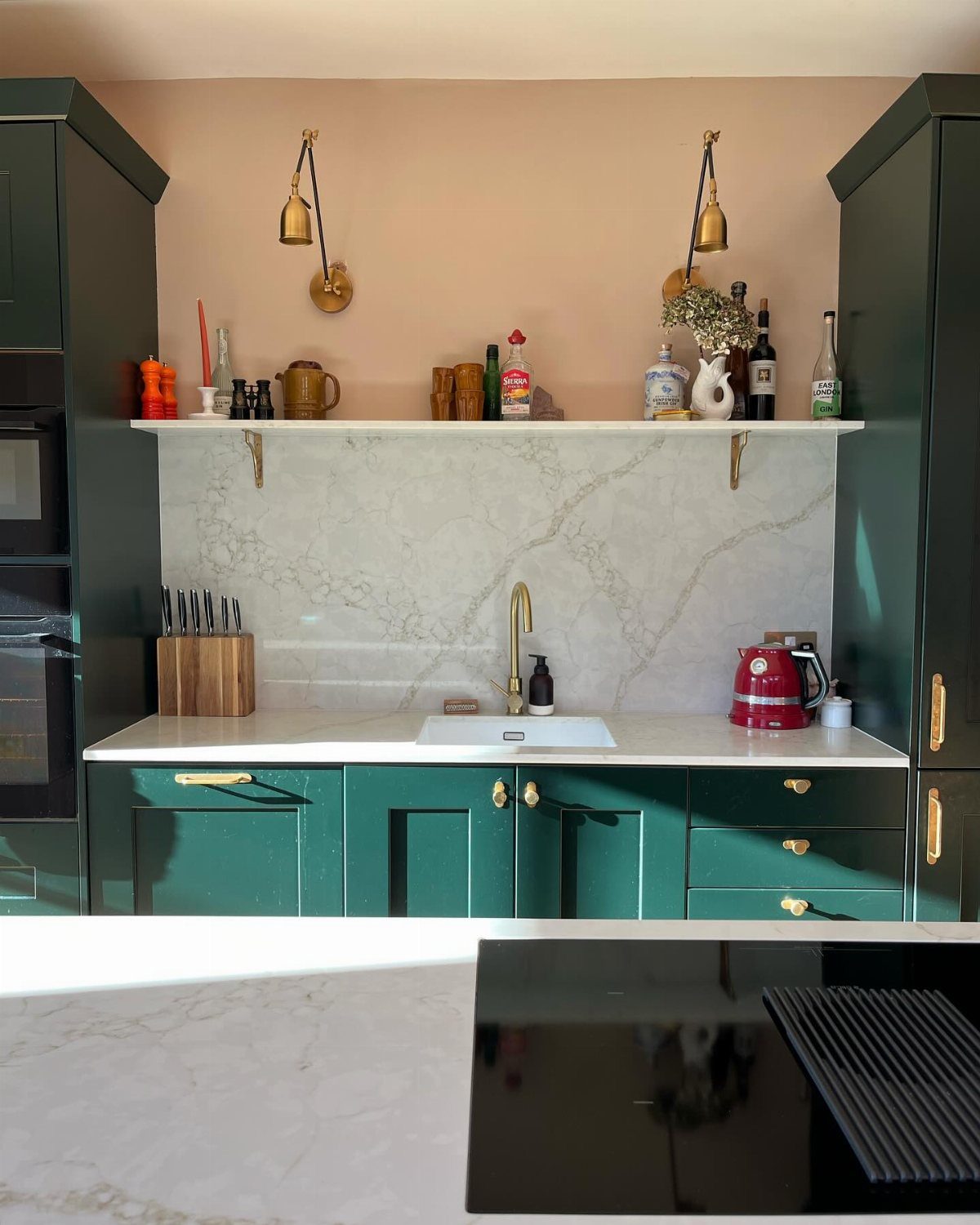
A short cabinet above the sink is easy enough to remove and swap for a single open shelf. Dish soap, a small plant, and maybe a bottle of hand lotion sit right where you reach for them.
The humidity from the sink actually helps keep certain plants happy. Grime builds up faster near cooking zones, so this placement works better over a sink than over a stove.
If you are already wiping the counter daily, the shelf gets the same treatment.
15. In a Breakfast Nook
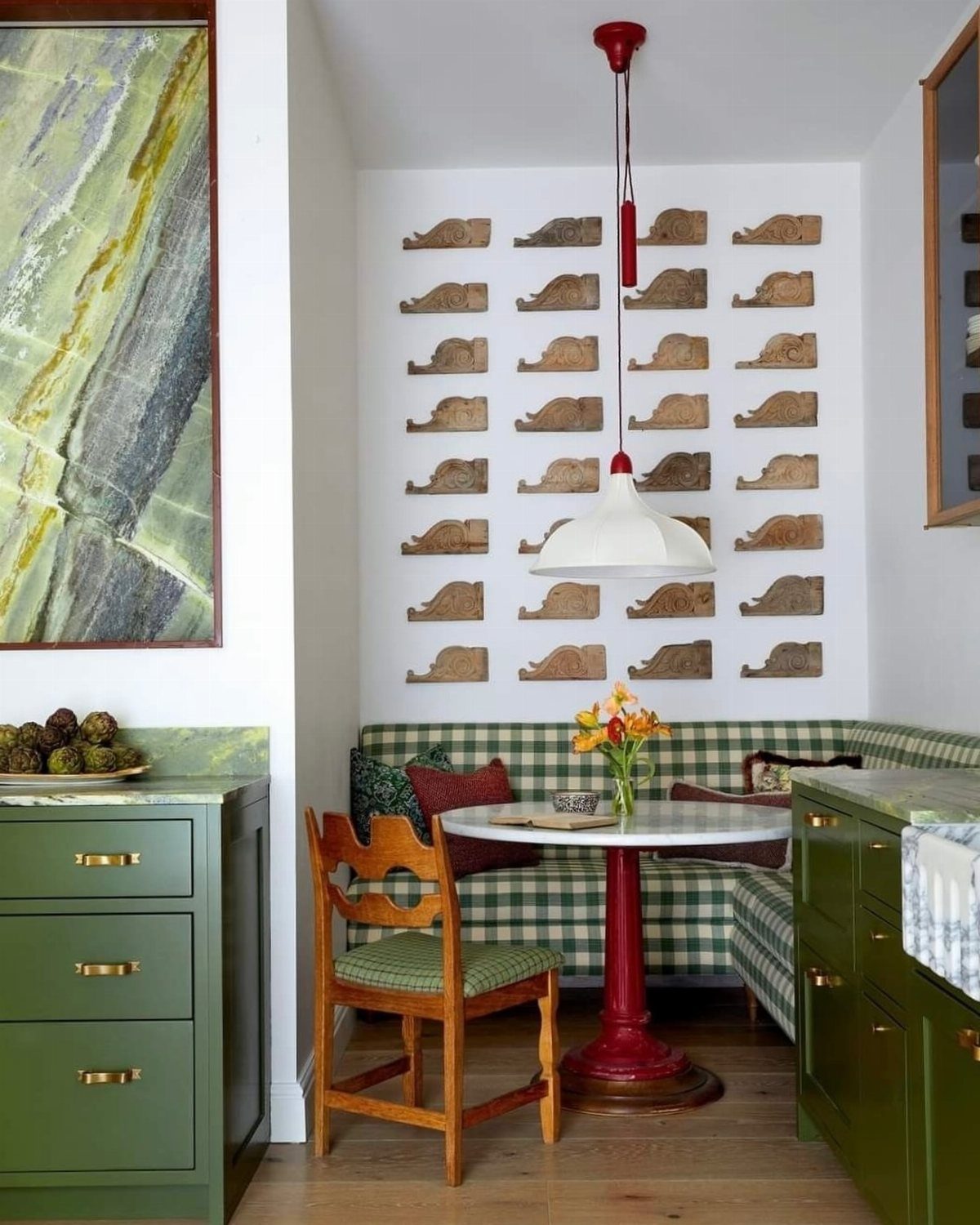
A breakfast nook with bare walls is a natural spot for a row of small floating shelves.
The space is tight, so this is where I would store the carafe for summer sangria or the mortar and pestle that only comes out for weekend projects.
Georgian staircase edgings run along the wall behind these shelves, turning an awkward corner into something intentional. Keep the items large enough to read from across the table; small stuff gets lost against upholstery.
16. Stacking Plates and Bowls
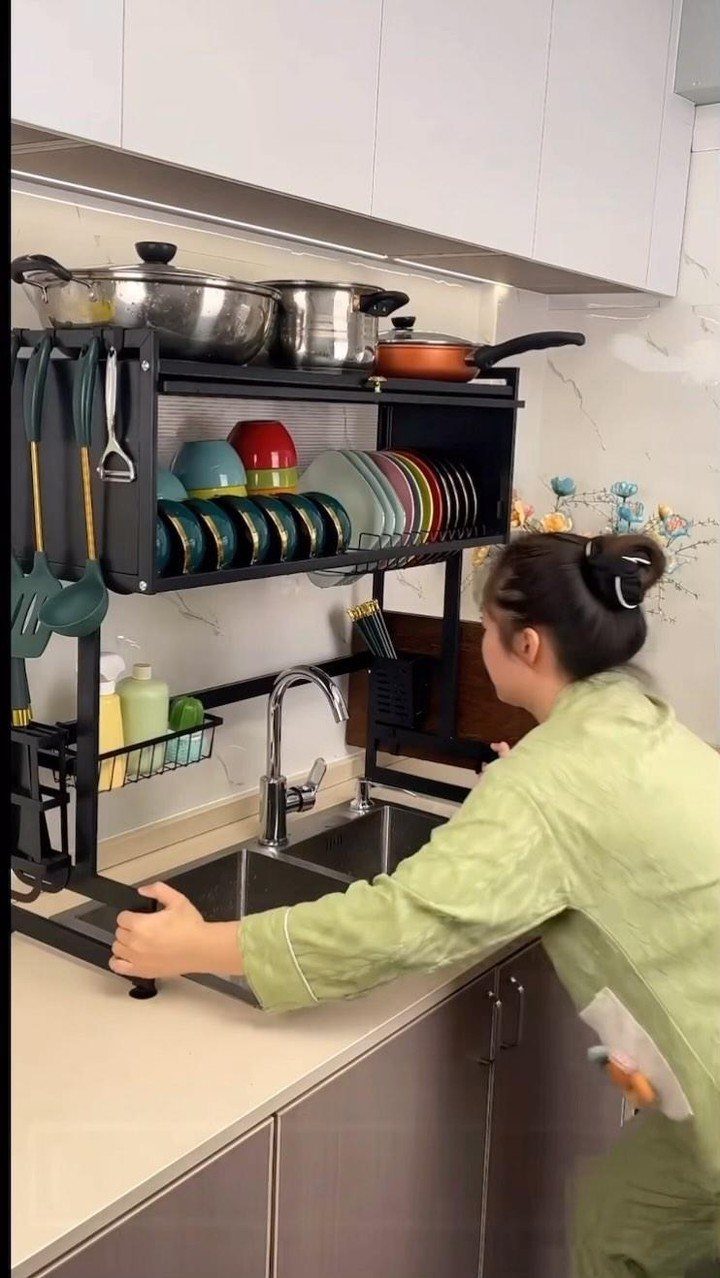
Stacked plates and bowls read as sculpture when you treat them deliberately. Group the same shapes together, dinner plates in a tall column and side plates or bowls in a shorter one beside it.
Varying the heights keeps the row from going flat. Plates with an interesting rim or texture stack especially well because the edge still shows.
Center each stack on the shelf or line it up with the bracket below for a cleaner line. Random heaps undo the whole effect fast.
17. Incorporate Natural Textures
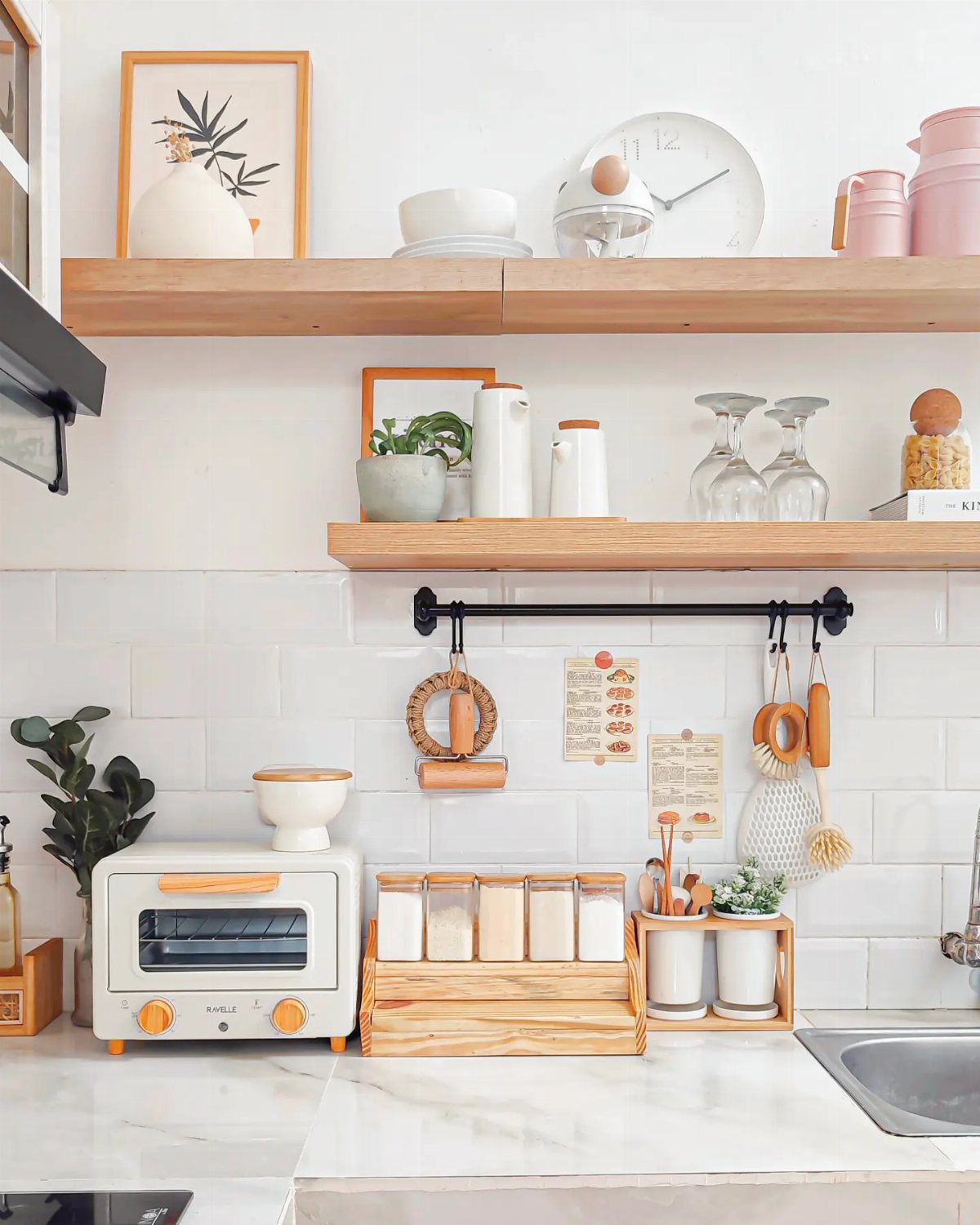
Wood grain on the shelves already adds warmth, so I build from there with ceramic vases, stoneware crocks, or a single linen-wrapped container. The texture layer keeps an all-white display from feeling like a showroom.
One cutting board leaned against the back, a small plant, or a rough bowl is usually enough. You aren’t collecting objects; you’re keeping the eye moving across surfaces that differ.
Smooth white dinnerware against wood and stone does this without trying too hard.
18. Use Colorful Shelves
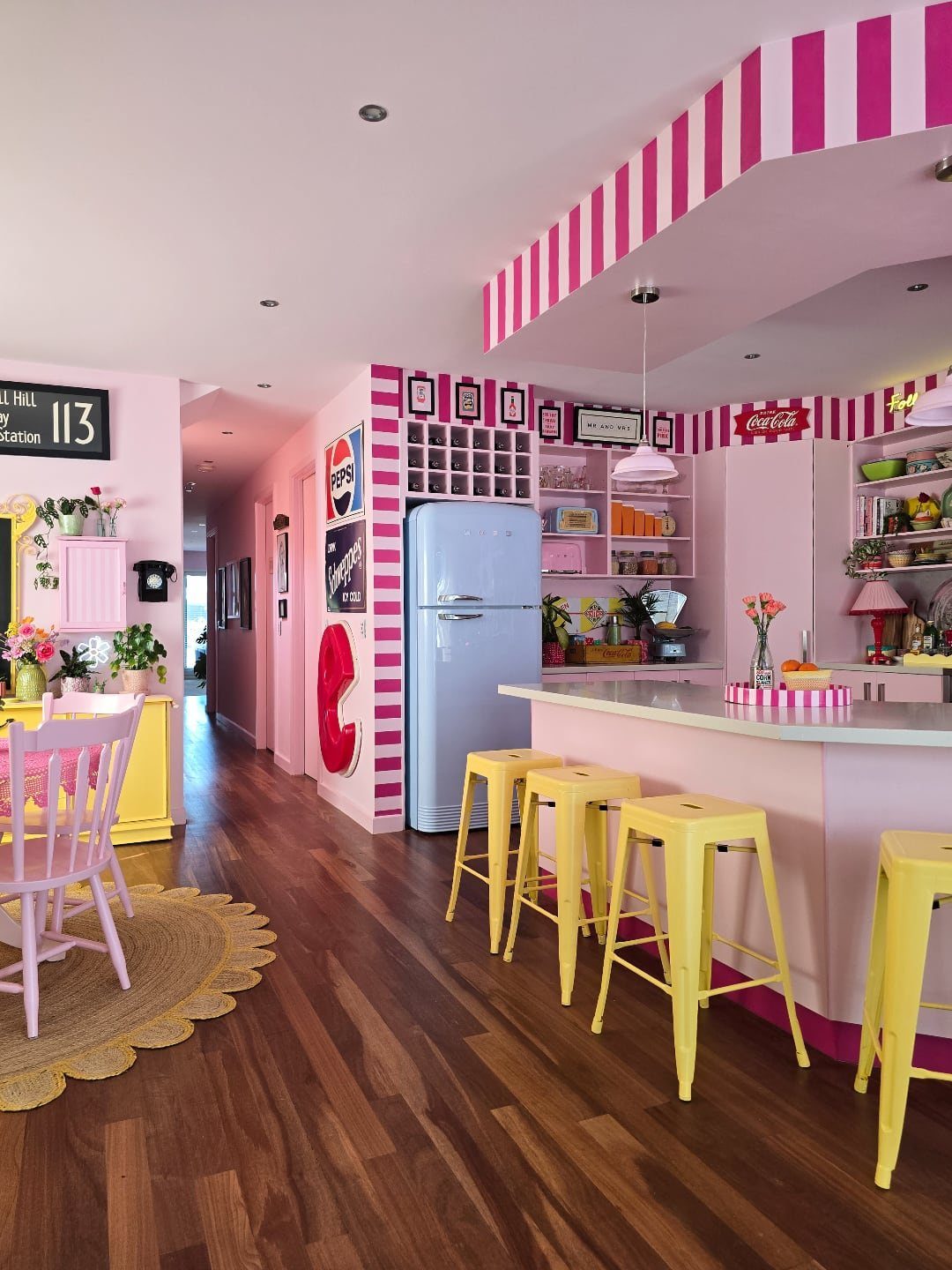
Painting the shelves themselves is a direct way to add personality without committing to a whole colored kitchen. The example goes full pink, but even a single bank of shelves in yellow or soft blue becomes the focal point.
I would balance it with neutral cabinets and countertops everywhere else so the color reads as intentional, not chaotic.
This suits renters who can paint shelves back later or homeowners ready for a weekend project with a quart of paint and a brush.
19. Floating Shelves
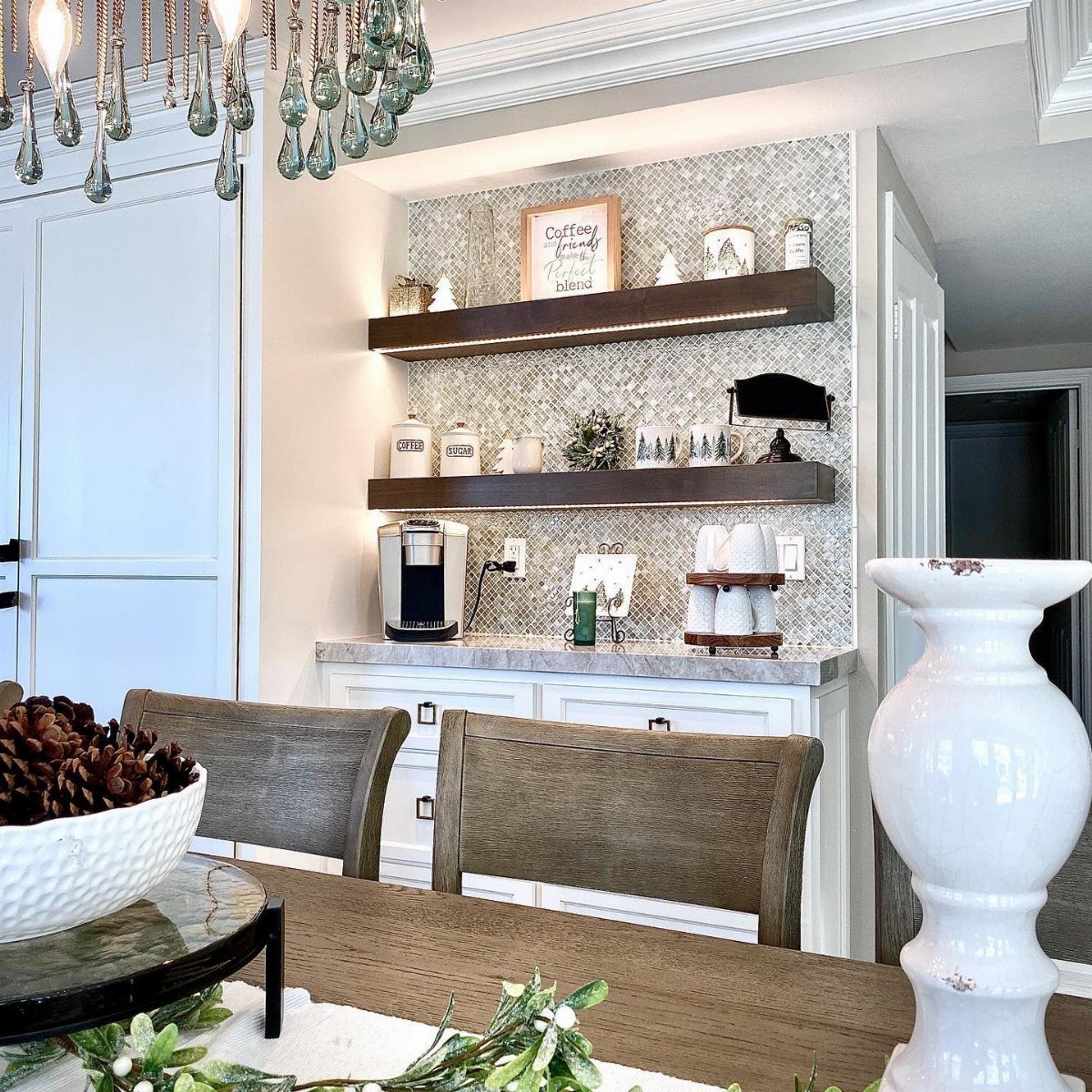
Floating shelves hide their hardware inside the wall, so the board itself looks like it is drifting against the tile. That uninterrupted line suits a small kitchen where every visual break costs space.
I would keep the load light: two or three white canisters, a small bowl, nothing stacked deep. LED strips underneath turn the bottom edge into a downlight for the counter below.
Worth doing if you are already opening the wall to anchor the brackets.
Skip this if you own heavy pottery or collect appliances; the hidden supports have weight limits, and overloading them bends the shelf forward over time.
20. Use Glass Shelves
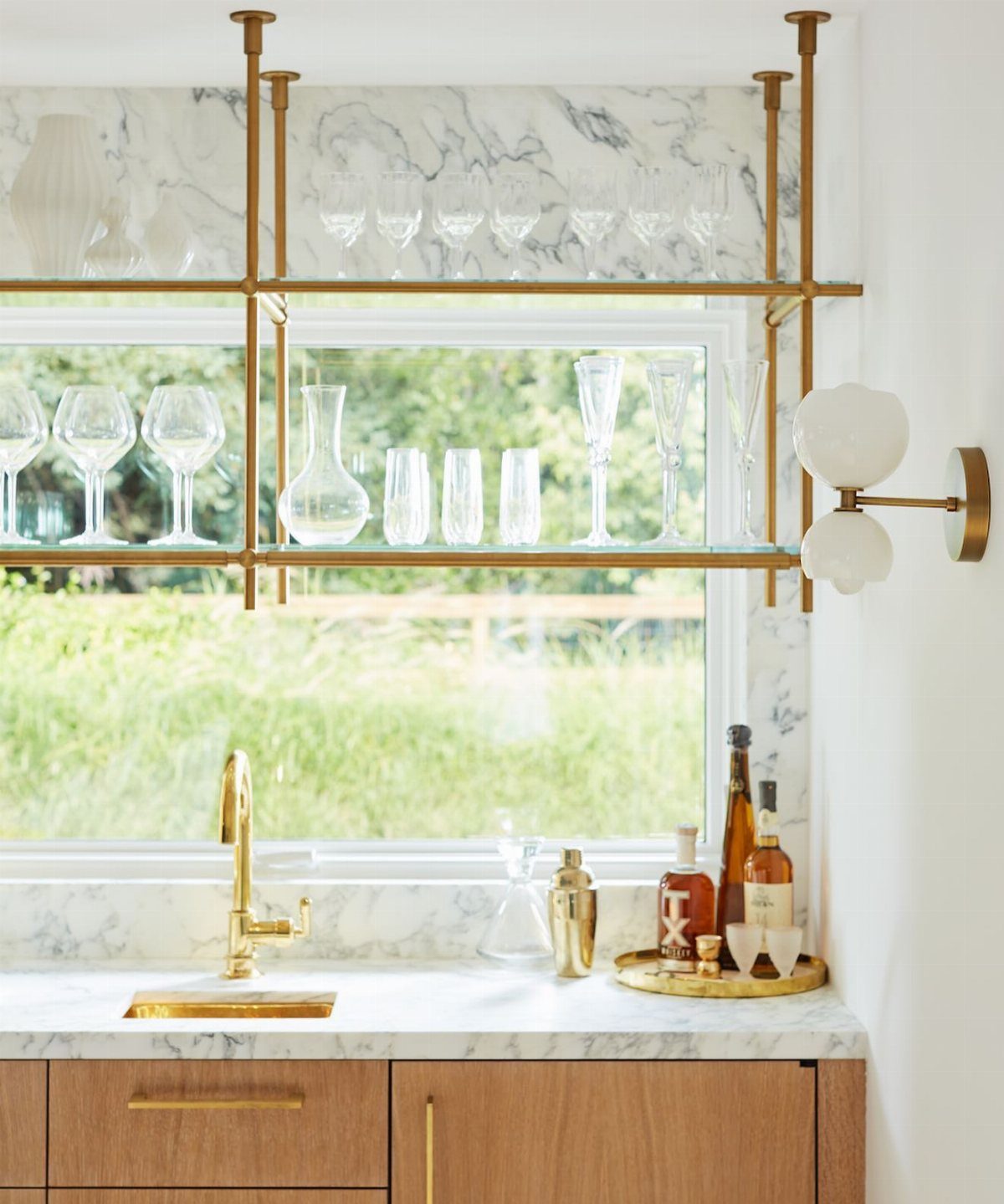
Glass shelves do not block light or wall pattern, which makes them practical above a busy backsplash where wood would look bulky. A gold frame picks up the faucet and keeps the whole wall from feeling cold.
Display only glassware you want to see daily; wine glasses catch light, decanters add height, and both stay clean behind a cabinet door. Wipe the shelves weekly, since dust shows immediately on clear surfaces.
One row is enough for most kitchens; two rows of glass start to read as a shop display.
Small kitchens gain the most here, because the shelves themselves almost disappear.
21. Incorporate Decorative Items
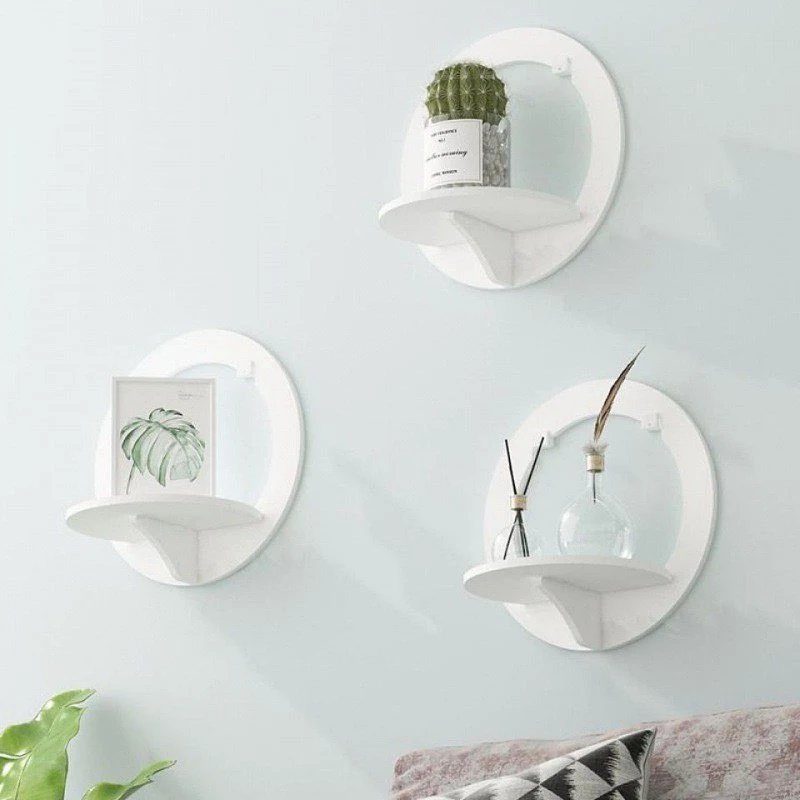
Open shelves work harder when they hold something besides dishes. A round shelf shape helps grouped objects read as a single vignette rather than clutter.
I would limit decorative items to one shelf in a set, or to the ends of a long run. The eye needs a resting place.
If you are nervous about dust, lean a framed print against the wall instead of hanging it; it takes ten seconds to move for cleaning.
This approach suits renters who cannot change the wall color but want the kitchen to feel personal.
22. Add Plants for Greenery
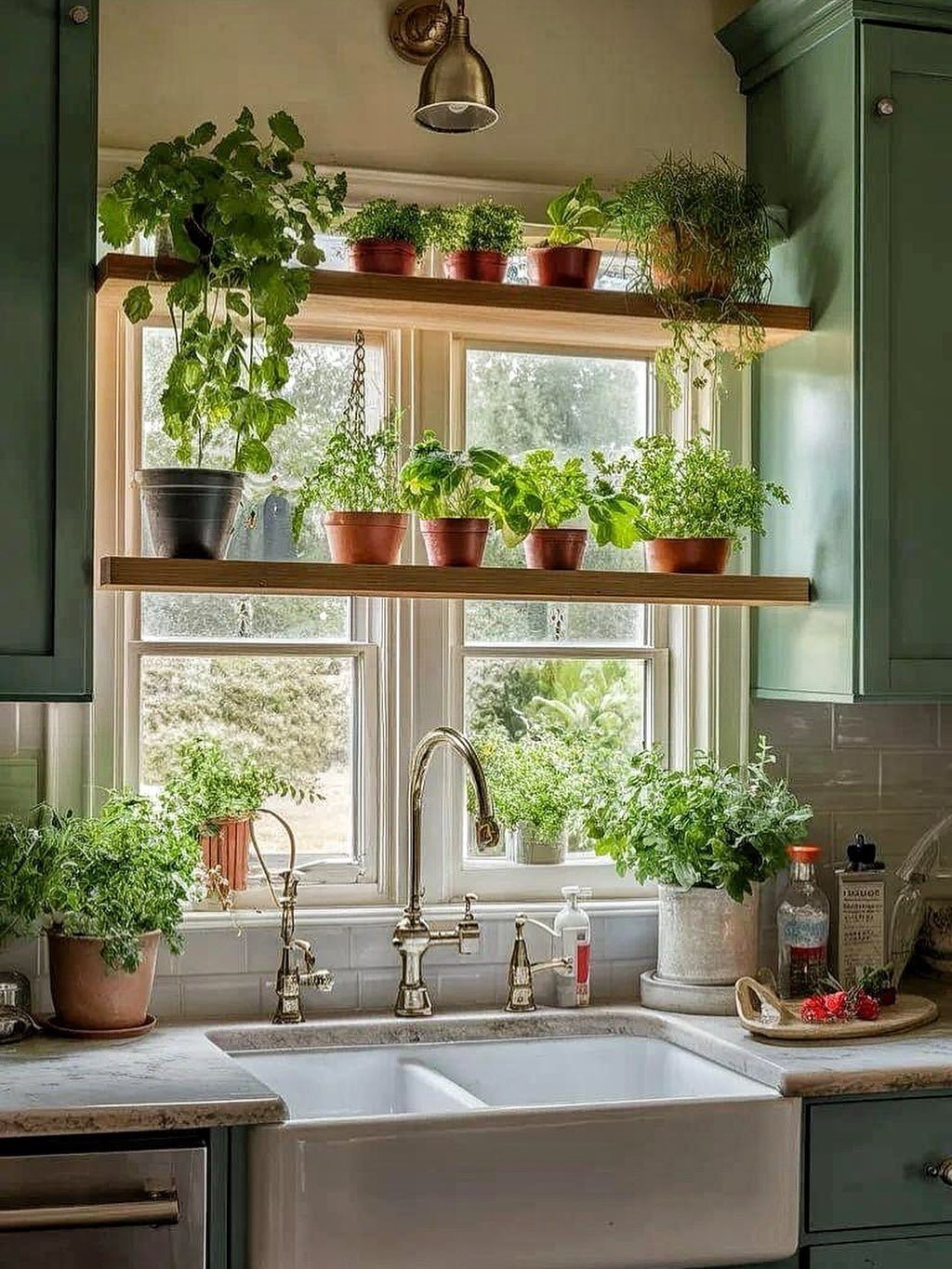
A blank wall above a sink window becomes a view with a line of potted plants on two shelves. Terracotta and dark pots keep the palette from getting too sweet; brass fixtures below warm the whole arrangement.
Choose plants that handle humidity and the temperature swing near a window: pothos, spider plants, and small herbs survive the mist from a sink.
Water them in place with a small can, or set the pots on saucers; the wood will stain otherwise. Hanging a trailing plant from the upper shelf adds height without blocking the window.
This is low cost and reversible, which makes it ideal for a first project.
23. Create a Spice Rack
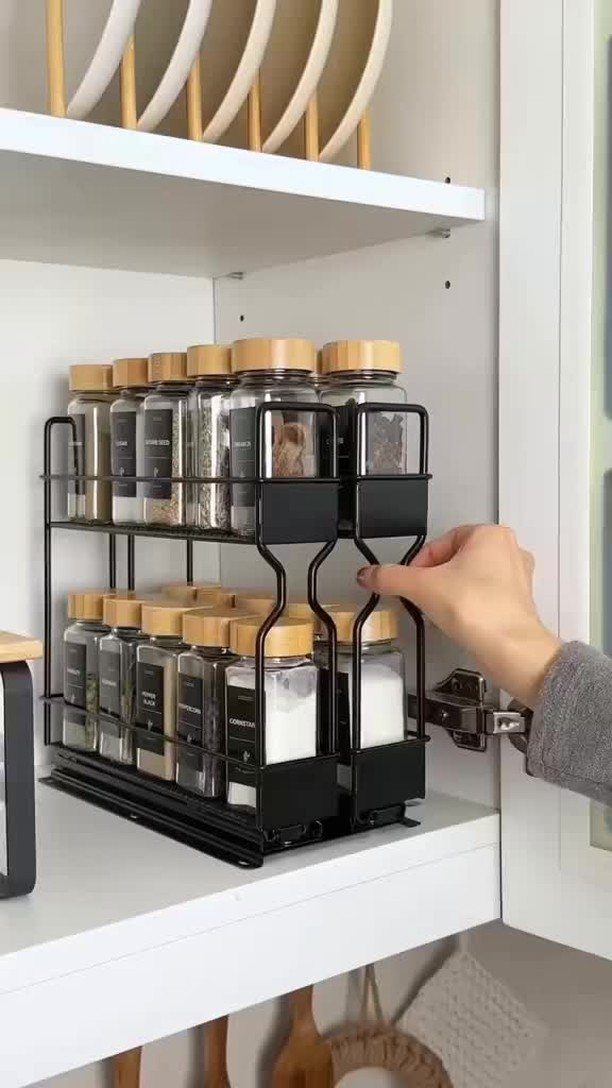
A single narrow shelf above the cooktop, dedicated to spices, gives you open storage without committing the whole kitchen to it. Matching glass jars with black lids read as one unit instead of twenty labels shouting at you.
Transferring spices takes an afternoon and a funnel. I would label the lids, not the fronts, so the row stays calm from below.
Keep only what you cook with monthly; the rest stays in a cabinet. A two-tier frame that sits on the shelf rather than mounting to the wall means you can move it when you clean.
Best for cooks who reach for spices by sight, not by reading a cabinet door.
Styling Tips for Open Shelves
Grouping similar items keeps open shelves from reading as random. I put plates with plates, glasses with glasses, and the eye finds them faster that way.
Clear canisters do the same work for dry goods; you see the contents at a glance and the shapes stay uniform.
Arrangements of three have a way of holding together. Two items feel like a pair that lost its mate, four starts to look like a crowd, but three sits still.
I use this for small clusters: a pitcher between two cups, a stack of bowls with a single plate leaning behind it.
If your everyday dishes are not attractive, swap them. Thrift stores carry simple white plates that read clean on a shelf and cost little enough to replace when one breaks.
For households with kids, unbreakable dinnerware in plain colors exists now and looks grown-up.
The amount of open shelving you install sets the tone. More shelves with casual styling lean eclectic; fewer shelves with tighter spacing read modern.
Match the bracket style to the rest of the room, or skip brackets entirely for floating shelves that disappear.
Maintaining Open Shelves
Open shelves demand the discipline that cabinets do not. Everything sits in view, so the plates and bowls you use daily become part of the design whether you planned it or not.
The mistake is treating them as hidden storage. Mismatched items, rarely-used pieces, and too much decoration turn the shelves into clutter instead of a feature.
For my own shelves, I stick to the daily rotation: plates, bowls, mugs, and a couple of serving dishes that see regular use. Convenience improves, and the shelves look intentional without extra effort.
Matching or coordinating the everyday dishes cuts down on visual noise and makes putting things back almost automatic. White stacks against white stacks, or one color family throughout, keeps the rhythm calm.
Space between items matters as much as the items themselves. A deliberate gap between stacks lets the eye rest.
Even ordinary dishes look chosen when they are not crammed shoulder to shoulder. The clean line that results reads contemporary without trying hard.
Dust settles on what sits still. I rotate through displayed pieces in normal use and wipe the shelves when I unload the dishwasher.
The maintenance stays small because the habit is already there.
Frequently Asked Questions
How to make open kitchen shelves look good?
Create balance with color and texture rather than cramming every surface. One natural element, one smooth, and one matte usually covers it; restraint reads as calm.
Group similar items together and keep arrangements to three objects, which holds together visually better than two or four.
What to put on an open shelf in a kitchen?
Everyday dishes, glassware, and the four or five things you reach for daily work best. Clear canisters for dry goods, a small plant, and one or two decorative items keep the look intentional.
Save bulky appliances and visual clutter for closed cabinets.
Are open shelves in kitchens still in style?
They still work best in kitchens where rows of cabinet doors start to feel like walls. Pick the style that matches how you actually cook and what you can spend, not the one that looks best in a photo.
What are some ideas for kitchen cabinets with open shelving?
Open shelves paired with standard cabinets on the same wall need colors that talk to each other, not compete. Use the open portion for daily bowls and plates, and put bulky items behind glass or solid doors.
A long stretch of open shelving with a short cabinet section in the middle breaks the wall up so it feels lived-in, not staged.