
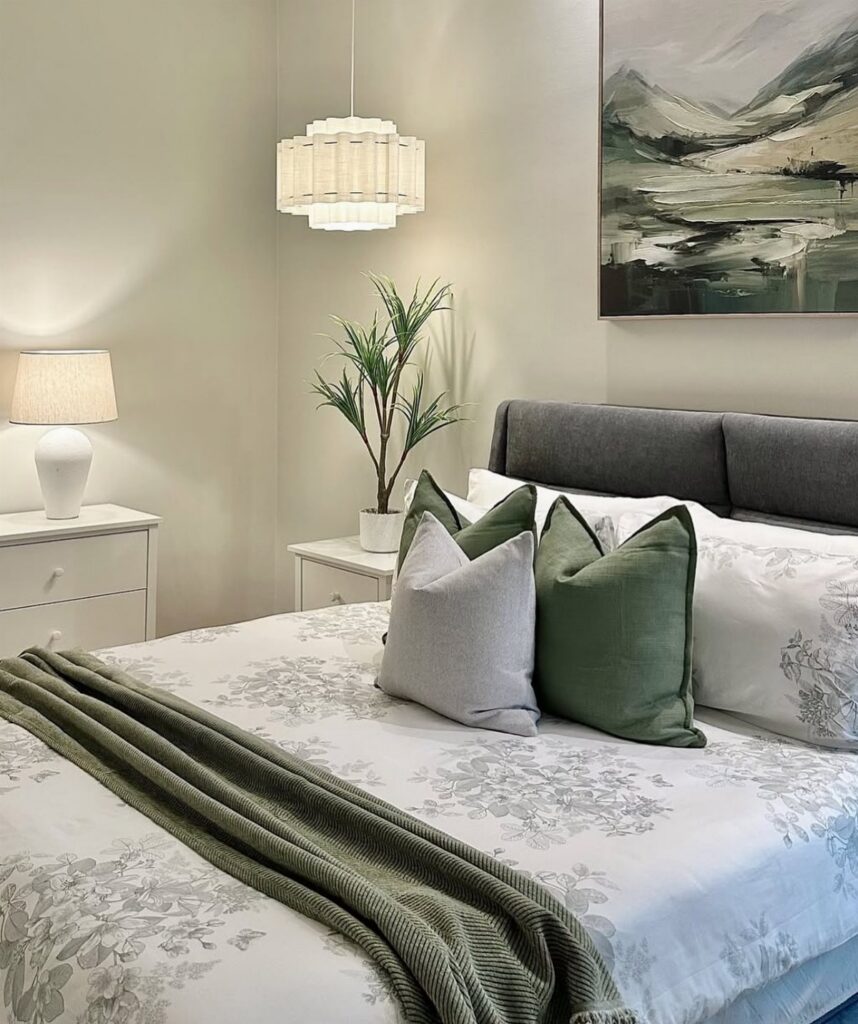
What picks your idea is whether you need the change to move with you or stay put: renters get layered lighting and peel-and-stick molding strips, first-home owners get paint and fixture swaps.
Farrow & Ball’s Archive, a warm taupe, appears in the mix for anyone ready to commit to a wall color.
1. Layered Lighting

A bedroom with only an overhead fixture feels flat by nine o’clock. A ceiling light alone makes every evening feel like a waiting room, so layers matter.
Start with a floor lamp in the corner opposite your bed, tall enough to throw light over a shoulder, then add a table lamp on the nightstand with a warm bulb.
A statement overhead piece anchors the room, but the real comfort comes from having light at multiple heights you can switch on as the night settles.
This suits renters best: lamps move with you, and no wiring changes needed.
2. Personal Touches
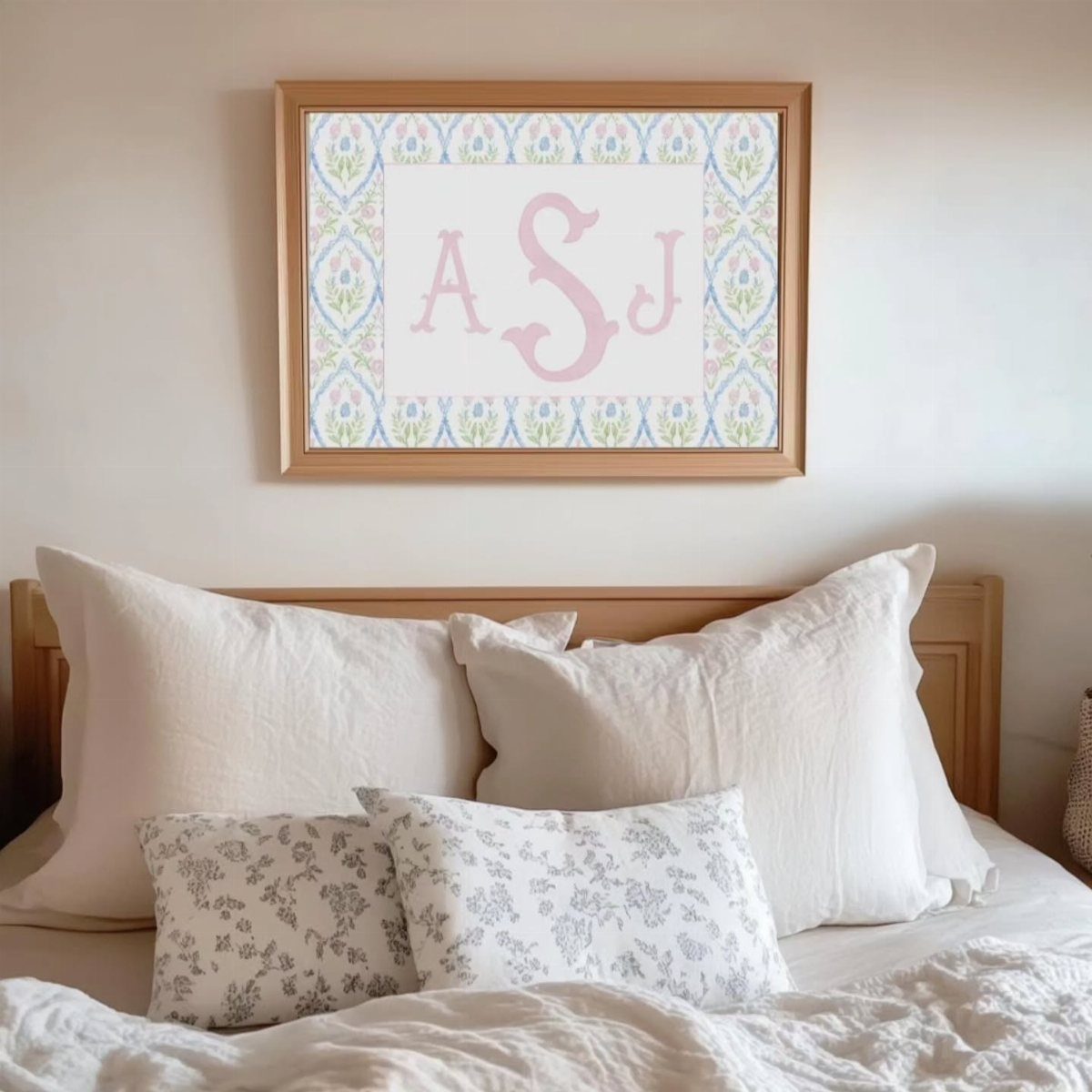
A monogram above the headboard is not my style, but the principle of one personal piece there is solid.
A grey and beige bedroom can slip into feeling like a hotel corridor if nothing in it came from an actual life.
I hang one piece that means something, a photograph I took or a print from a trip, and keep the frame simple so it does not compete with the neutral walls.
A marble-topped nightstand, as one designer used, adds weight and texture without adding color; the veining picks up both tones in the room.
That small luxury, the stone beside your bed, costs more than wood but survives moves and changing tastes.
If your budget is tight, thrift the table and add the marble yourself with peel-and-stick tile cut to fit.
3. Clutter-Free Space
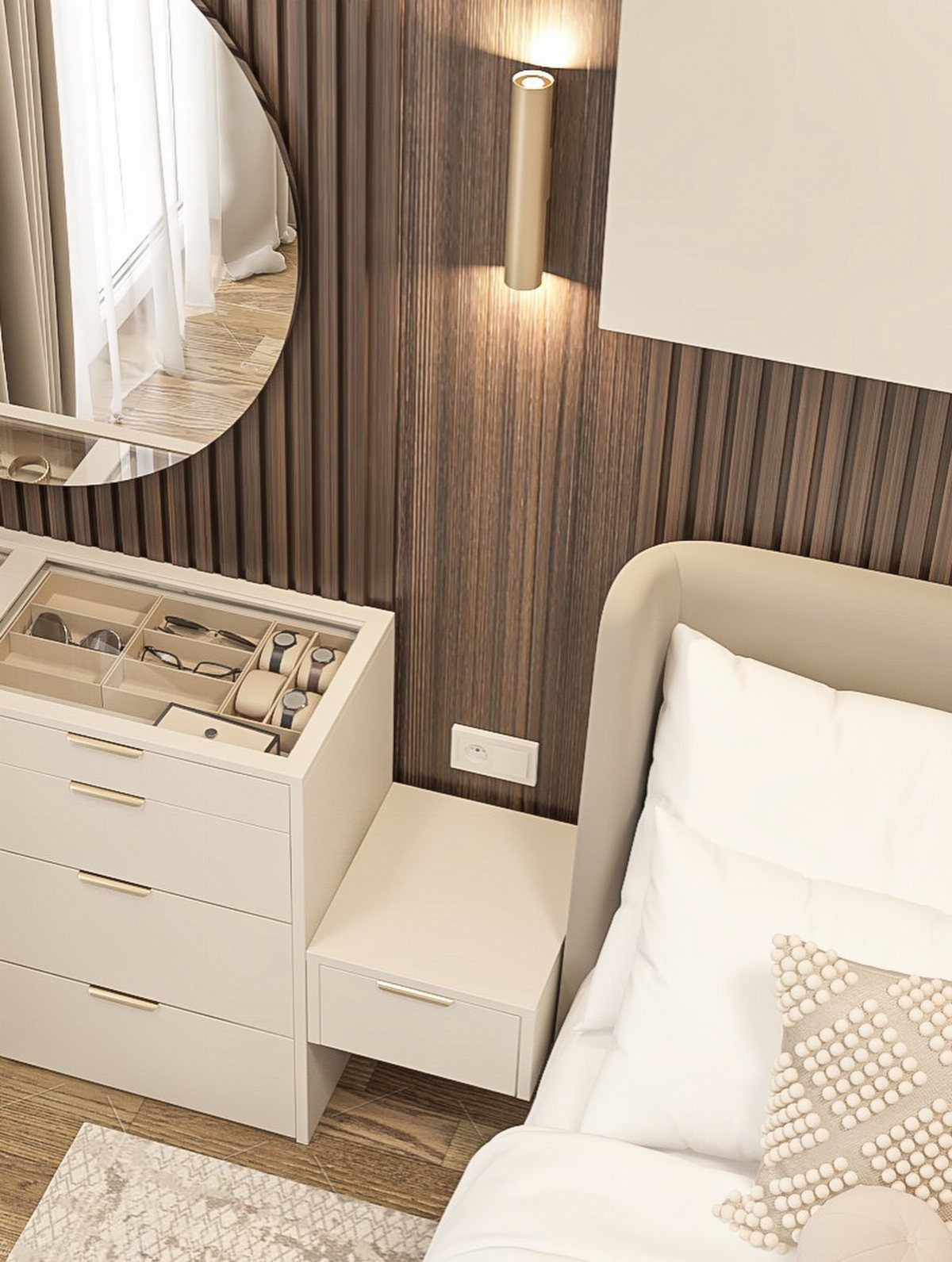
Baskets under the bed, bins on shelves, a nightstand with a drawer rather than an open shelf: these are the pieces that keep beige and grey from reading as bland.
The calm of the palette depends on everything having a place. Clothes that match the walls but never make it to the hamper still read as clutter; a hamper that fits the space helps.
Spend your weekend budget on one lidded basket and a drawer organizer. The rest can wait.
4. Finishing Touches
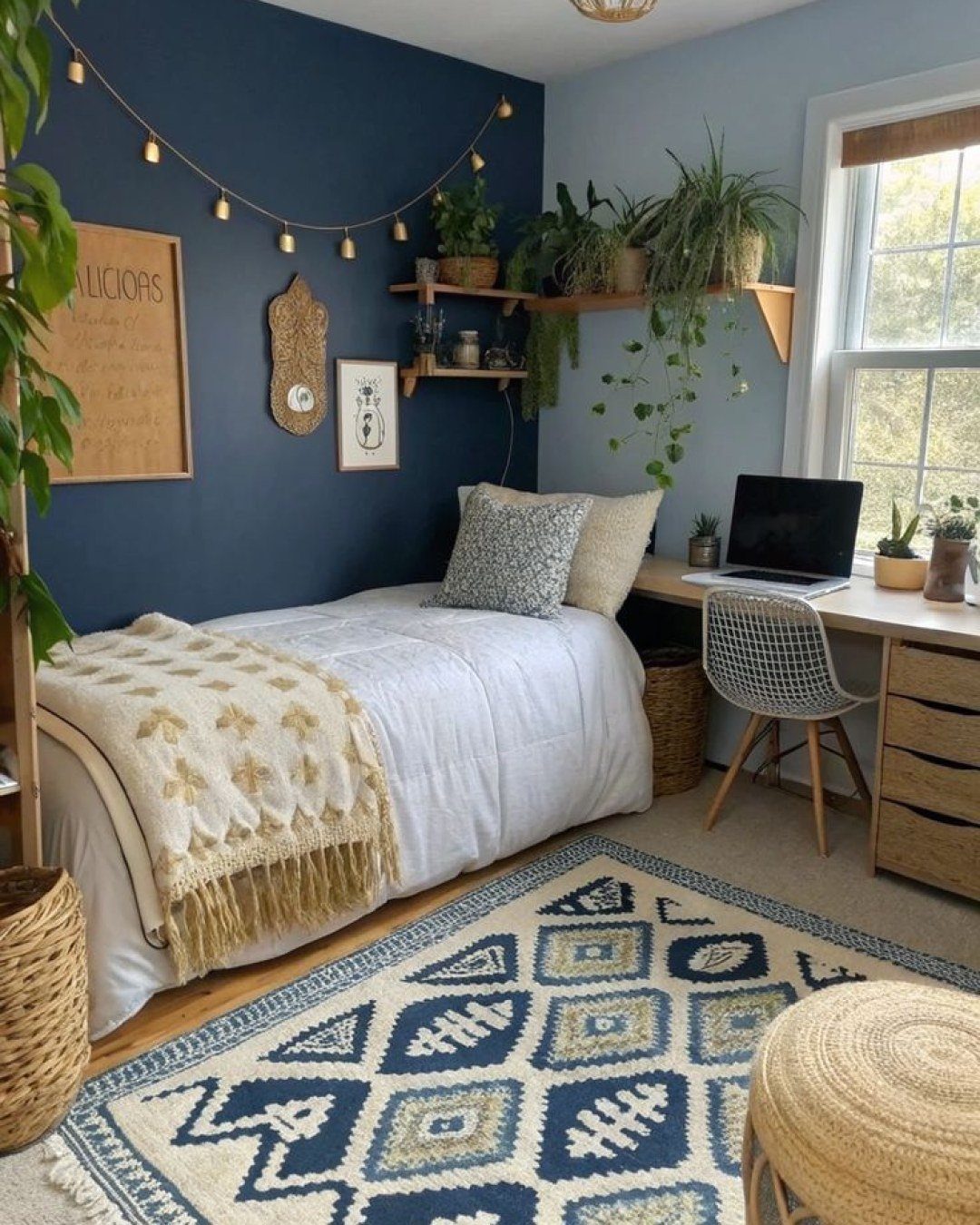
String lights and a throw can read as dorm room if the proportions are wrong. Navy walls anchor whimsy, and lights that trace a shape rather than draping everywhere keep the look intentional.
In a grey and beige room, I keep decorative accents to two or three per surface. A candle, a small vase with whatever is drying in the yard, a stack of books with a color that holds the grey.
Fresh flowers need replacing often; dried grasses last longer and cost less. A patterned throw works when the bed is otherwise plain; add pattern everywhere and the eye has nowhere to rest.
One good object beats five adequate ones. I buy fewer things now and move them around more.
5. Layering Textures
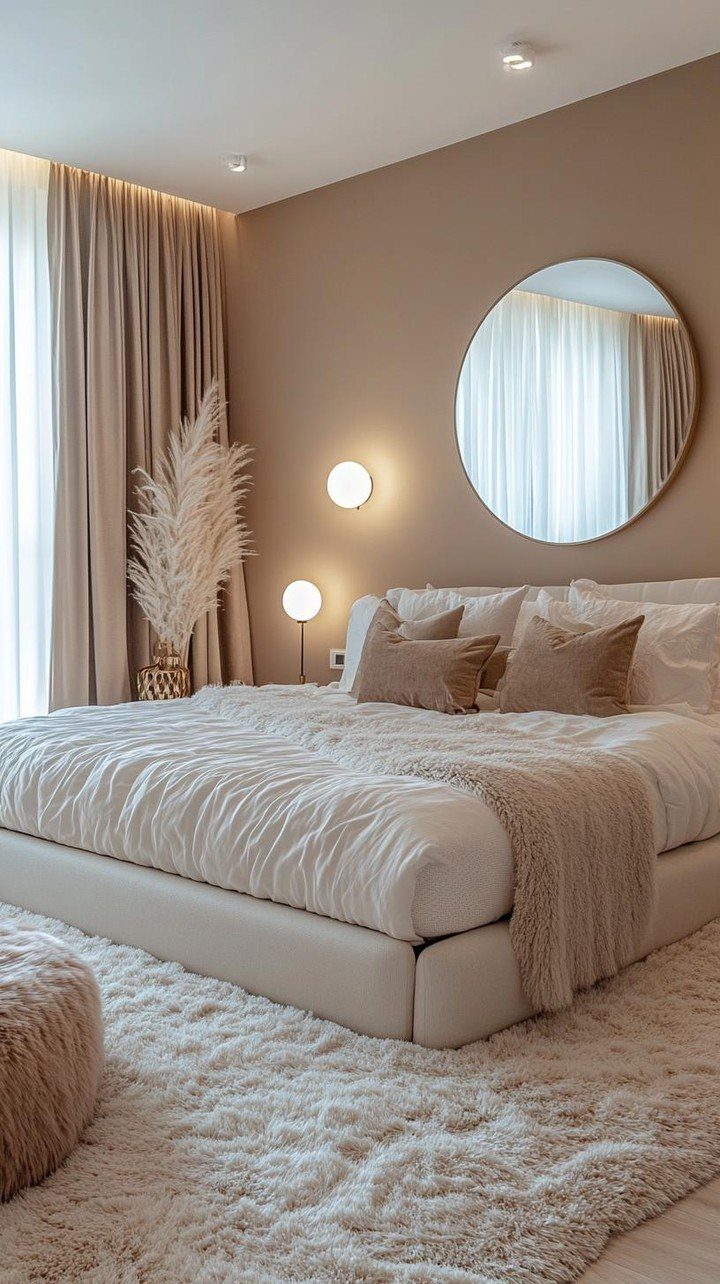
Texture is how you keep neutral from meaning boring. A chunky knit, a shaggy rug, and linen that looks slept in, all in a narrow range of beige and off-white, keep the layering from feeling busy.
I start with the bed: a cotton or linen duvet in one tone, then a throw in something nubbier, like a loose knit.
The rug comes last, after I have lived with the room for a week and know where my feet actually land. Velvet bedding adds a different kind of depth, more formal than a casual weave; both work, but not together.
Taupe walls, like Farrow & Ball’s Archive, warm a grey room when you are ready for paint. Until then, textiles do the same job with less commitment.
6. Grey and Beige Gallery Escape
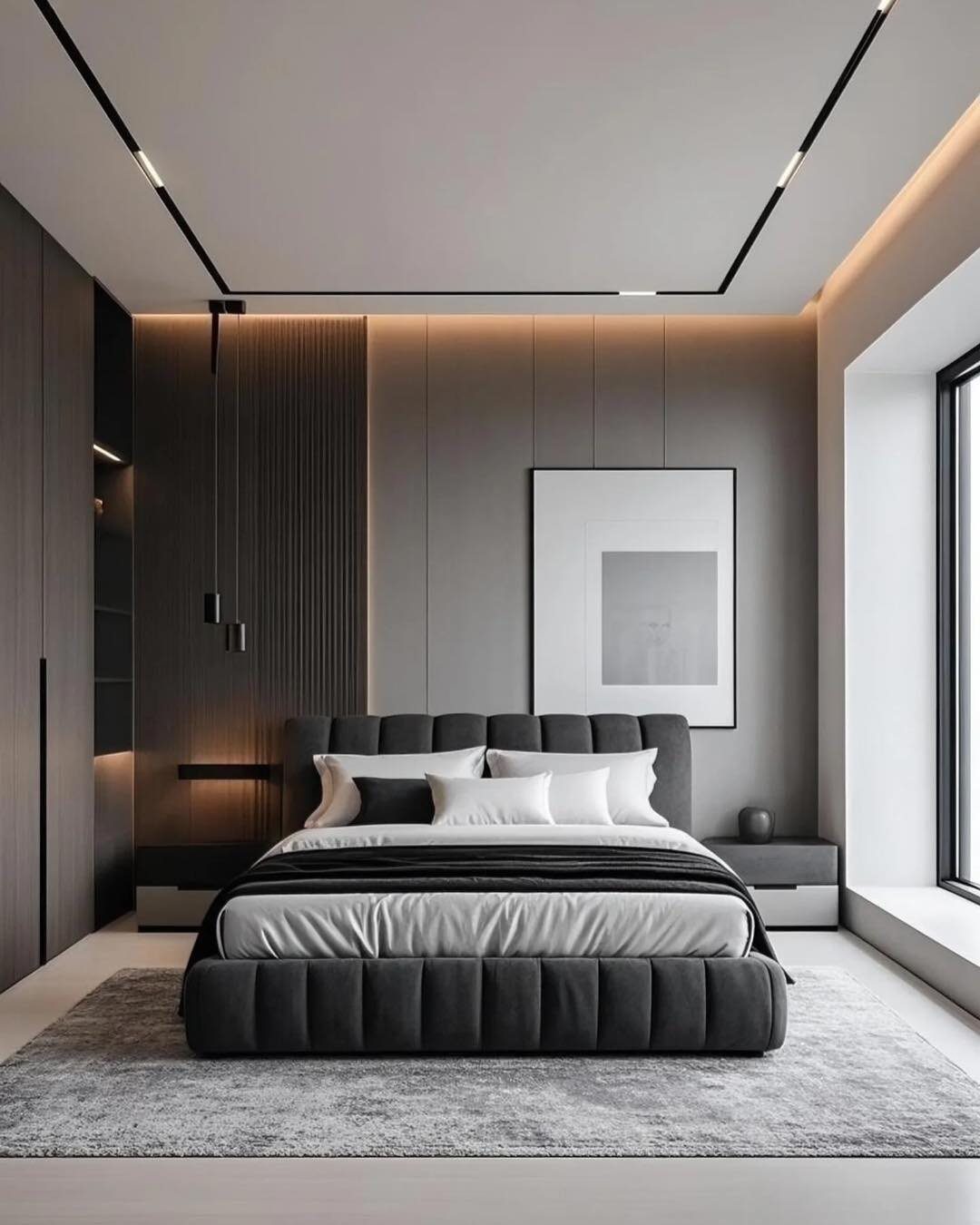
A gallery wall sounds like more work than it is. One large piece where a cluster might go is its own kind of choice.
For a grey and beige bedroom, I collect frames in three finishes, oak, black, and brass, and keep the art inside them abstract or photographic, never both in the same room.
Vertical paneling adds architecture that a flat wall lacks; if you are renting, peel-and-stick molding strips come down with a hair dryer.
One designer hung a round mirror above the bed to break up the rectangles, a move I have copied in smaller rooms where a full gallery would crowd.
Start with a tight cluster of pieces and build from there if the wall calls for more.
7. Coastal Greige Retreat
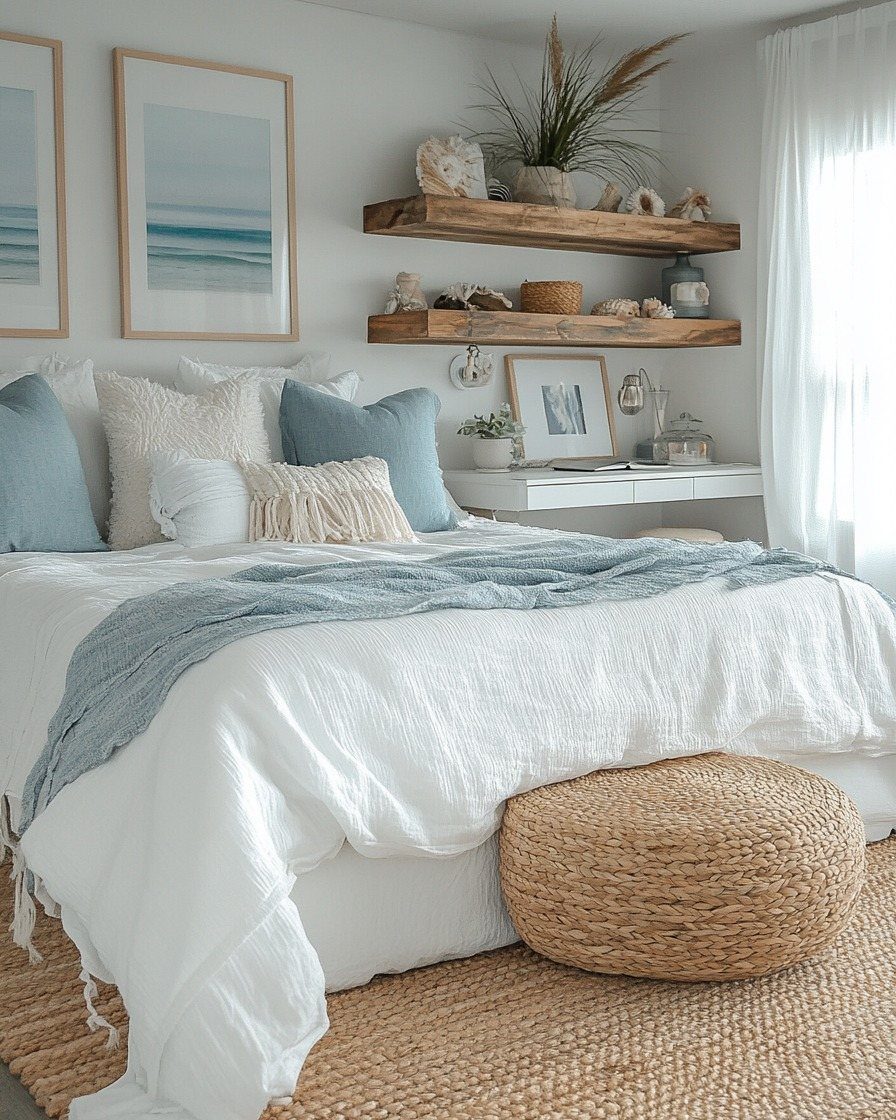
A jute rug and muted coastal art finish the look without cluttering a small room. Grey beadboard runs at most home centers, and one weekend covers the install if the wall is already smooth.
Best for someone who wants a beach-house mood without literal anchors and ropes.
8. Scandinavian Minimalist Chic
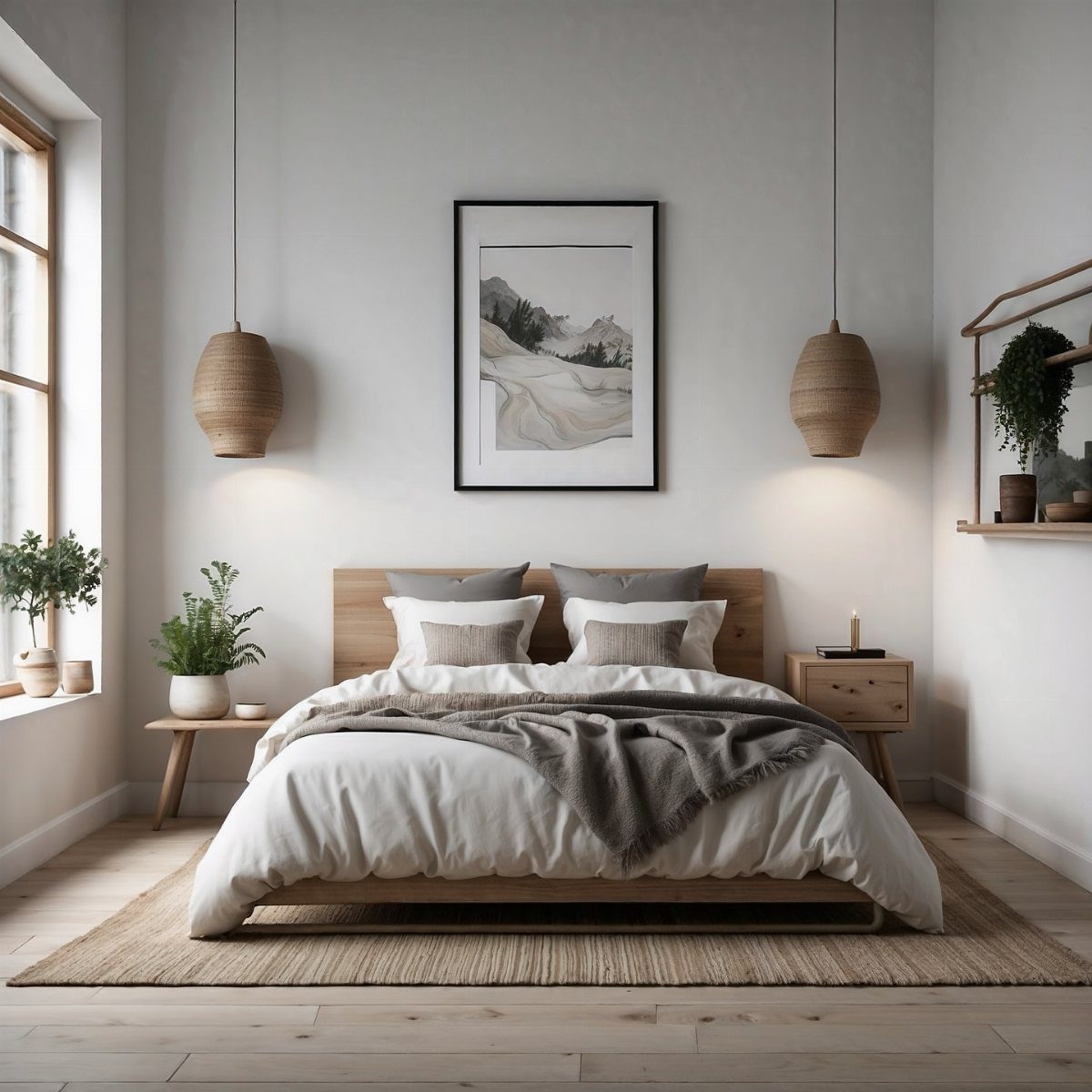
Scandinavian minimalism lives in the balance between warm and cool. Light grey walls keep the space from going flat; a beige panel accent behind the bed adds the warmth that pure grey-and-white rooms often miss.
Wooden pendant lights work, but sleek white furniture on the storage pieces keeps the airiness intact. Abstract line art in a symmetrical trio above the bed costs little and anchors the wall without weight.
I’d skip this one if you need hidden storage; the look trades drawers for openness.
9. Cozy Seating Area

A bedroom seating corner turns leftover floor space into somewhere you actually sit.
A tan lounge chair by a fireplace works, but the same move works with any comfortable armchair or chaise, a small side table, and a reading lamp with a warm bulb.
Position it near a window if you have one; natural light matters more than the furniture cost. A used armchair reupholstered in grey or beige linen costs less than a new mid-range piece.
Beige curtains show the right weight: heavy enough to frame the corner, light enough to filter morning light.
Small bedrooms still fit this; a compact chair and narrow table need only a tight corner.
10. Pebble & Cream Luxe
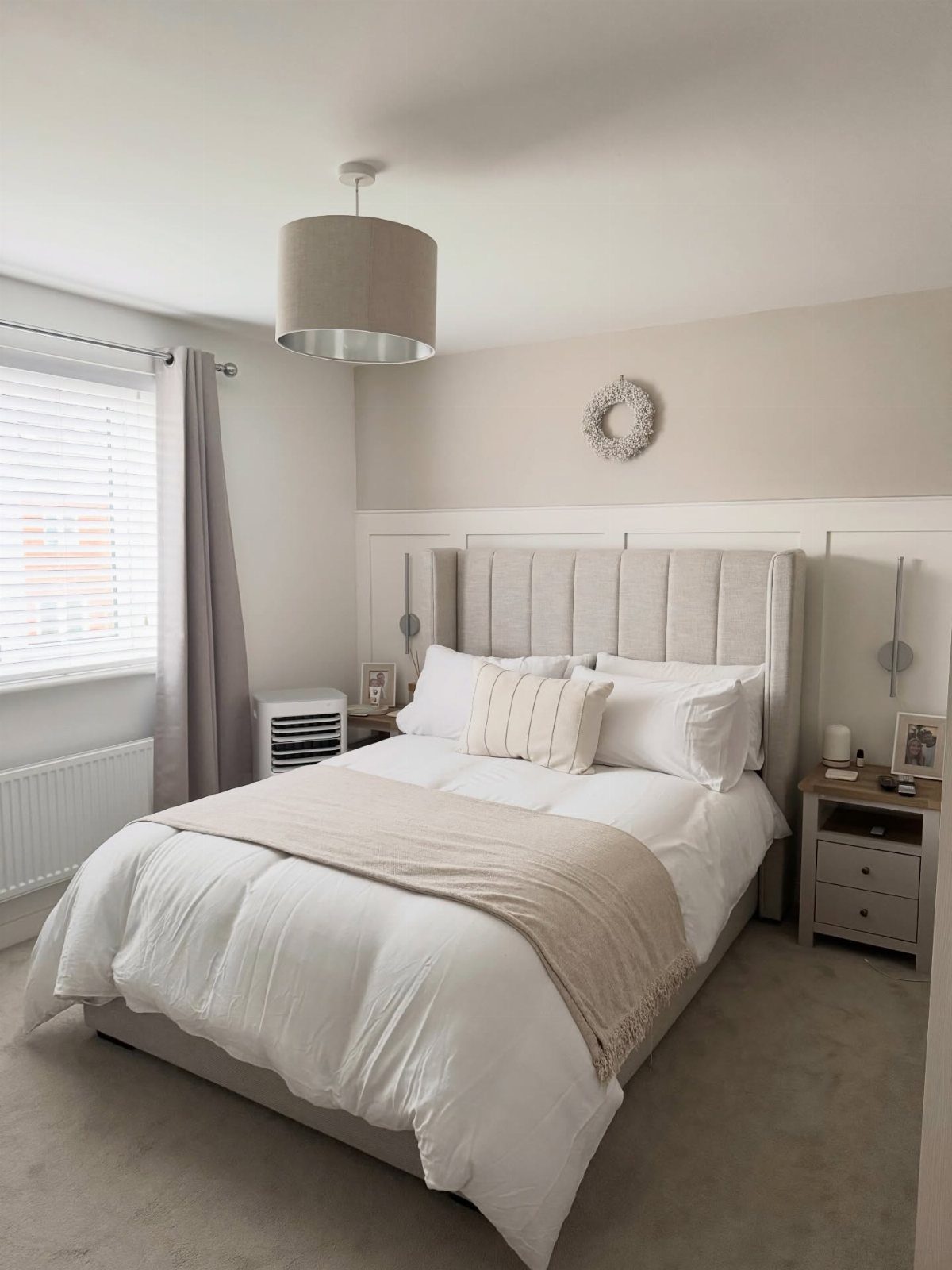
A beige upholstered headboard softens the transition between wall and bed; grey drapes at the windows repeat the wall tone and frame the light.
This is the entry point for someone nervous about color. Pebble grey sits so neutral it almost reads as a warm white in morning light, and cream bedding forgives the slight variations in dye lot that cheaper sets often have.
A grey drum pendant installs in an afternoon if you swap an existing fixture.
The trade is polish for personality; add one textured throw or the room goes hotel-generic.
11. Grey, Beige and White Bedroom
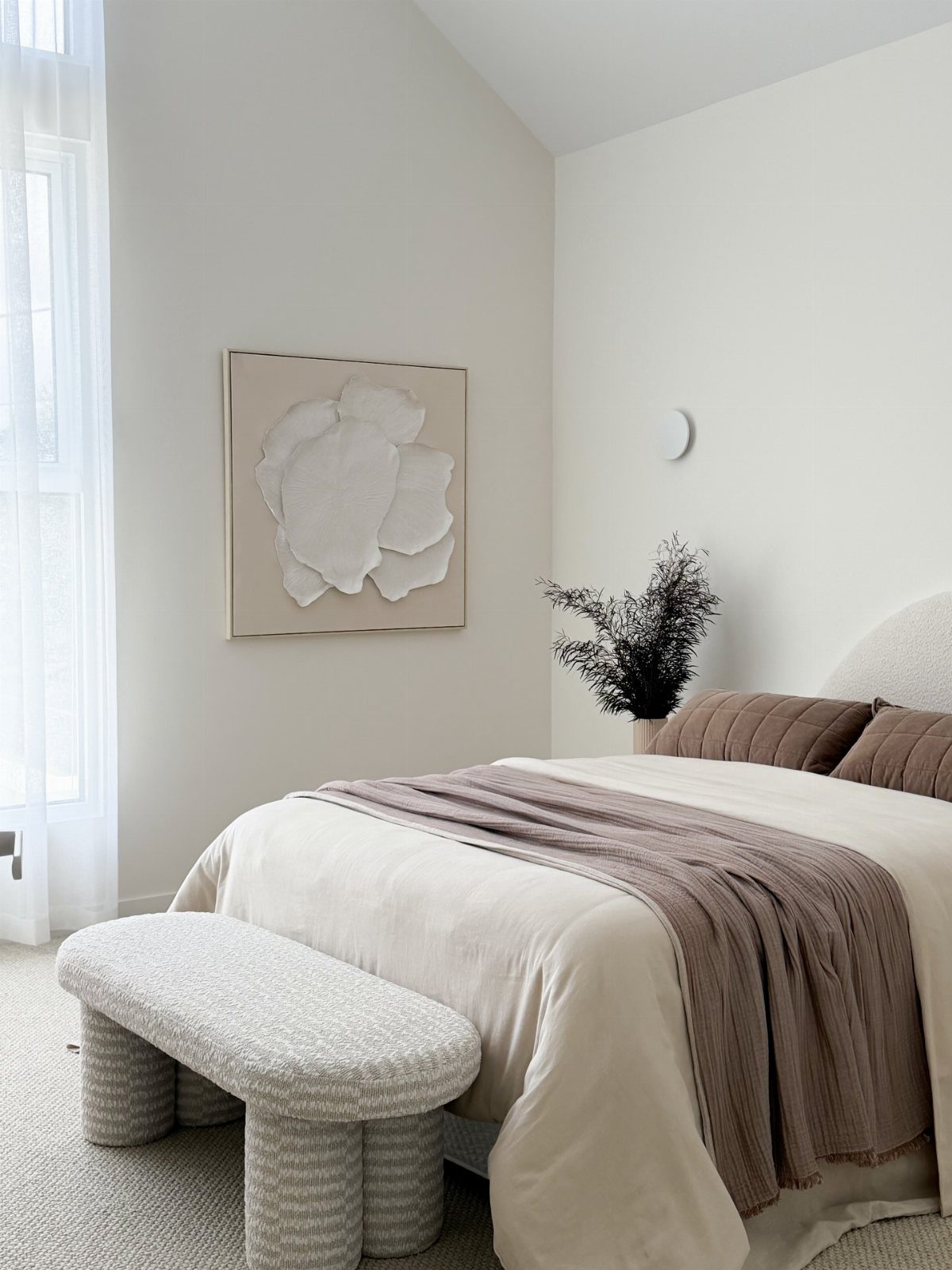
Grey, beige, and white succeed because the white does the structural work.
White paneling adds architectural interest without darkening a small room.
I’d put the grey in the larger upholstered pieces and the beige in textiles, since bedding and throws are easier to swap than a headboard.
The dried flowers in the small vase cost nothing if you clip them yourself in late summer.
This suits renters and first-home owners most; the palette moves with you and forgives mismatched furniture.
Mixing Grey and Beige
Grey and beige share the same tonal family, which is why they settle together without fighting. Keeping them in the same weight class is what makes the pairing work.
A pale warm grey against a sandy beige reads as one quiet layer; a charcoal against that same beige starts a shouting match.
Light tones do the heavy lifting here. I would pick a soft greige for walls and let bedding carry the slightly darker or lighter note.
The overall look stays cohesive because nothing jumps too far from center.
If you want contrast, add it through black or white in small doses. A thin black picture frame or crisp white sheets gives the eye a place to rest without breaking the calm.
Creating a Calm Atmosphere
Soft colors do half the work of calming a bedroom; layered textures finish the job. A cotton sheet, a wool throw, and a linen curtain give the eye three versions of quiet to move through.
White brightens without stealing attention. I would use it on the ceiling and trim to lift the grey and beige rather than compete with them.
Leave breathing room above and around the heavier tones so the space does not feel crowded.
Keep the palette tight. When walls, textiles, and furniture all sit in a similar light range of grey and beige, the room looks planned rather than pieced together.
Dark grey or black belongs in small, deliberate moments: a lamp base, a thin stripe in a rug.
Incorporating Patterns
Patterns belong on the moveable pieces, not the walls. Cushions and bedding carry them best because you can swap them when the mood shifts.
Floral patterns on pillows or a duvet cover push a modern cottage feel without committing the whole room to the theme.
I would start with one patterned piece and let the rest stay solid so the eye has somewhere to land.
The bedding sets the tone. Warm grey or beige against white sheets gives that clean-but-cozy base, then patterned cushions layer on top to add the visual interest.
The pattern itself does not need to be loud; a small repeat or a faded print keeps the calm intact.
Personalization
Artwork and family photos turn a decorated room into one that feels occupied. I would lean a framed piece on a nightstand rather than hang everything at eye level; the casual placement reads as lived-in, not staged.
The key is restraint. One or two personal pieces per surface keep the room from becoming a gallery of your history.
A single framed photo on a dresser, a small print above the bed: enough to signal this is your space, not enough to crowd the neutral palette.
The homely feeling comes from the mix, not the volume.
A found object beside a formal portrait, a child’s drawing in a simple frame: the contrast between them is what makes the room feel gathered over time rather than bought in a day.
Frequently Asked Questions
Can you mix grey and beige in a bedroom?
Grey and beige share the same tonal family, which is why they settle together without fighting. Match their depth and they behave like relatives: a wall in warm greige pairs naturally with sheets a shade lighter or deeper.
Do grey and beige look good together?
Keeping them in the same light range gives the room a settled, quiet feel that still invites you in. Warm grey and sandy beige melt into one soft layer; swap that grey for charcoal and the whole room tenses up.
What colors complement a beige bedroom?
Grey is the natural partner for beige, since both sit in the same neutral tonal family. For small, deliberate moments of depth, black works on lamp bases or thin stripes in a rug.





