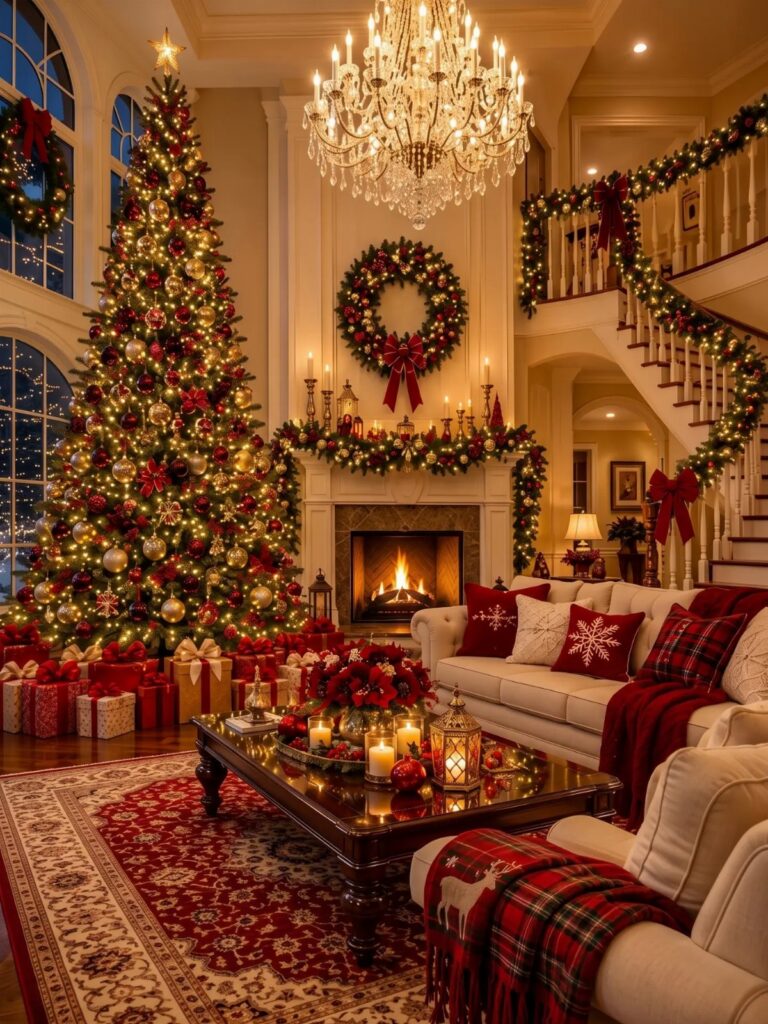
These living room Christmas decor ideas start with gathering pinecones outside and run up to a flocked tree in a galvanized bucket, with most projects fitting into one afternoon or a single weekend.
Your floor plan decides what works: renters short on space get the wall tree and fairy lights, while homeowners with a mantel can build layered garlands and dough bowl centerpieces that fill the room’s architecture instead of fighting it.
1. Wall Christmas Tree
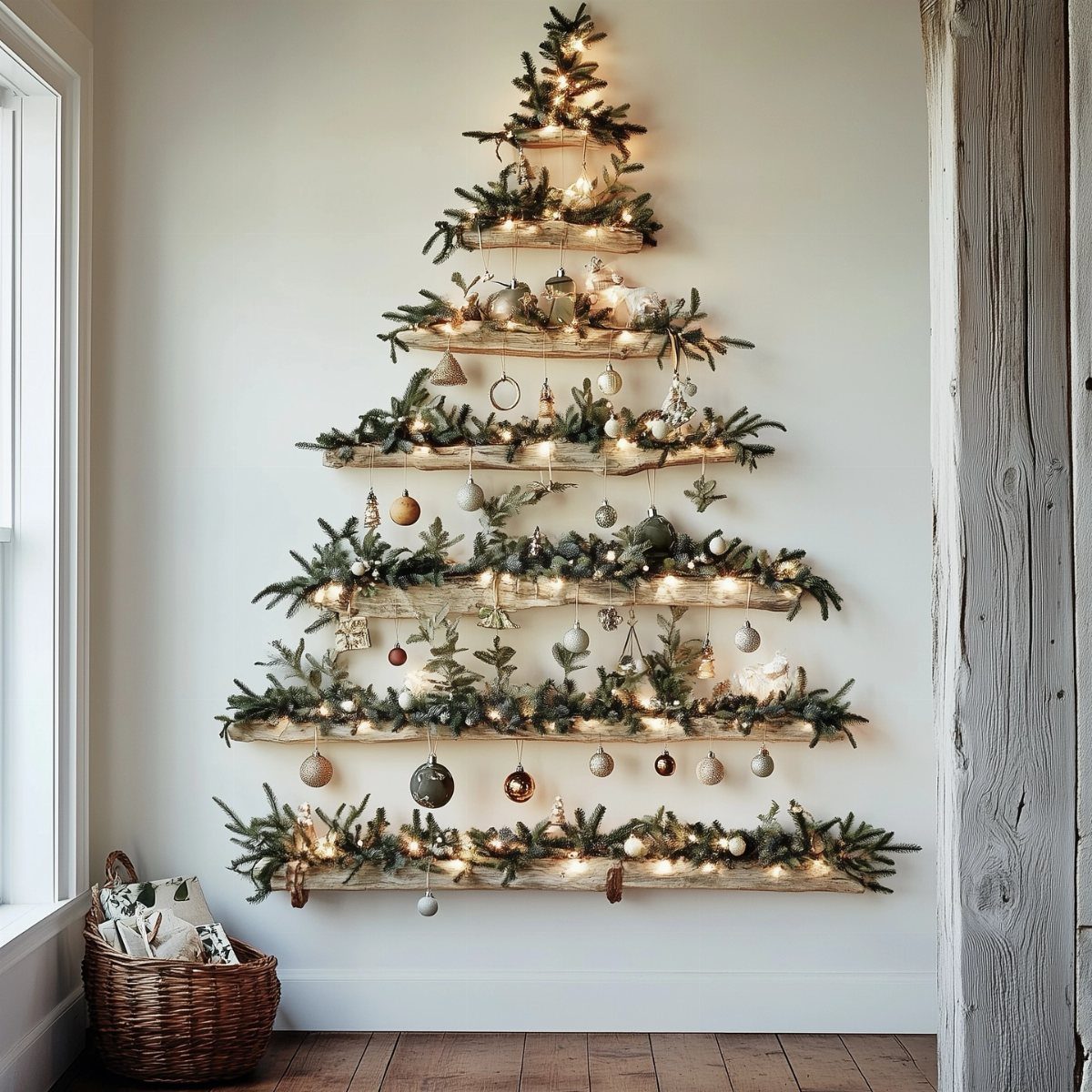
A wall Christmas tree frees up floor space while still giving you branches to decorate. Floating shelves staggered in length let the outline read as a tree without needing a diagram.
Pine cuttings, a string of lights, and a handful of ornaments finish it; a paper star on top costs nothing but time with scissors and glue.
This works best in apartments where a full spruce would block the couch, or in rooms where you want the look without the needle drop. Storage space on the shelves themselves shrinks by half once the greens go up.
2. Mini Trees
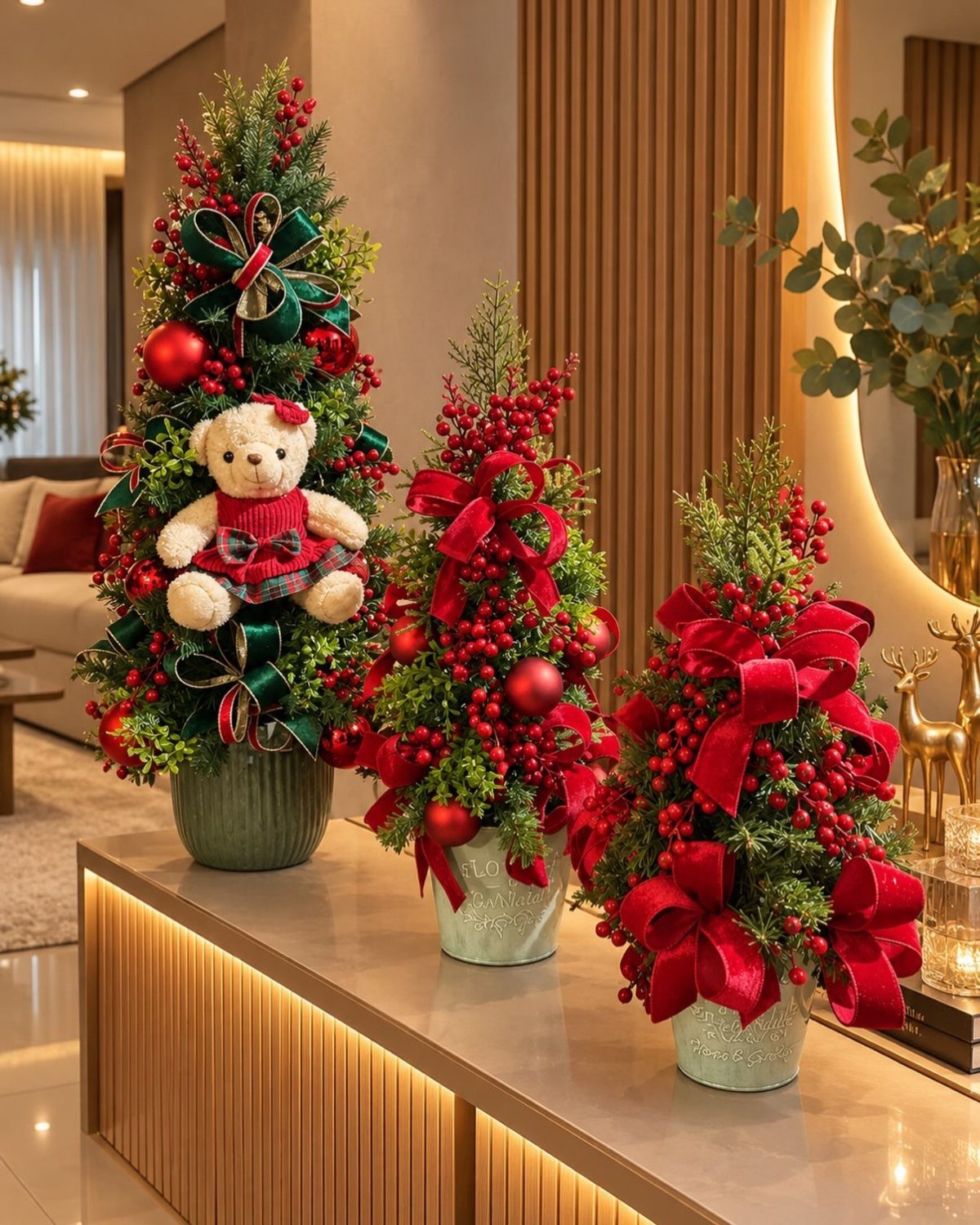
Mini trees turn side tables and console surfaces into small celebrations without the commitment of a full tree. Small trees run to about knee height, enough that a single strand of battery lights wraps them completely.
A pair flanking the fireplace, or three staggered along a credenza, reads as intentional rather than leftover.
Ceramic pots from a hardware store run cheap; burlap ribbon and a few berries from the craft aisle finished the look in one afternoon.
This suits renters who want greenery that travels, or anyone whose living room cannot fit a tree and still hold a conversation.
3. Wreaths Galore
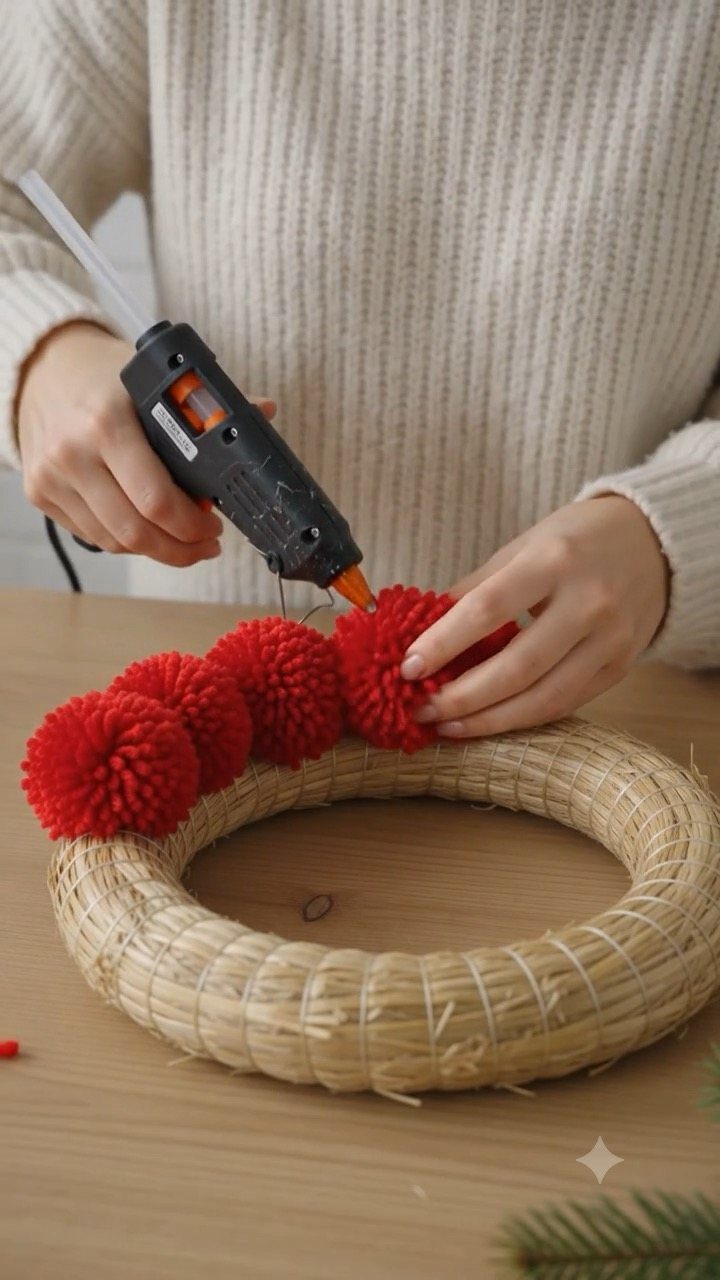
Wreaths multiply well. One on the door is standard; four in the same room, mixed in scale and material, starts to look like a collection rather than a repeat.
One large and plain, one small and loud, and two medium ones that talk to each other through shared color keeps the wall from going flat. The risk is clutter, which arrives fast if every wreath competes for attention.
Stop at four, or at least vary the wall color behind them.
4. Hang Wreaths

Wreaths belong in places besides doors. I have hung them from curtain rods, leaned them against mantel mirrors, and once looped a small one over a table lamp where the shade hid the string.
A no-sew fabric kit turns into a 3D piece with enough body to read from across a room; the craft itself is quiet enough for an evening in front of a show.
Light fixtures work if the wreath is light and the bulb runs cool. The limit is imagination and, practically, whether the hook will hold.
5. Window Garland
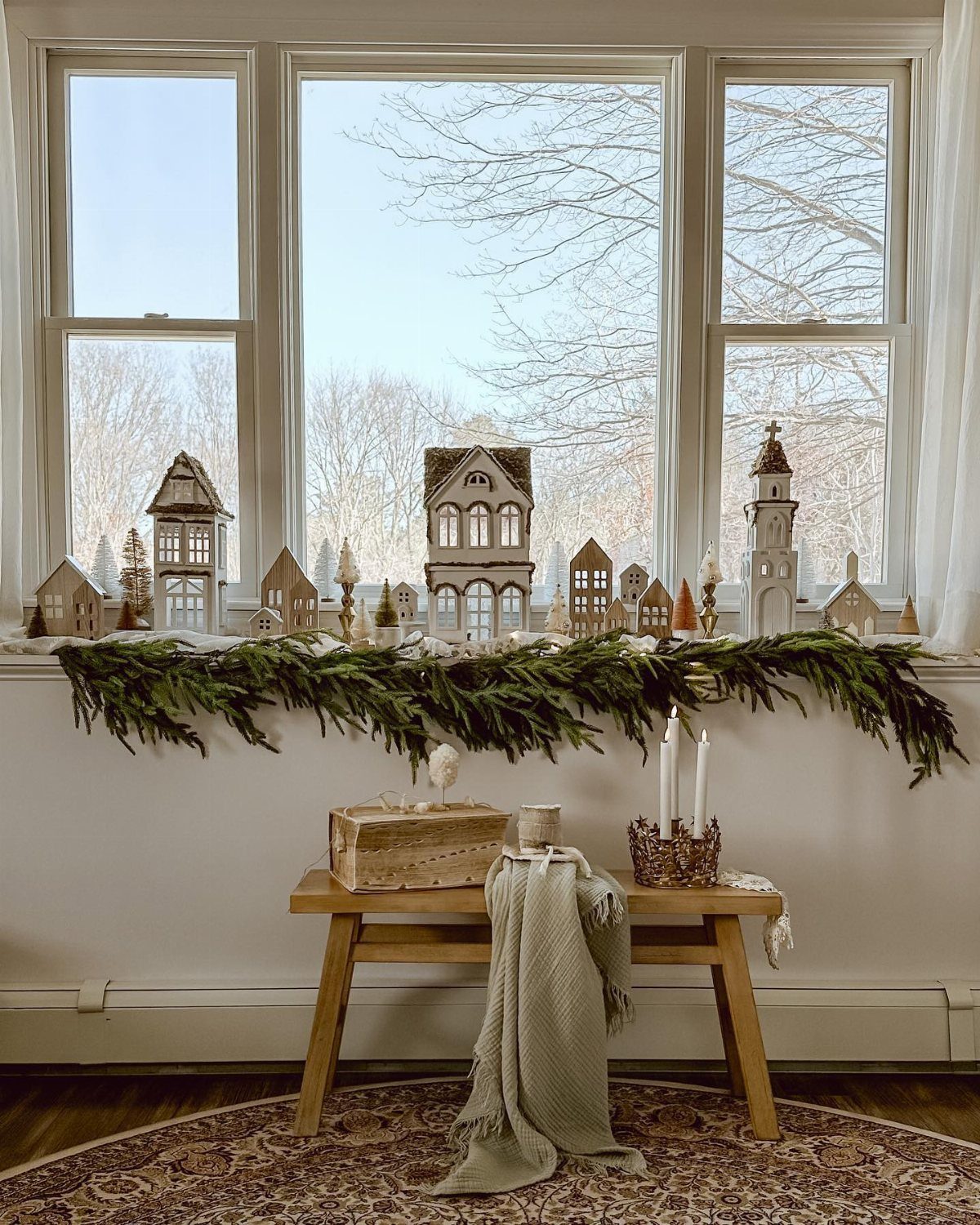
A window garland frames the glass instead of blocking it, which matters when the view is part of the room.
I run mine along the sill rather than the header, where it does not interfere with curtains and catches the eye of anyone walking past outside.
The miniature village tucked into this one came from a thrift store; fresh greens would work, though dried orange slices and pine cones last longer and cost nothing if you save them from fall.
This completes a room that already has a tree and a mantel but still feels unfinished, and it asks for no floor space at all.
6. Cozy Textures
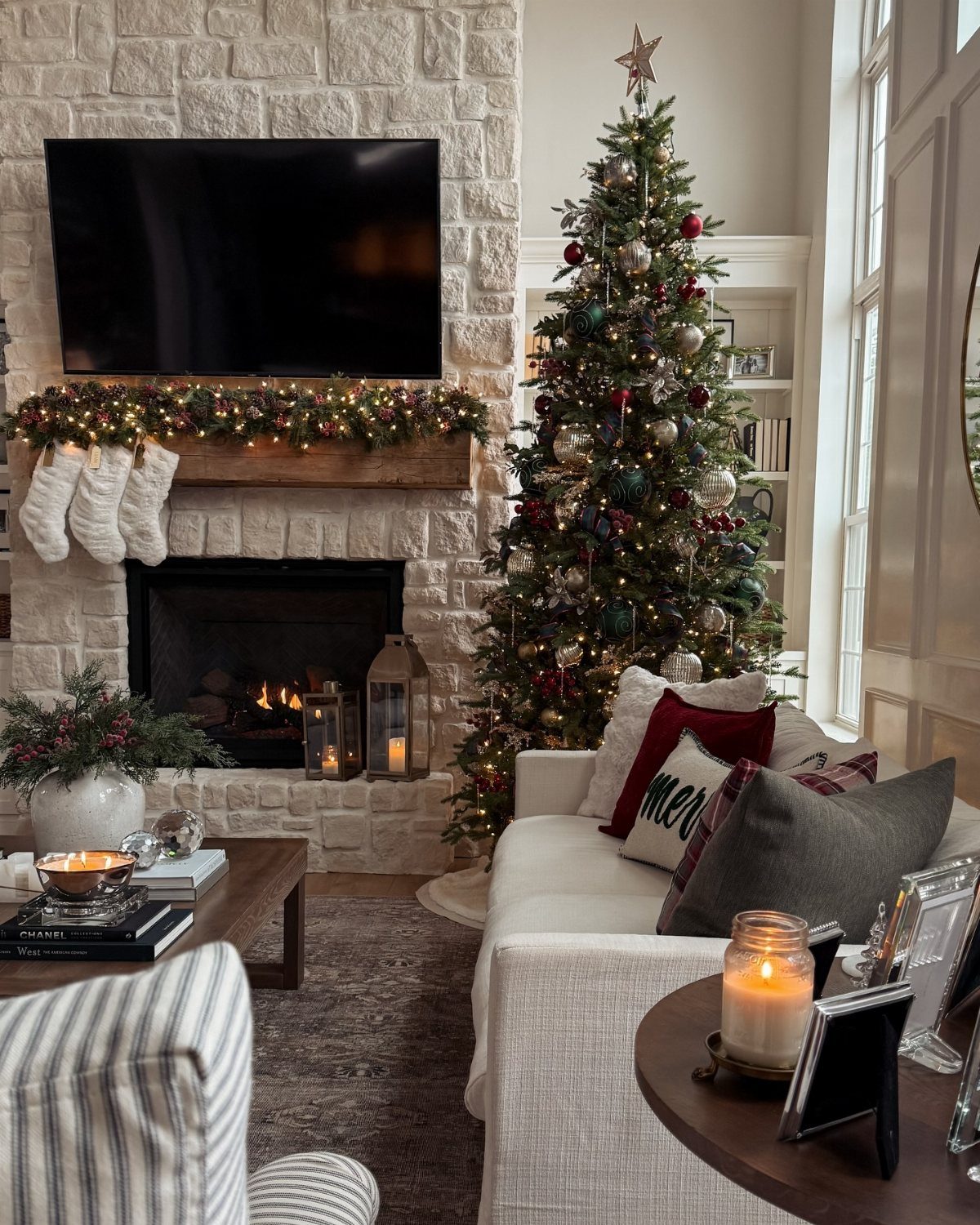
Texture does the work of color when you want warmth without committing to a palette.
I layer a woven throw over a smoother one, add one nubby pillow to a set of flats, and hang stockings in a fabric that does not match anything else in the room.
A stone fireplace helps; a shelf of folded blankets achieves something similar where there is no hearth. Burlap and organic cotton read as natural; recycled sweater stockings or vintage wool add history.
Mixing without matching is easier than it sounds: start with three textures that share one color, then stop. Start with three textures and stop before you count to six.
7. Use Candles
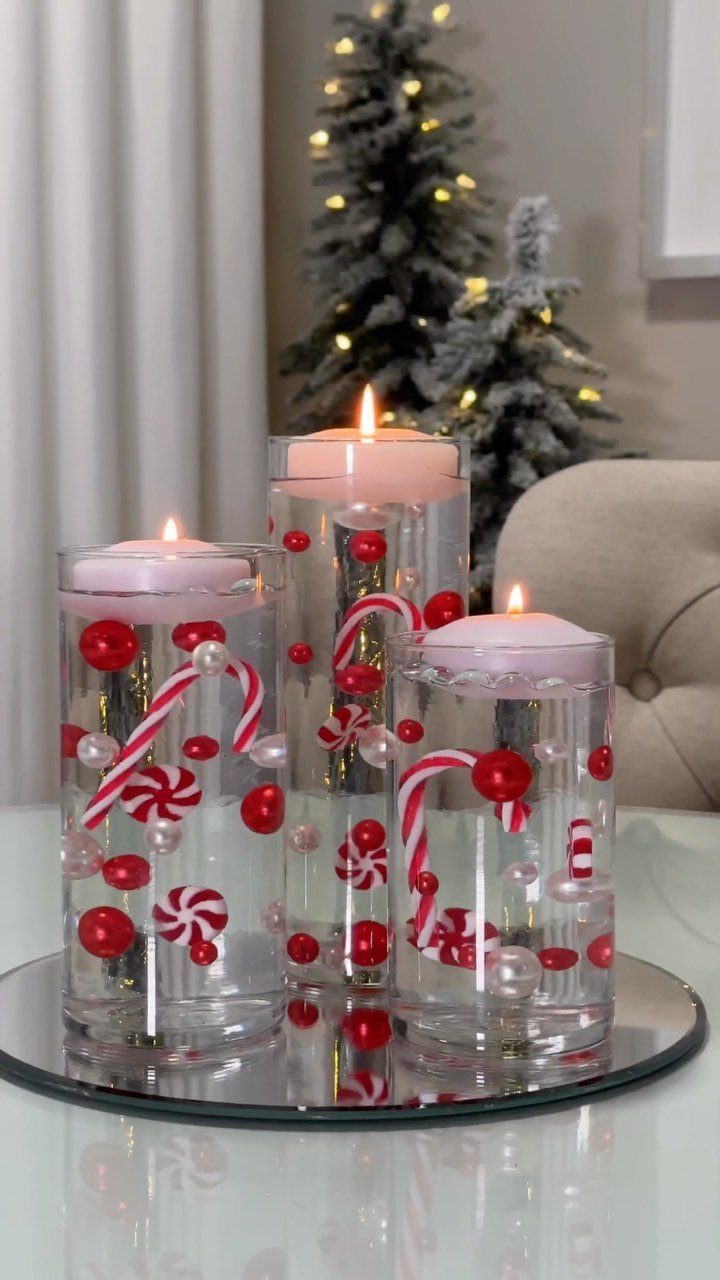
A floating candle in a cylinder vase turns any flat surface into something that feels like an event. Glass cylinders that hold water, ornaments, and a tea light or small pillar on top are worth keeping on hand through December.
The water keeps the candle steady and catches the light twice.
Tapers in brass holders, chunky pillars on wood trays, even a scented jar candle tucked behind something taller all layer together for warmth you can’t get from overhead lighting.
Tying bundles of pillars with velvet ribbon turns them into one piece rather than a scattered group.
For a coffee table you actually use, a tray holds the whole grouping and lifts off in one move when the board games come out.
8. Use Natural Elements
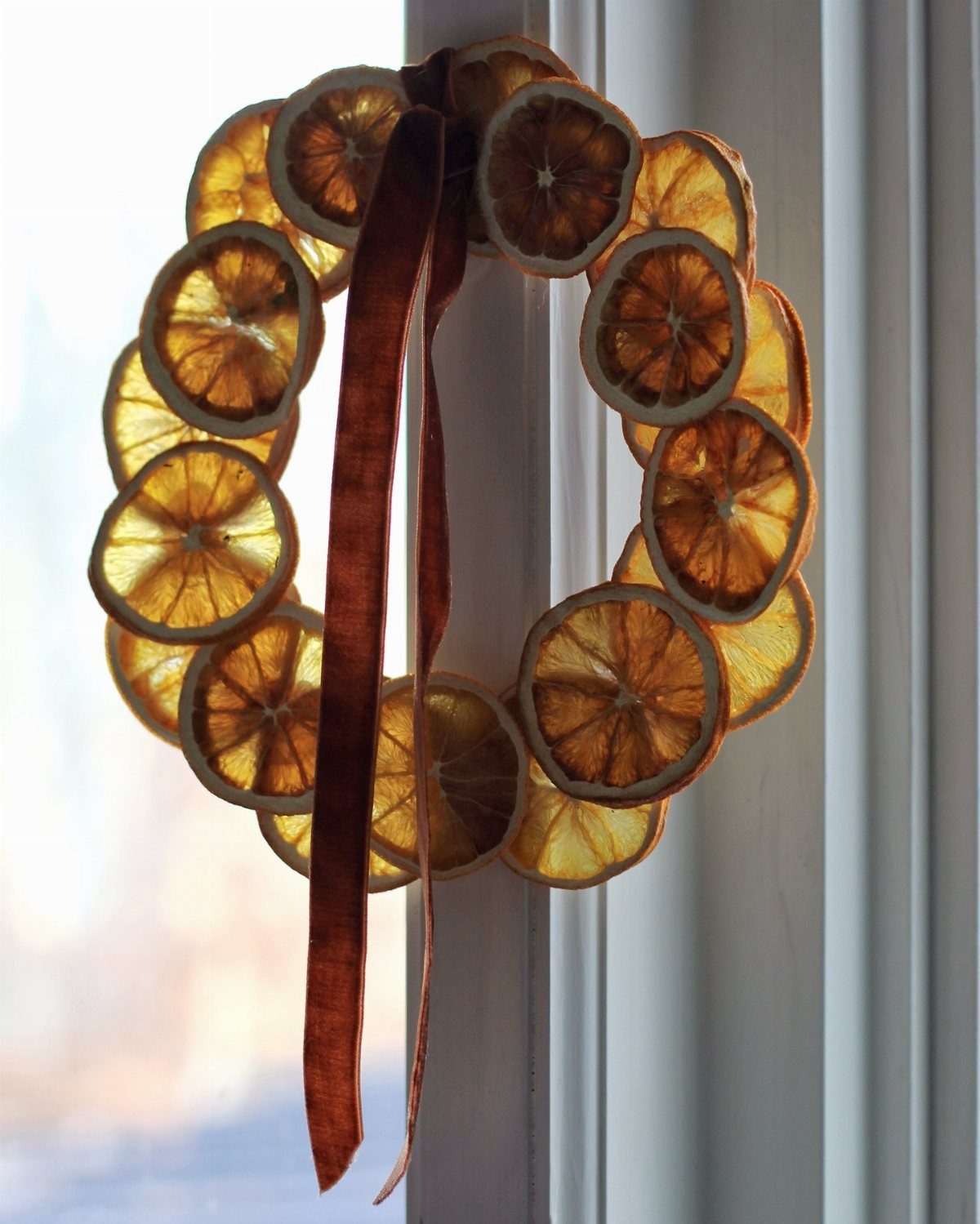
Dried orange slices strung on thread or wired into a wreath carry the color of Christmas without the price of fresh florals.
I run mine in a dehydrator when I have one going for something else, though a low oven works fine if you have the time to watch it.
The slices keep for years, go stiff and translucent, and smell like the good part of baking.
Pinecones gathered from the yard, clipped branches from a tree that needs trimming anyway, and a handful of those orange rounds turn a plain window or mantel into something that looks collected rather than bought.
A length of dark ribbon that picks up the fruit’s color without matching it exactly gives a wreath more depth than a perfect match would.
Fresh greens work too, but the dried route means you set it once and it lasts the full season.
9. Use Fairy Lights
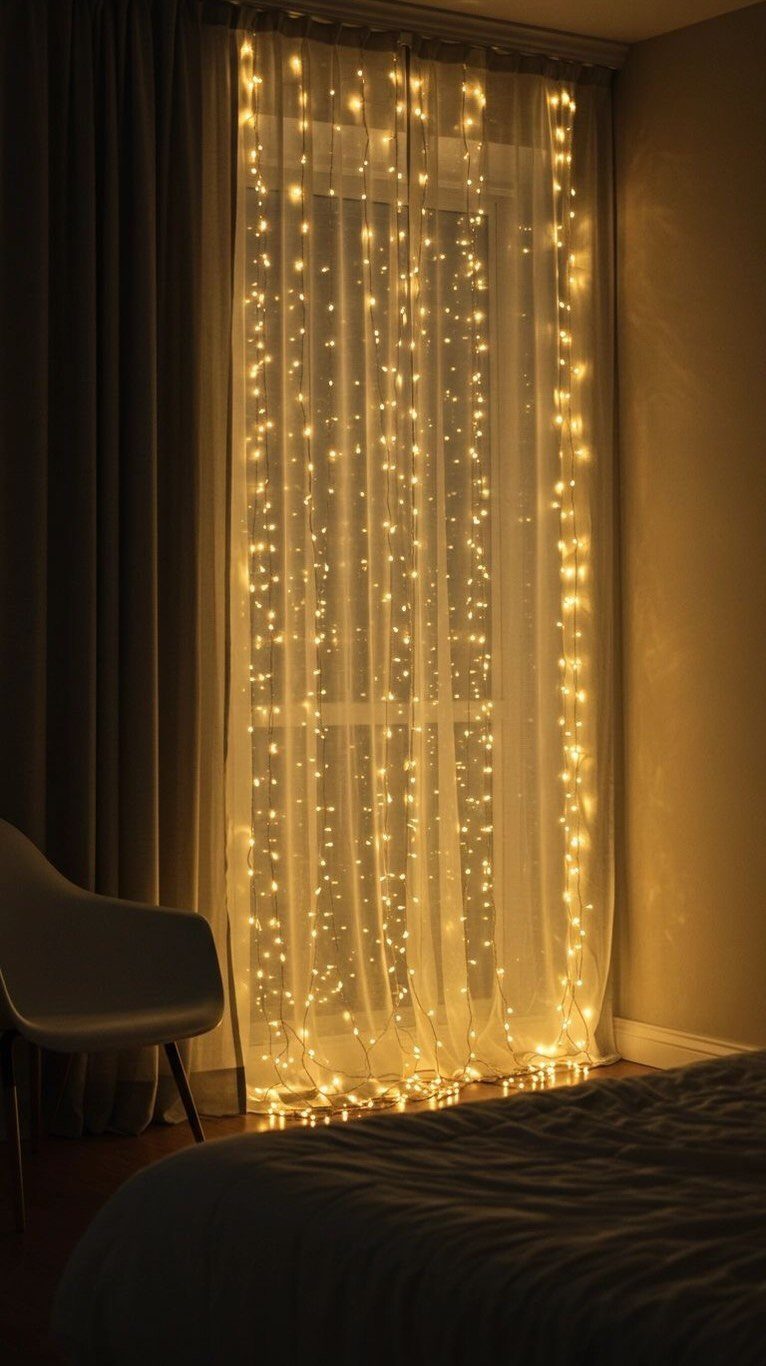
Fairy lights behind a sheer curtain turn a window into a soft glow that reads as snow-lit from the street and cozy from the sofa.
I buy the curtain-style strands, the ones with vertical drops, and hang them from the rod behind whatever panels I already own. Battery boxes hide behind the fabric, and the whole thing takes ten minutes.
The same lights work stuffed in a glass vase, woven through a mantel garland, or laid along a shelf where the cord tucks behind books.
Pairing fairy lights with wreaths hung from the same rod turns a window into one tall decoration rather than scattered pieces.
For a small living room, this is light that doesn’t take floor space or table surface. The warm white strands matter more than the cool ones here; the yellow cast is what makes a room feel like December.
10. Don’t Forget Coffee-table Decor
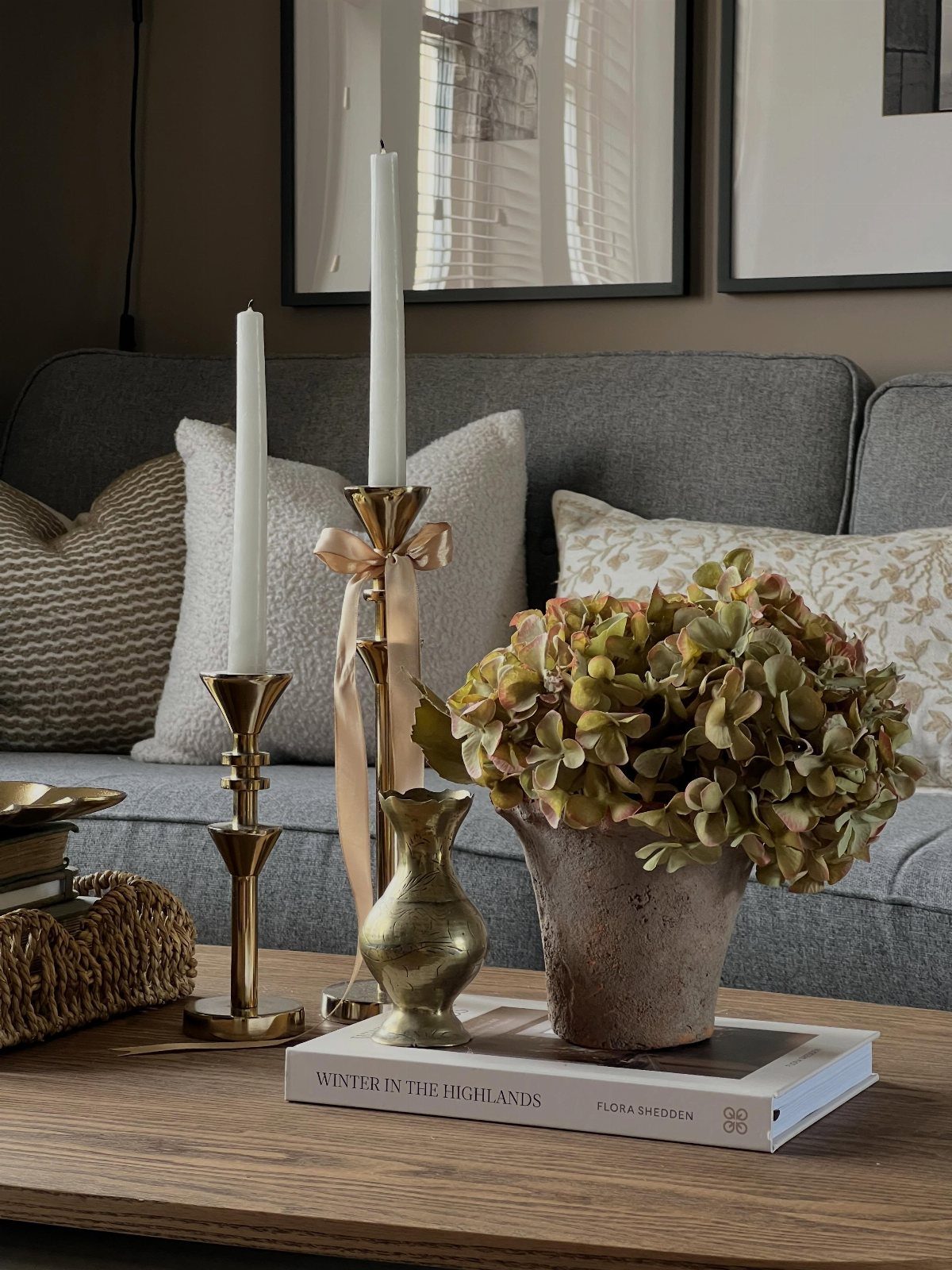
A coffee table vignette lives on a tray so it can evacuate in one lift when the pizza arrives.
I build mine with three heights at minimum: something tall like a candlestick, something low and wide like a bowl, and something in between that carries the seasonal note.
A gold and white palette keeps coffee-table decor calm enough to live with all month.
A folded Christmas napkin or tea towel under the tray adds color without committing a whole textile purchase.
Draping a runner over the edge of the table reads as intentional; hiding it completely can look like you forgot to put it away.
The real trick is stopping before the table becomes a museum piece. Leave room for a mug, a remote, an actual human hand.
11. DIY Velvet Trees
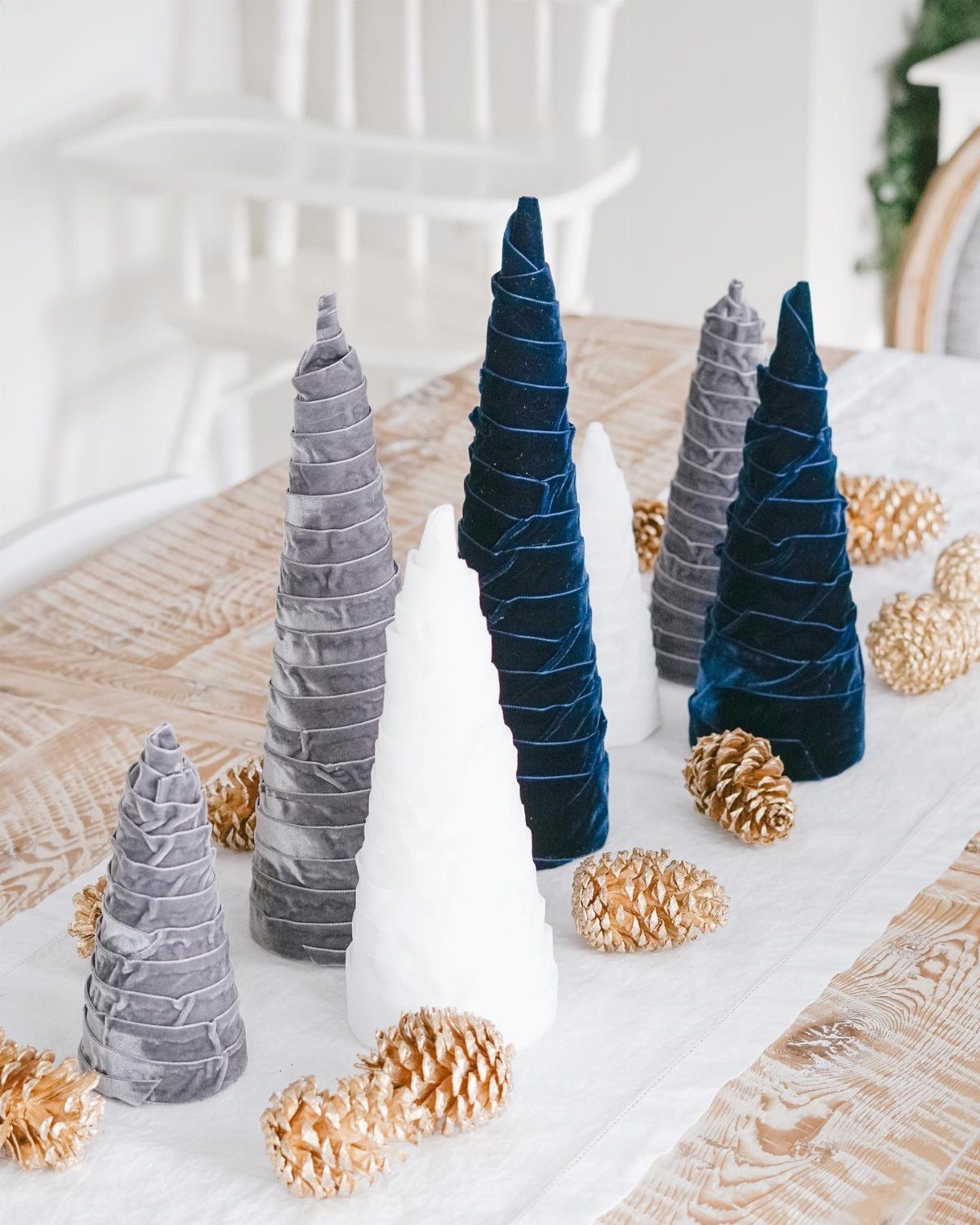
Foam cones wrapped in velvet ribbon stand up as trees that cost less than a coffee and take an hour to make.
Craft-store cones with pointed tops work well for wrapping velvet ribbon from base to peak, pinning as you go. A small bow at the top covers the raw end.
The texture matters more than the color. Grey, navy, and cream together read as sophisticated; all red or all green tips into craft-fair territory faster than you’d think.
The gold pinecones scattered at the base are a nice touch, but a small wooden bowl or a length of bead garland works the same way.
These scale down to a windowsill or up to a sideboard. A cluster of three at staggered heights carries more weight than one larger piece, and they store flat if you pull the pins and rewind the ribbon next year.
12. Mantel Sign
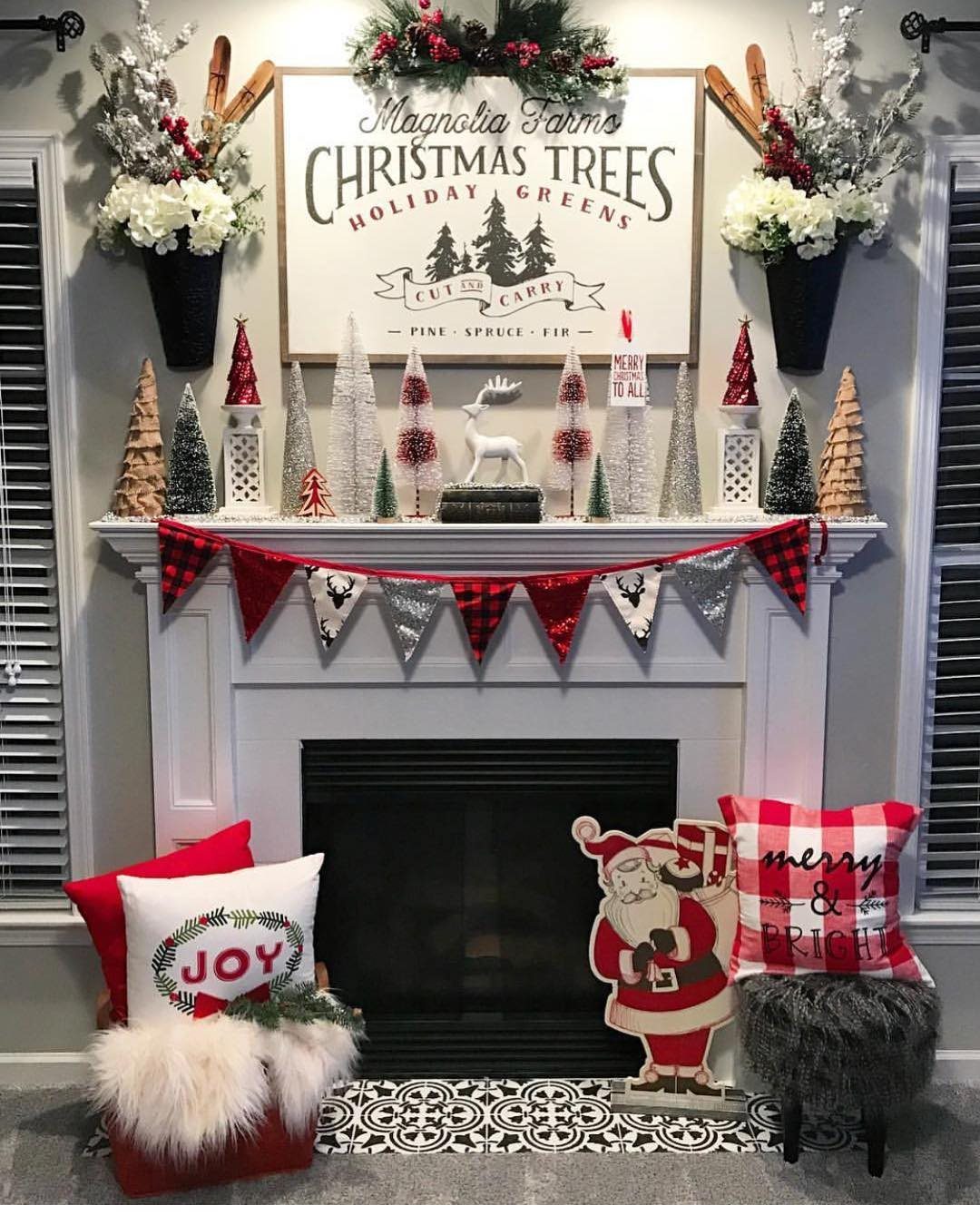
An oversized sign above the mantel fills the vertical space that garland alone leaves bare.
I look for one wide board, painted or printed with something that reads from across the room: a farm name, a carol line, even just "Merry" in a typeface with some weight to it.
Hang a mantel sign high enough to clear the tallest piece you place beneath it.
Layered garland below helps. The maker whose mantel this is runs greenery, bead strands, and dried orange slices together so the sign doesn’t float in isolation.
Red and silver bunting across the front edge adds a third layer that ties to whatever else is in the room.
For renters or anyone who hesitates to put holes in plaster, a wide sign propped on the mantel shelf instead of hung reads almost the same from a few feet back. The scale is what carries it, not the mounting.
13. Elegant Neutrals
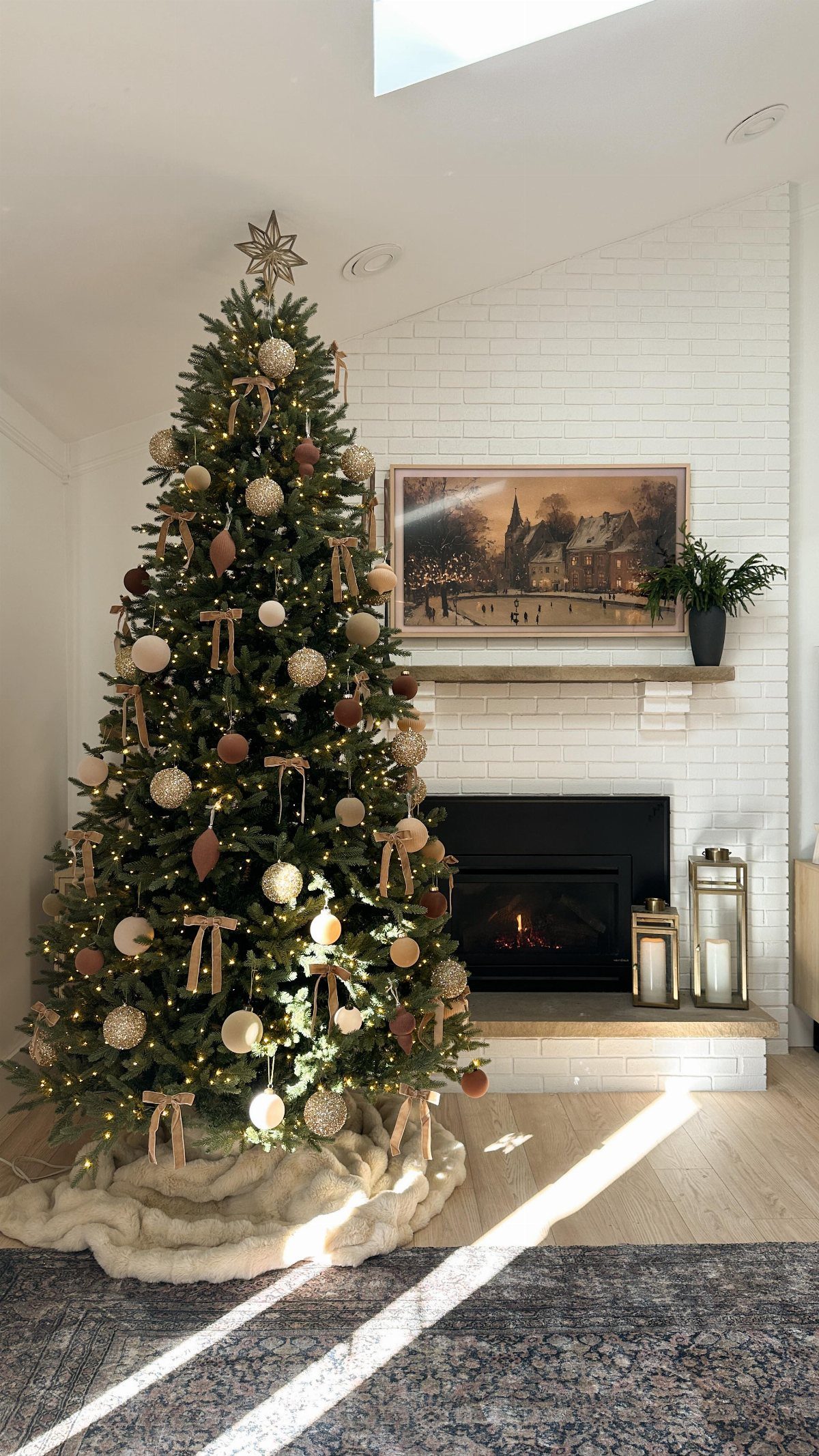
A flocked tree changes the whole room without adding color you have to live with past January.
Champagne and gold ornaments catch the light differently than red or green; the matte finish on flocking softens the glow so nothing reads as flashy.
I would skip the pre-lit version and string my own warm white lights. The density matters more than the bulb count; 100 lights per vertical foot of tree keeps the sparkle even.
This suits renters who cannot paint and anyone whose living room already runs beige, cream, or gray. Flocking sheds, which is the one real downside.
A white faux fur skirt catches the drift and reads as intentional texture rather than mess.
14. Galvanized Tree Bucket
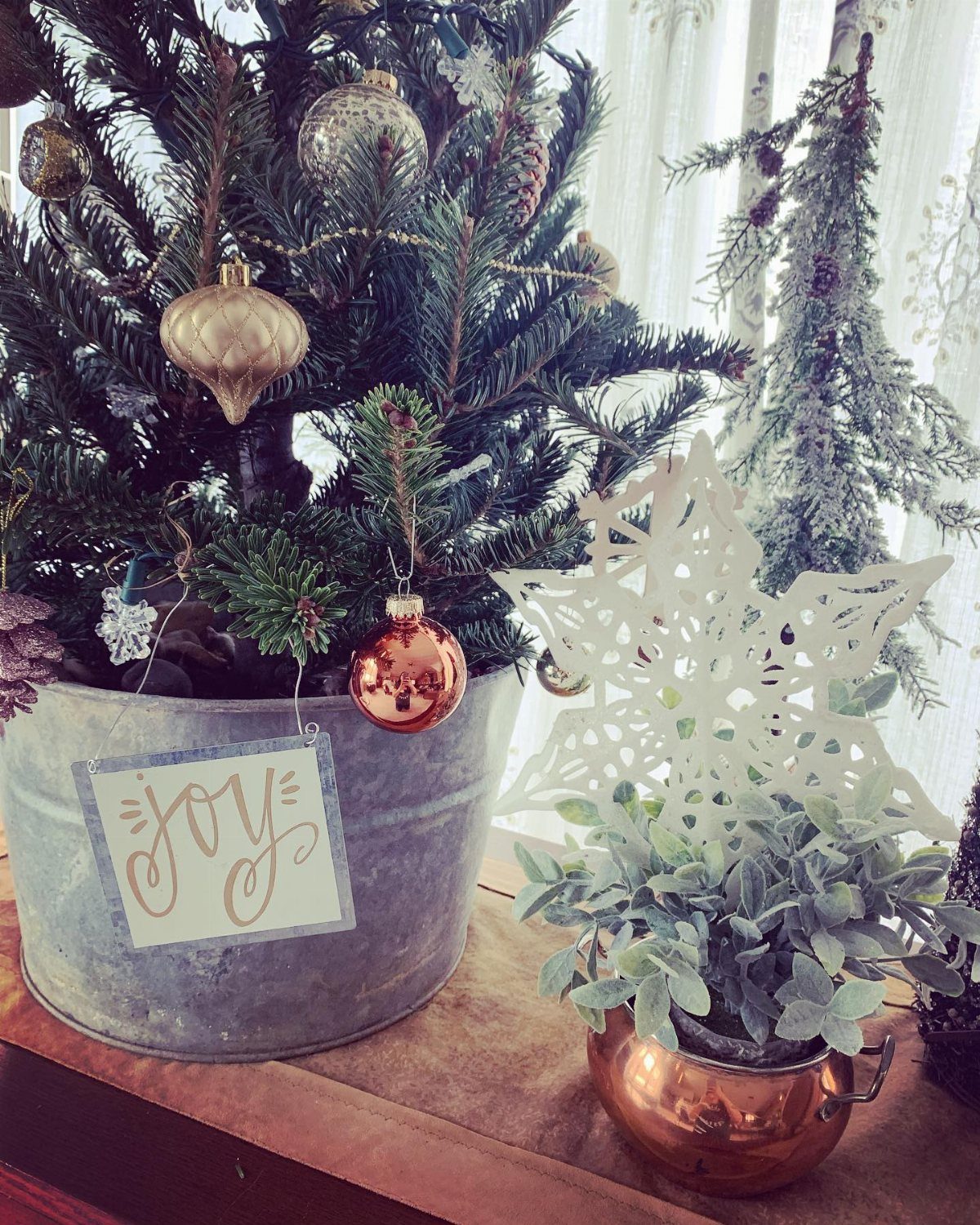
A galvanized bucket weighs enough that a small tree will not tip without sandbags or ugly weights. The zinc finish reads farmhouse without going full barn; it pairs with copper or brass ornaments the way distressed wood never quite manages.
The size to look for is 14–16 inches across at the opening. Anything narrower and the tree stand will not fit; wider and the tree looks marooned.
I set my bucket on a boot tray first if the floor matters.
This works best for tabletop trees or slim pencil shapes. A full-size tree in a bucket looks like a temporary parking job, which is fine if that is the honesty you want.
A metal bucket speaks for itself.
15. Citrus Garland
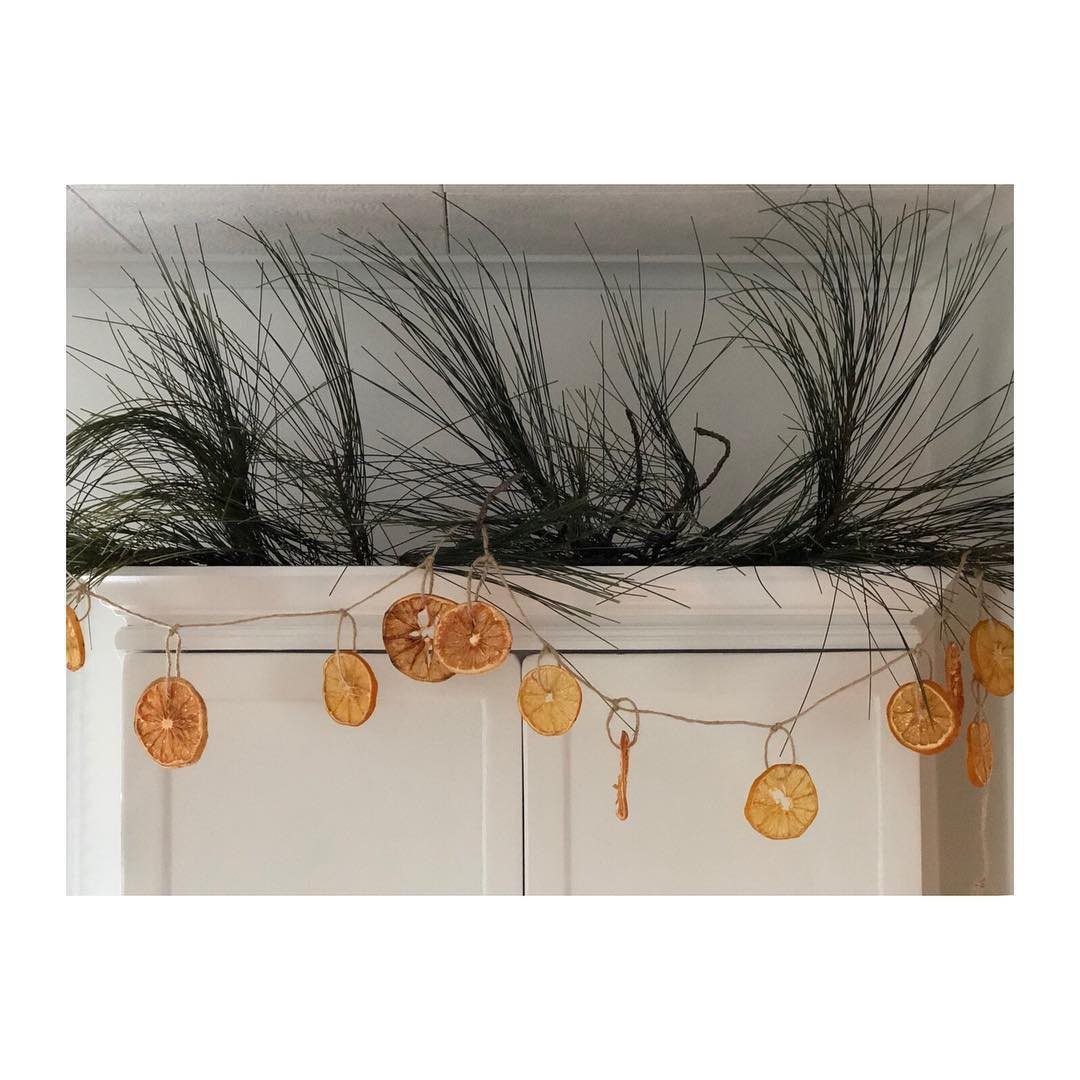
Dried citrus garland takes patience to make and lasts the whole season if you run the dehydrator or oven low enough. Slice oranges ¼ inch thick, lay them on wire racks, and dry at 170°F until they are stiff and translucent.
The house smells like a bakery while the citrus dries.
Twine holds up better than fishing line; the acid in the fruit weakens nylon over a few weeks. I thread through the flesh near the rind, not the center, where the pith is thickest and the hole holds shape.
This garland suits mantels that already have greenery; the orange reads as intentional contrast, not kitchen spillover. The color shifts to amber by January, which I like better than the bright start.
16. Use Wrapping Paper
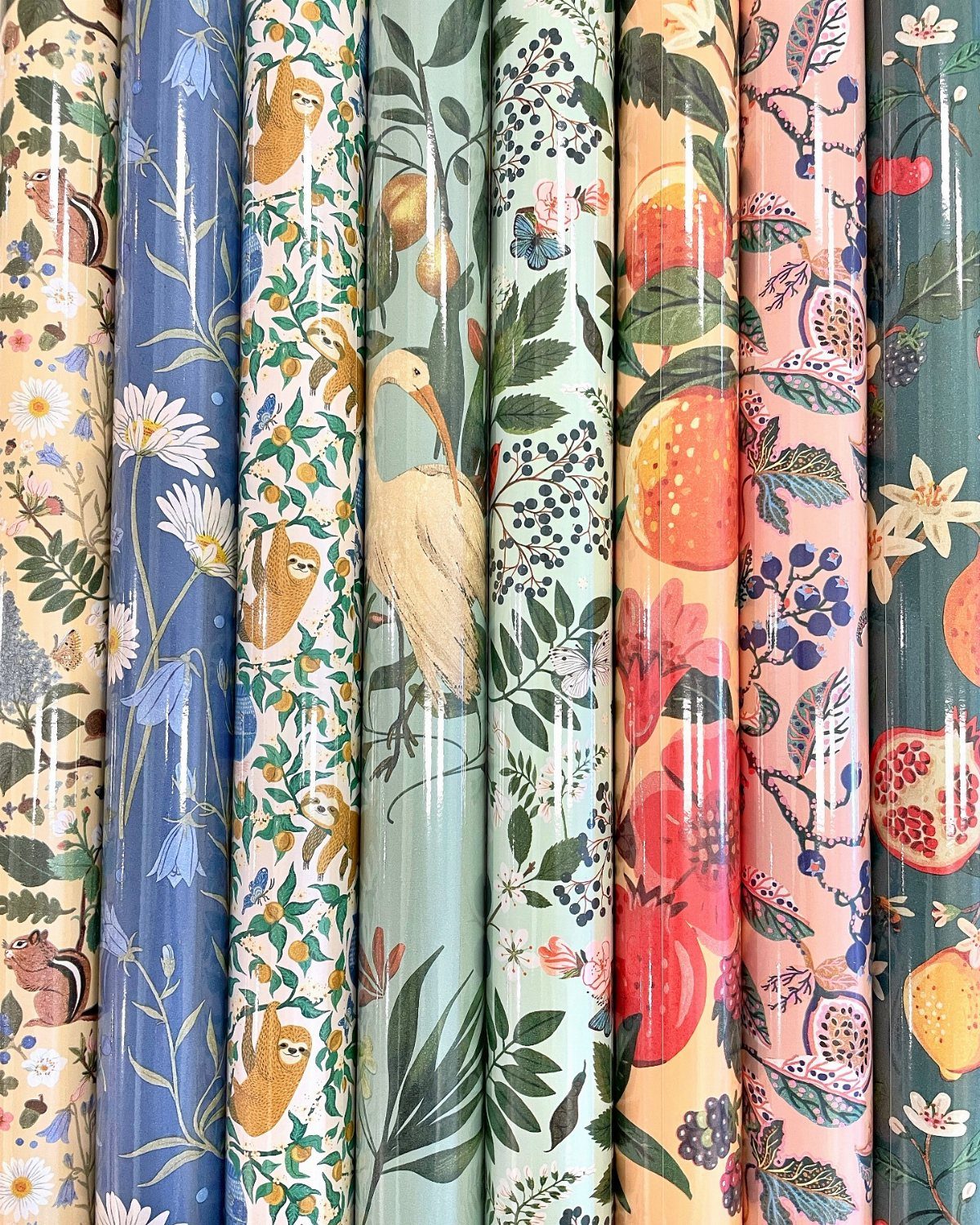
Wrapping paper as decor depends on choosing rolls you would hang as prints.
Floral and fruit patterns work because they read as art supplies, not leftovers; vertical storage in a tall basket keeps the rolls crisp and turns the collection into a color block.
I wrap empty boxes for the stack under the tree. Cereal boxes, shoeboxes, anything rectangular.
The weight stays light, the shapes stay regular, and nobody opens them early by accident. A single roll of good paper is cheap; three coordinated patterns fill a basket without much spend.
This suits the reader who wants color without ornaments everywhere. The risk is looking like a gift-wrapping station; keep the basket away from the tree to separate the two jobs.
17. DIY Wall Art
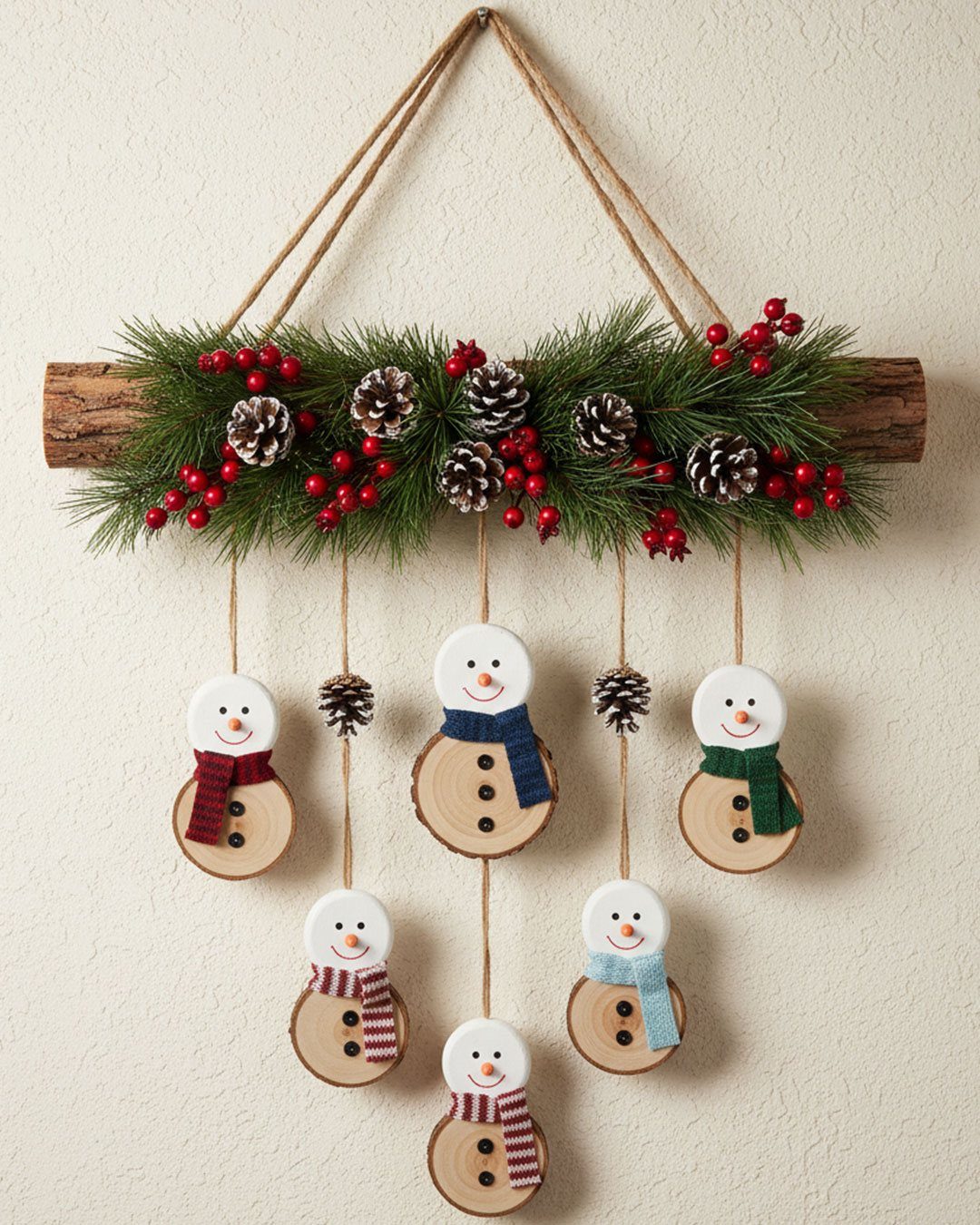
Printables in thrifted frames let me change the wall for December without storing bulky art.
I print at home on matte cardstock, trim with a metal ruler, and swap the glass for a cut-to-size piece of thin plywood if the frame depth fights the paper.
The reverse canvas trick, stretching printable over a mini frame’s back side, uses almost no materials and finishes fast.
A branch piece is a different route: a found stick, florist wire, and small wooden rounds from the craft store. Paint the snowmen simple, with mismatched scarves.
Imperfect hands read as folk, not failed.
This idea fits the reader with more time than storage space. Guests will ask where you bought it.
18. Layered Garlands
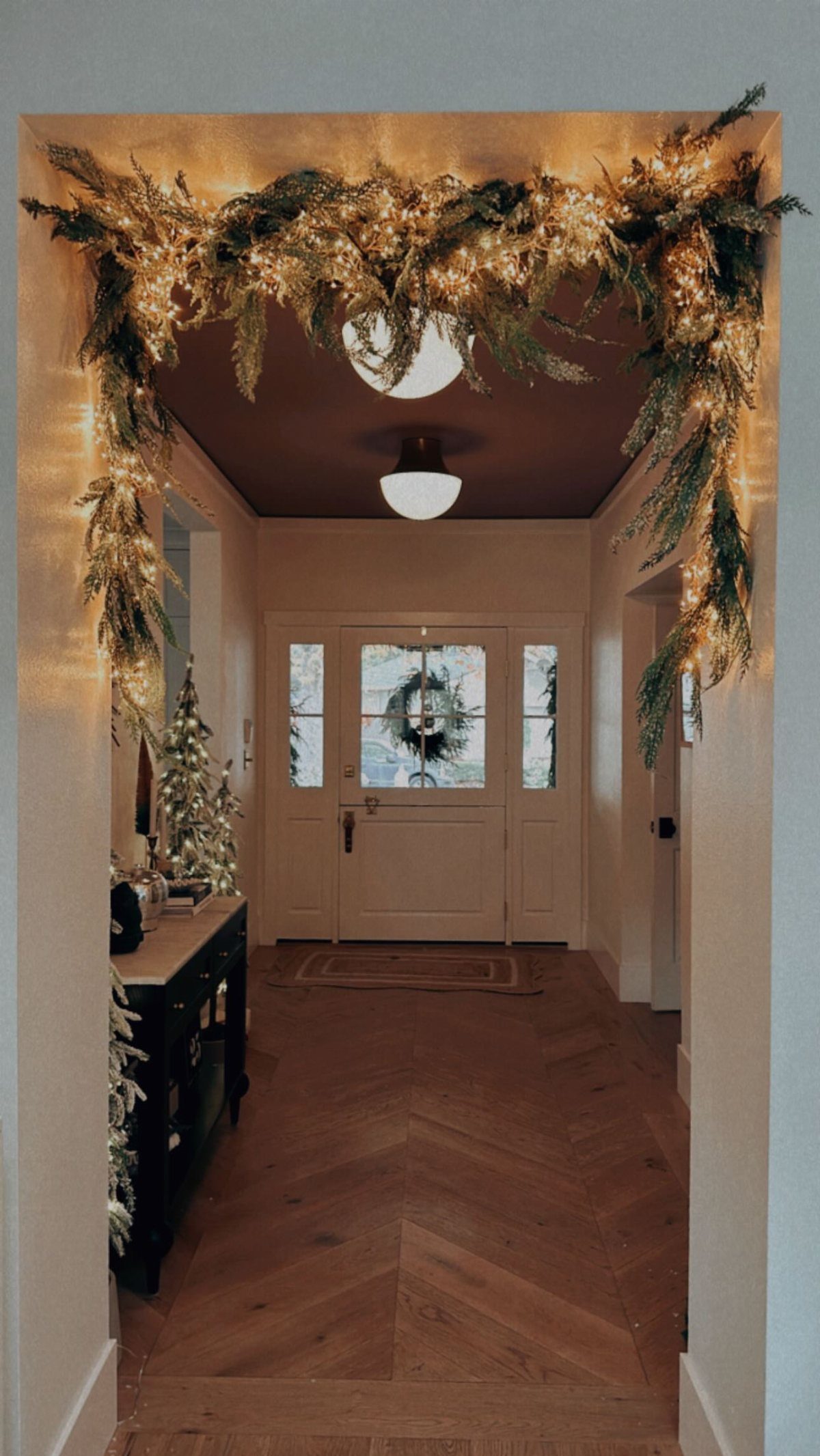
One garland on a mantel reads as leftover; two or three read as design. Start with a base of plain greenery, real or faux, then add a thinner strand of beads, bells, or dried fruit.
The layers should differ in weight and texture, not just color.
I wire the heavy layer to the mantel edge first, drape the lighter ones over it, and adjust so each texture shows at some point across the span.
Lights work as the third layer; on a mantel I would add them last, tucked deep so the bulbs glow through rather than sit on top.
This takes more material than a single swag, but the extra bulk is what makes it look built up rather than skimpy. Depth photographs well and reads as finished from across the room.
19. Vintage Finds

A chipped ceramic tree or a cross-stitch pillow that came from your grandmother’s attic carries more weight than anything shrink-wrapped at a big-box store.
Two or three old pieces clustered where the light hits them, on a tray or a narrow ledge, lets the new stuff fade back.
Thrift stores and estate sales fill up in November with holiday castoffs. A brass reindeer from a flea market now anchors my whole mantel; vintage pieces cost less than new ones and carry more weight.
One or two finds per room is enough; more than that and the room starts to look like a shop. Any more and the look turns into a collection instead of a mood.
Family heirlooms work the same way. One pillow, one ornament, one frame.
The warmth comes from the story it holds, not the quantity.
20. Decorate with Ornaments

Ornaments do not need a tree to earn their keep.
A bowl of red and white beads on a coffee table, or a hurricane vase packed with monochromatic balls and a few bells, reads as intentional decor instead of leftover supplies.
I fill apothecary jars from the dollar store with one color family and set them where the light catches the gloss.
Coordinate the ornament tones with any greenery or stems on the same surface so the eye travels smoothly across the table.
For a mantel, I nestle ornaments into garland between pinecones and berries. The round shapes break up the linear sweep of greenery.
Heavy bell swags or thick glass balls anchor the ends so nothing slides.
21. Dough Bowl Centerpiece
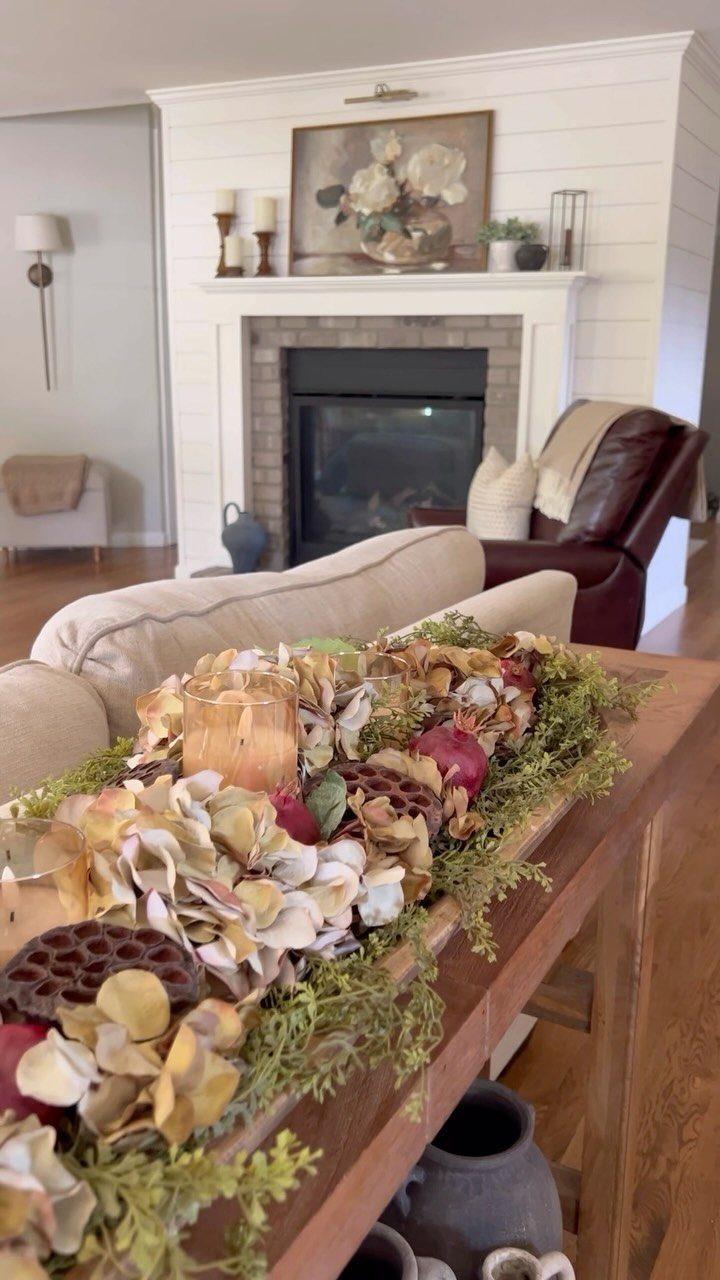
A long wooden dough bowl sits low and wide, which means your sightline to the TV stays clear and the coffee table still holds a mug.
Dried hydrangeas, a few pinecones, and whatever earthy pods dried in the fall fill a dough bowl without the work of fresh flowers.
Muted autumn hues and small pomegranates give sculptural contrast against soft florals in a centerpiece that lasts the season. That mix of texture and shape matters more than color matching.
Keep the arrangement low enough that people can talk across the table; anything taller belongs on a mantel. Anything higher competes with conversation across the room.
A low bowl also survives the inevitable reach for the remote without toppling.
22. Layered Vignettes
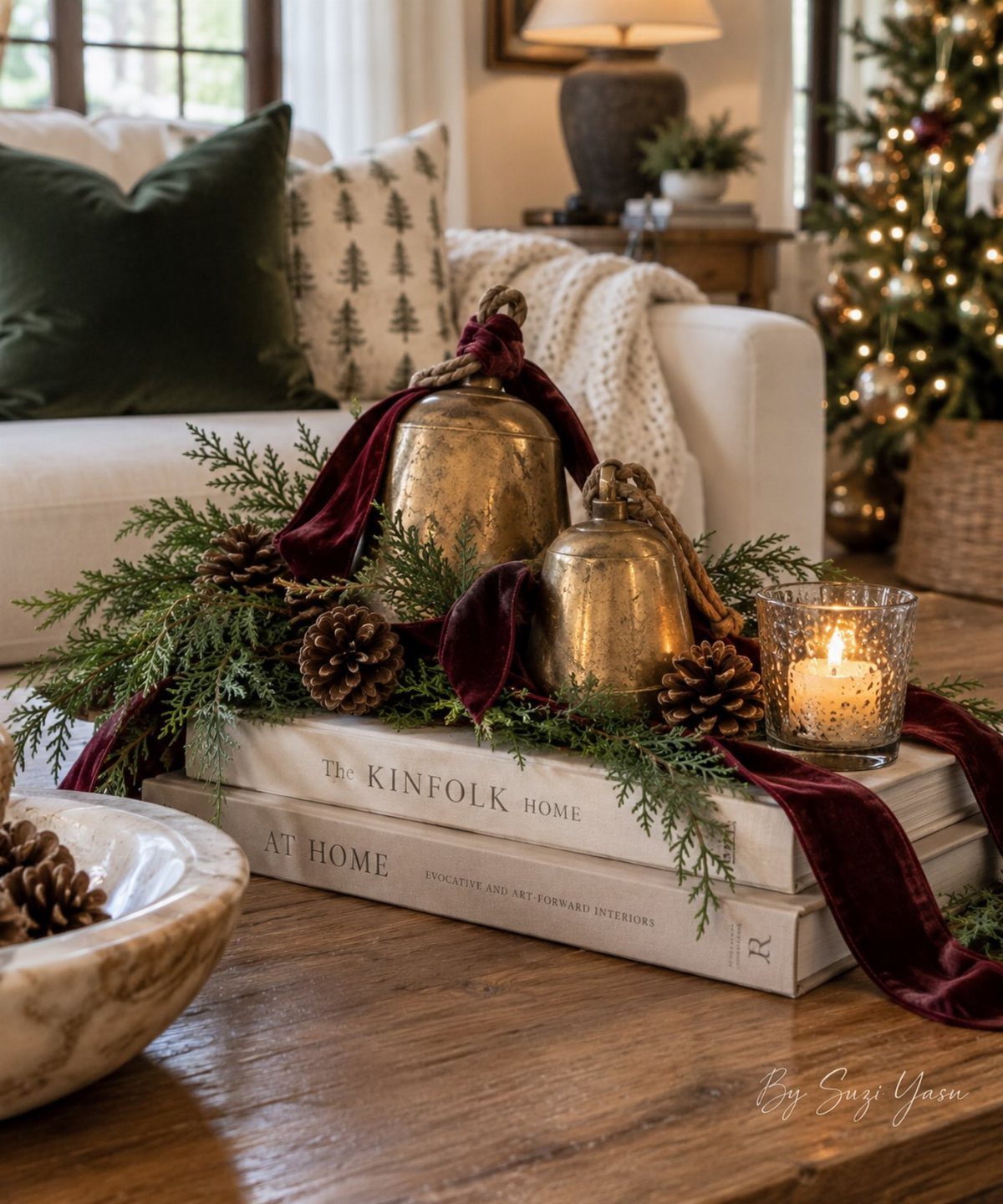
A vignette built on a tray moves off the table when you need the space for takeout or a puzzle.
Mixing heights and textures keeps the eye from landing in one place and staying there. Burgundy velvet ribbon against aged metal and soft candlelight reads as Old World warmth without feeling like a stage set.
A folded Christmas towel draped over the tray edge adds another layer of texture and catches wax drips. When the season ends, the tray stores everything in a drawer until next year.
23. Use Colorful Accessories
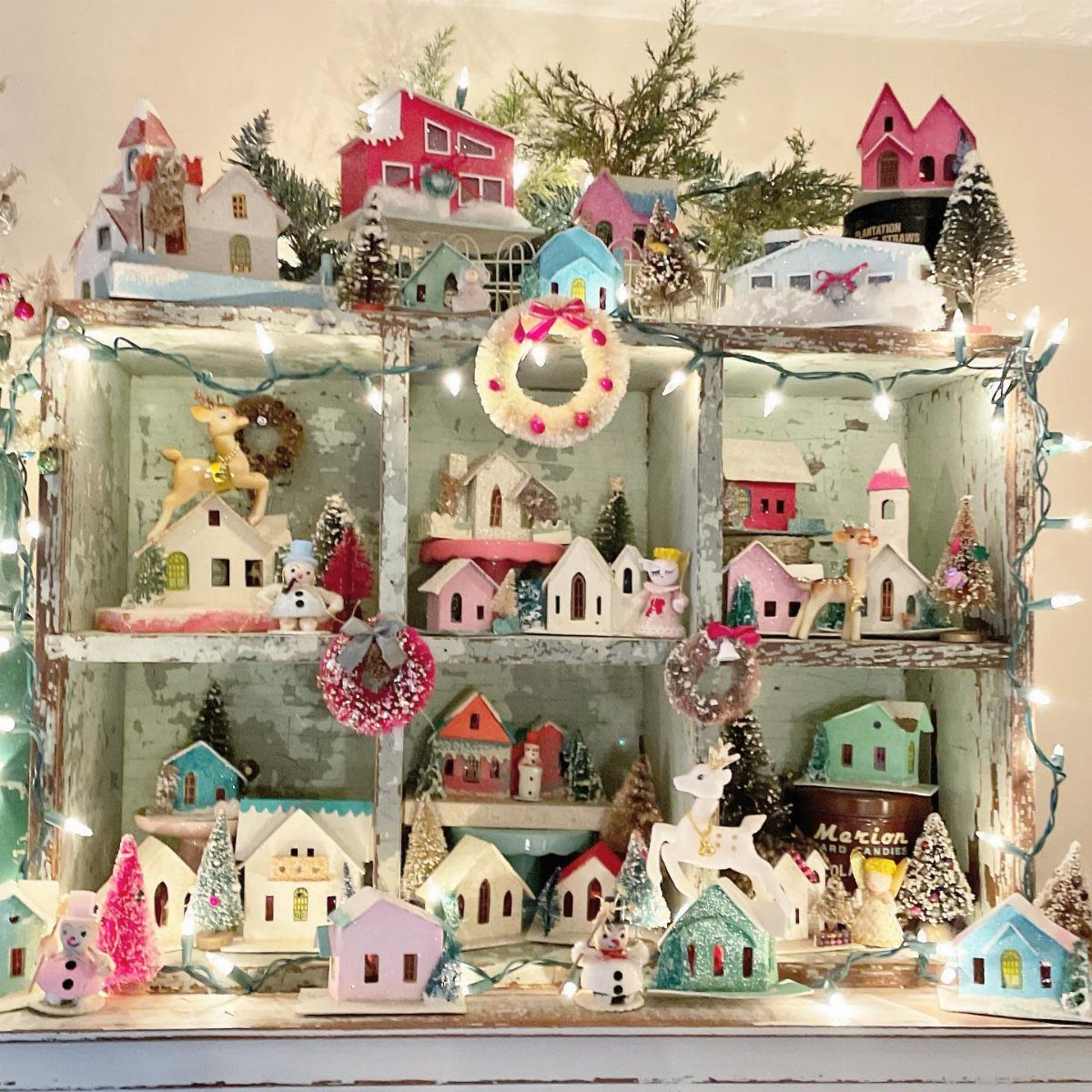
Pulling one bright color from something already owned and running it through the room in accessories ties things together without a theme-park feel.
A retro station wagon pillow on a chair, a plaid blanket thrown over the opposite arm, a winter scarf hung on a hook or woven through a basket.
These small moves cost little and read as festive without a single tree.
Accessories that work in January too mean the room does not go bare on December 26. A good winter scarf or a cheerful ceramic house earns its shelf space year-round.
The fairy lights help, but the color does the real work.
Choosing a Color Palette
A color scheme keeps the room from feeling like a garage sale of holiday odds and ends. One or two colors set the tone, and everything else follows.
Some years I skip red entirely and stay neutral. Other years I want white and gold everywhere, or I swing back to traditional greens and reds.
Deciding before the boxes come down from the attic saves the second-guessing. Once the palette is set, every wreath, candle, and garland choice gets easier.
A theme works the same way. Cozy rustic one season, heavy red the next; a set palette keeps either one from turning into chaos.
You can mix and match, but having that anchor, color or vibe, keeps the whole living room from fighting with itself.
Layering Decor
Depth comes from stacking, not spreading thin. I place a larger piece at the back of a shelf or table, then step smaller items forward so each layer shows.
A tall ceramic tree behind a shorter wooden one, a candle in front of both. On a coffee table, a low bowl of ornaments sits nearer to the edge while a slim brass tree rises behind it.
The eye catches three things at once instead of one flat row.
Vary the heights more than the colors. Two items at the same level merge into one blob; three heights read as three separate moments.
I leave breathing room between groups so the layers don’t collapse into clutter.
Frequently Asked Questions
How can I make my living room look Christmassy?
Layer texture and light rather than color alone.
A woven throw over a smoother one, fairy lights behind a sheer curtain, and a single strand of garland on a window sill or mantel edge read as festive without demanding a full redesign.
Candles in glass cylinders on the coffee table finish the shift in about ten minutes.
What are the 2026 Christmas trends?
For 2026, maximalism in texture and layering wins over single statement pieces. Multiple garlands on a mantel, clusters of mini trees at staggered heights, and ornaments used outside the tree all build depth.
Neutral palettes with flocking, champagne, and gold run alongside bolder dried citrus and berry accents.
What is the color for Christmas this year?
Neutrals that survive past January make the most sense: champagne and gold on flocked trees, cream and grey velvet, amber dried citrus against natural greens. A single color family tied across three textures matters more than any one seasonal shade.
Red and green together tips fast into craft-fair territory unless handled with restraint.